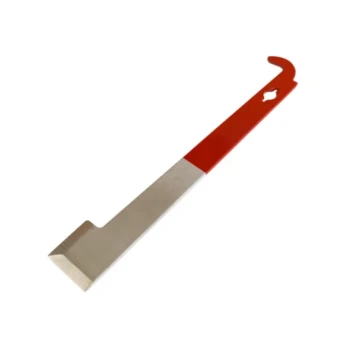
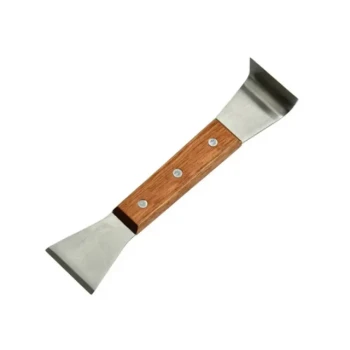
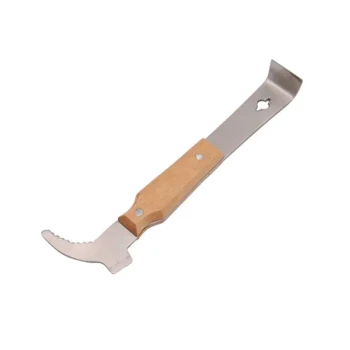
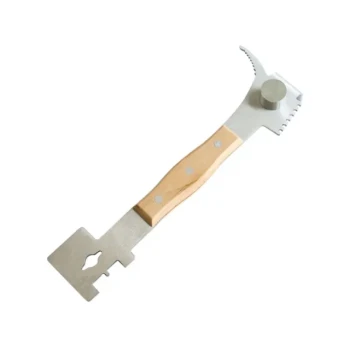
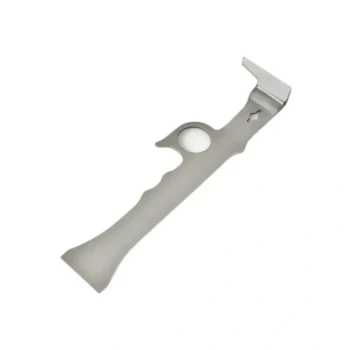
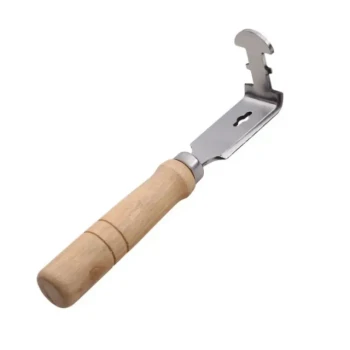
Professional hive tools are the mechanical key to unlocking a beehive. Honeybees naturally seal their environment with propolis, a resinous "bee glue" that bonds components together with significant strength. A professional hive tool provides the necessary physical leverage to pry these sealed components apart and scrape away excess wax without damaging the hive’s wooden structure.
The hive tool is not just a scraper; it is a precision lever designed to overcome biological welding. Its primary value is ensuring that the physical force required to inspect a colony does not result in the destruction of the hive's internal frames or external body.
The Physical Challenge of Beekeeping
The Propolis Bond
Honeybees use propolis to reinforce and waterproof their home. While beneficial for the colony, this substance effectively glues hive components together.
Moving these components by hand is often impossible due to the strength of this bond. Beekeepers attempting to inspect a hive without mechanical aid will find frames and covers immovably sealed.
Accumulation of Materials
Beyond propolis, hives accumulate excess beeswax on frame bars and walls. This buildup reduces the mobility of internal parts over time.
Regular maintenance requires the removal of this excess material to maintain proper spacing and function.
How the Hive Tool Solves the Problem
Mechanical Leverage
Professional hive tools feature specific leverage structures designed to apply force effectively.
By utilizing the principle of physical leverage, these tools allow a beekeeper to pry open lids and separate frames that are tightly sealed. This converts a difficult physical task into a manageable mechanical operation.
Material Hardness
These tools are constructed from high-hardness metal. This rigidity is essential for transferring force without the tool bending or snapping under pressure.
The strength of the metal allows it to cut through the structural bonding of propolis that would defeat weaker, makeshift tools.
Protection of Hive Infrastructure
A critical function of the hive tool is damage prevention. Prying wood with inappropriate tools often leads to splintering or cracking.
Hive tools allow for precise separation of components. They ensure that operations such as honey extraction and inspection do not compromise the integrity of the wooden or composite hive structure.
Understanding the Trade-offs
Manual Precision vs. Brute Force
While the hive tool is designed to prevent damage, it is a manual instrument that relies on the operator.
The tool is made of high-hardness metal, which is significantly harder than the wooden hive parts. If leverage is applied incorrectly or without care, the metal tool can still gouge or compress the softer wood of the frames.
Maintenance Requirements
The tool is durable, but it serves as a contact point for resin and wax.
To maintain its effectiveness as a scraper and lever, the tool itself requires cleaning to remove the very buildup it is used to clear from the hive.
Making the Right Choice for Your Goal
The hive tool is identified as one of the five essential items for beekeeping maintenance. Here is how to view its utility based on your objectives:
- If your primary focus is Colony Inspection: The hive tool is critical for mobility, allowing you to pry apart sealed frames to check on the queen and brood health.
- If your primary focus is Equipment Longevity: The tool is essential for preservation, allowing you to separate components without splintering the wood or damaging the hive body.
Investing in a professional hive tool is an investment in the structural integrity of your apiary.
Summary Table:
| Feature | Primary Function | Benefit to Beekeeping |
|---|---|---|
| Mechanical Leverage | Prying apart sealed components | Enables easy access to frames and lids without using brute force. |
| High-Hardness Metal | Cutting through propolis bonds | Provides the rigidity needed to break biological seals without tool deformation. |
| Sharp Scraping Edge | Removing excess wax & propolis | Maintains proper spacing and cleanliness within the hive environment. |
| Precision Design | Structural preservation | Minimizes splintering and damage to wooden hive bodies during inspection. |
Elevate Your Beekeeping Operation with HONESTBEE
At HONESTBEE, we understand that professional-grade tools are the foundation of a productive apiary. We provide commercial apiaries and distributors with a comprehensive wholesale range of high-performance beekeeping machinery and tools—from precision hive-making equipment to honey-filling systems and essential industry consumables.
Whether you are scaling your commercial production or supplying the next generation of beekeepers, our specialized hardware ensures maximum efficiency and long-term durability. Partner with us today to access wholesale pricing and industry-leading equipment tailored to your business needs.
References
- Veronica Ibitola Makinde, Pius Olanrewaju Ogunjobi. Counselling Farmers on Improving the Yield of Flowering Crops through Integrated Apicultural Farming for Wealth Creation. DOI: 10.22624/aims/humanities/v11n2p3
This article is also based on technical information from HonestBee Knowledge Base .
Related Products
- Professional Multi-Function Stainless Steel Hive Tool
- Professional Stainless Steel J-Hook Hive Tool
- Professional Stainless Steel Pry-Bar Hive Tool
- HONESTBEE Professional Long Handled Hive Tool with Precision Cutting Blade
- Professional Dual-End Stainless Steel Hive Tool for Beekeeping
People Also Ask
- What is the role of professional hive tools in routine apiary maintenance? Expert Tips for Hive Health and Longevity
- What are the benefits of a multi-functional hive tool? Streamline Your Apiary Workflow with One Tool
- What advantages do multi-functional hive tools offer? Maximize Your Apiary Efficiency and Workflow
- What are the common construction features of hive tools? Key Insights for Superior Beekeeping Efficiency
- Which intervention materials and management tools are used in commercial apiaries? Protect Your Bees from Pesticides