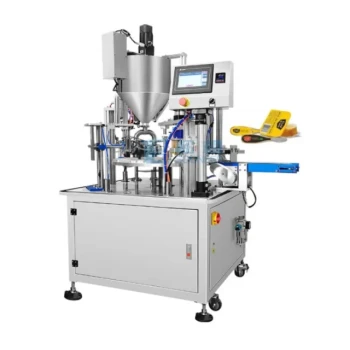
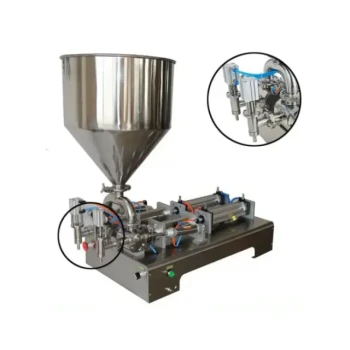
Honey-filling machines act as the critical bridge between raw agricultural output and sustainable conservation funding. By transforming raw honey into high-value commercial goods, this equipment generates the financial stability required for farmers to invest in long-term bee health and habitat protection.
The relationship between processing technology and ecology is fundamentally economic: automated equipment maximizes the market value of honey, creating a profitable cycle where commercial revenue directly funds the preservation of honeybee populations and their pollination environments.
The Economic Loop of Conservation
Transforming Raw Yield into Commercial Assets
According to the primary principles of the industry, conservation requires capital. Honey-filling machines transform primary agricultural products into standardized commercial goods with significantly higher market value. This conversion allows beekeepers to capture more revenue from the same biological resources.
Funding Colony Health
Once scientific management yields a stable bee population, high-efficiency equipment ensures that the commercial potential of that harvest is fully realized. The financial resources gained from this optimized processing are essential for funding continued investment in colony health and population management.
Elevating Standards to Access Premium Markets
Ensuring Consistency and Hygiene
Manual filling poses risks of secondary contamination, unsterilized equipment, and poor sealing. Professional filling machines integrate automated metering and sterilization functions to resolve these quality issues. This ensures products meet strict national and international hygiene standards.
Unlocking High-End Revenue Streams
To enter high-end retail channels or export markets, products must feature standardized packaging and labeling. By utilizing precise fluid control technology, machines create the professional brand image required for these lucrative markets. The resulting increase in comprehensive income further strengthens the beekeeper's ability to maintain their apiaries.
Supporting the Broader Agricultural Ecosystem
Incentivizing Pollination Services
While pollination is a priority for modern agriculture, honey and beeswax remain vital secondary products that support the beekeeper's bottom line. When processing equipment increases the added value of these by-products, it creates a stronger economic incentive for operators to provide crop pollination services.
Enhancing Industry Resilience
The adoption of improved technologies contributes to food security by maintaining active pollinator populations. Furthermore, utilizing equipment developed from locally available materials can reduce initial investment costs, increasing the adoption rate of technology and making the overall honey production system more resilient to economic fluctuations.
Understanding the Trade-offs
Initial Capital Investment
While automation drives long-term value, the upfront cost of industrial-grade filling machines can be significant. Beekeepers must balance the potential for high-precision efficiency against the financial risk of initial procurement, especially in smaller operations.
Complexity of Operations
Moving from manual to automated workflows introduces a layer of technical complexity. Achieving the benefits of high-speed processing and fluid control requires a commitment to maintenance and standardized workflows, which may require new skills or training for traditional operators.
Making the Right Choice for Your Goal
To leverage processing equipment for both ecological and economic success, align your machinery choices with your strategic objectives.
- If your primary focus is Ecological Conservation: Prioritize equipment that maximizes profit margins per unit, ensuring you have the surplus capital required to reinvest in habitat protection and pollination services.
- If your primary focus is Commercial Expansion: Invest in machines with integrated sterilization and high-precision metering to meet the strict entry requirements of high-end export markets.
- If your primary focus is Operational Resilience: Consider equipment utilizing locally available materials to lower initial costs and reduce dependency on specialized imported supply chains.
Ultimately, the most effective conservation strategy in beekeeping is a financially viable business model supported by efficient, high-quality processing infrastructure.
Summary Table:
| Benefit Category | Impact of Processing Equipment | Ecological Contribution |
|---|---|---|
| Economic Value | Transforms raw honey into premium commercial assets | Generates funds for habitat protection and bee health |
| Market Access | Automated sterilization & precision metering | Meets global standards, increasing income for apiary upkeep |
| Agricultural Synergy | Increases value of by-products (honey/wax) | Incentivizes beekeepers to provide vital pollination services |
| Industry Resilience | Improves efficiency through professional workflows | Ensures food security by maintaining stable pollinator populations |
Scale Your Impact with HONESTBEE Professional Solutions
At HONESTBEE, we understand that a sustainable beekeeping industry requires a balance of ecological health and commercial profitability. We empower commercial apiaries and distributors with the professional tools needed to maximize every harvest. From high-precision honey-filling machines to advanced beekeeping machinery and essential consumables, our comprehensive wholesale offering ensures your operation meets the highest market standards.
Our Value to You:
- Turnkey Equipment Solutions: Specialized hardware including hive-making and honey-processing machinery.
- Standardized Quality: Achieve the hygiene and consistency required for high-end retail and export markets.
- Industry Expertise: We supply the full spectrum of tools to reduce operational complexity and increase your ROI.
Ready to transform your production efficiency and fund your conservation goals? Contact HONESTBEE Today to explore our wholesale catalog and customized equipment solutions.
References
- Kennedy S. Halvorson, P. Boettcher. Protection of honeybees and other pollinators: one global study. DOI: 10.1007/s13592-021-00841-1
This article is also based on technical information from HonestBee Knowledge Base .
Related Products
- Precision Durable Efficient HONESTBEE Rotary Honey Filling Machine
- Economy Small Honey Filling Machine Honey Bottle Filler Packaging Machine
- Fully Automatic Honey Filling Packaging Machine for Processing Line
- Commercial Rotary Honey Filling Machine for Production
- Semi Automatic Small Honey Bottle Filling Machine Honey Filler
People Also Ask
- What are the common types of bottling machines used for honey? Choosing the Right Solution for Your Apiary
- What quality control role does professional honey filling equipment perform? Ensure Consistency and Product Stability
- How do high-precision honey filling machines ensure quality? Optimize Your Commercial Production with HONESTBEE
- How do honey filling machines work? Achieve Precision & Speed for Your Apiary
- What is a key feature of the new generation of the honey filling machine? The Advanced Electronic Control Unit