Honey harvesting and weighing equipment serve as the critical validation tools in the development of mite-resistant bee stocks. By providing precise, quantitative data on honey production, this equipment allows breeders to objectively compare the commercial viability of naturally resistant colonies against standard, high-production commercial lines.
Core Takeaway The mere survival of a honeybee colony against mites is not enough for the industry; the colony must also remain profitable. Weighing equipment quantifies the "fitness cost" of resistance, enabling breeders to select lineages that balance robust defense mechanisms with high honey yields.
The Role of Quantitative Data
Benchmarking Against Commercial Standards
To determine if a mite-resistant population is commercially viable, it must be measured against the current industry standard.
Harvesting and weighing equipment provide the raw metrics necessary to compare resistant colonies directly with mite-susceptible commercial populations.
Without this data, "resistance" is merely a biological observation rather than a commercial asset.
Identifying Fitness Costs
Natural resistance to pests often requires energy that the bees would otherwise invest in foraging and hoarding nectar.
Weighing equipment reveals these potential "fitness costs" by highlighting if a resistant colony produces significantly less honey than its non-resistant counterparts.
If a colony survives mites but fails to produce a surplus of honey, it holds little value for a commercial beekeeper.
Optimizing Breeding Programs
Balancing Defense and Productivity
The ultimate goal of commercial breeding is not just survival, but efficient production without chemical intervention.
Breeders utilize the data from weighing systems to identify genetic lines that possess the "sweet spot": adequate resistance traits combined with high productivity.
This facilitates a selection process where only the most well-rounded colonies are propagated for the market.
The Necessity of Standardization
Accurate weighing relies on the use of standardized hardware components during management.
Standardized hives and frames ensure that weight data is consistent across vast numbers of colonies, removing variables that could skew the results.
This systematic approach transforms manual harvesting into a data-driven science, enabling large-scale natural selection.
Understanding the Trade-offs
The Risk of Tunnel Vision
Focusing exclusively on mite resistance can lead to the accidental selection of aggressive or low-yield bees.
If breeders do not rigorously use weighing equipment to verify yield, they risk releasing stock that is hardy but economically useless.
Interpreting Variability
Data from harvesting equipment must be analyzed over time, as environmental factors can influence yield as much as genetics.
A single season of low yield in a resistant colony does not always indicate a genetic fitness cost; consistent long-term weighing is required to confirm the trend.
Making the Right Choice for Your Goal
To apply these insights effectively, consider your specific role in the apiculture industry:
- If your primary focus is Commercial Breeding: Prioritize weighing equipment to cull resistant lines that demonstrate a yield reduction of more than 10-15% compared to commercial standards.
- If your primary focus is Honey Production: Use weighing data to identify which resistant stocks can replace your current colonies without lowering your total annual tonnage.
True commercial success lies in finding the intersection where biological resilience meets economic output.
Summary Table:
| Evaluation Metric | Role of Equipment | Commercial Significance |
|---|---|---|
| Yield Benchmarking | Compares resistant colonies to standard lines | Determines if resistance is a profitable asset |
| Fitness Cost Analysis | Measures nectar hoarding vs. defense energy | Identifies colonies that maintain high production |
| Genetic Selection | Provides data for 'sweet spot' identification | Ensures only high-performing survivors are bred |
| Standardization | Ensures consistent data across hardware | Facilitates large-scale, data-driven selection |
Maximize Your Apiary's Profitability with HONESTBEE
Are you looking to balance biological resilience with high economic output? HONESTBEE specializes in supporting commercial apiaries and distributors with the precise tools needed to evaluate and scale your operations. From advanced honey-filling machines and hive-making hardware to a full spectrum of beekeeping machinery and essential consumables, we provide the industrial-grade equipment necessary to transform your beekeeping into a data-driven success.
Partner with us to access:
- Comprehensive wholesale offerings for large-scale operations.
- Specialized machinery designed for efficiency and durability.
- A wide array of honey-themed cultural merchandise and consumables.
Contact HONESTBEE today to equip your business with the professional tools required to identify and propagate the next generation of high-yield, mite-resistant bees!
References
- Barbara Locke. Natural Varroa mite-surviving Apis mellifera honeybee populations. DOI: 10.1007/s13592-015-0412-8
This article is also based on technical information from HonestBee Knowledge Base .
Related Products
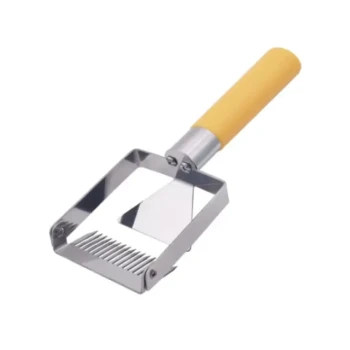
- Stainless Steel Pivoting Honey Uncapping Fork with Plastic Handle
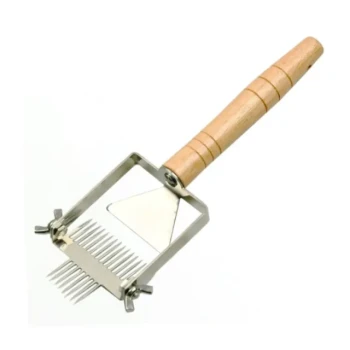
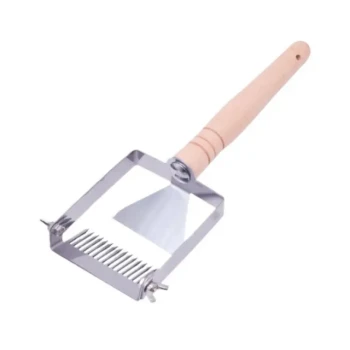
- All-Stainless Steel Pivoting Honey Uncapping Fork for Beekeeping
- Professional Stainless Steel Pry-Bar Hive Tool
- Electric Honey Press Machine for Squeezing Honey Comb Press Equipment
- HONESTBEE 2 Frame Manual Acrylic Honey Extractor Beekeeping Equipment
People Also Ask
- What is the design purpose of honey uncapping forks and honey uncapping tanks? Maximize Your Harvest Efficiency
- How does a honey uncapping fork supplement the use of an uncapping knife? Boost Your Honey Yield and Extraction Efficiency
- What are the essential tools for uncapping honey frames? Choose the Right Tool for Your Apiary
- What other tools are available for honey uncapping besides knives? Find the Right Tool for Your Apiary's Scale
- What tools are used for honey uncapping? Choose the Right Knife for Your Harvest