Honey supers and queen excluders function as an integrated system to compartmentalize the beehive for maximum efficiency. The super provides vertical expansion space dedicated to nectar storage, while the excluder serves as a precise filtration device that confines the queen to the lower brood box. This mechanical separation ensures that the upper reserves are filled exclusively with honey, keeping the harvest clean and distinct from the colony's nursery.
Core Takeaway By establishing a strict physical boundary between the brood rearing area and the honey storage area, this equipment combination maximizes harvest purity and simplifies extraction without impeding the worker bees' natural foraging workflow.
The Mechanics of Separation
Vertical Expansion via Supers
Honey supers are modular boxes added to the hive to increase its internal volume. This vertical expansion is critical during nectar flows, as it provides the colony with the necessary storage area to process and cure incoming nectar. By preventing overcrowding, supers also help suppress the colony's natural impulse to swarm.
The Precision of the Queen Excluder
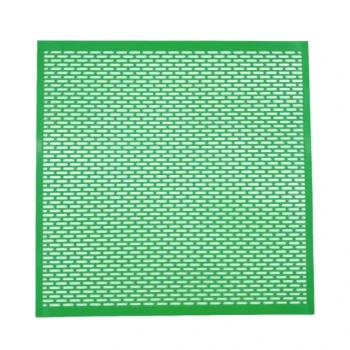
The queen excluder is a grid placed directly between the brood chamber and the honey supers. It utilizes specific gap widths calibrated to the anatomy of the bees. These gaps allow the smaller worker bees to pass through freely to store nectar but form a physical barrier that the larger queen cannot penetrate.
Efficiency Gains in Production
Guaranteeing Honey Purity
The primary efficiency gain is the assurance of purity. Because the queen is physically restricted from the supers, she cannot lay eggs in the honey frames. This results in a harvest that is completely free of larvae, pupae, and "brood juice," ensuring a cleaner product with higher commercial value.
Streamlining Extraction
Using an excluder significantly simplifies the harvesting process. Beekeepers do not need to inspect individual frames to sort brood from honey during collection. This separation allows for the use of professional honey extractors and standardized equipment, which facilitates non-destructive collection and consistent output.
Energy Redirection
In advanced management scenarios, the excluder (or specific isolator) can be used to temporarily confine the queen to halt egg-laying during peak flows. This redirects the colony's energy resources—normally consumed by feeding larvae—entirely toward nectar collection and processing. This intervention can significantly enhance the production efficiency of individual colonies.
Understanding Strategic Trade-offs
Colony Growth vs. Honey Yield
While restricting the queen enhances honey production, it can impact colony dynamics if managed aggressively. Using an excluder to halt egg-laying redirects energy to foraging, but it effectively pauses the creation of the next generation of bees.
Management Requirements
Relying on this equipment requires standardized inspection protocols. Insufficient management or improper placement can lead to production bottlenecks. Beekeepers must ensure the excluder does not become a barrier to the workers' movement, which could accidentally limit the storage capacity they are trying to increase.
Making the Right Choice for Your Goal
To optimize your apiary management, apply the equipment based on your specific production targets:
- If your primary focus is Maximum Purity: Place the queen excluder immediately above the brood box before adding supers to ensure a zero-tolerance barrier against larvae in your harvest.
- If your primary focus is Peak Volume: Utilize the excluder to temporarily restrict brood rearing during major nectar flows, redirecting the colony's energy entirely toward resource collection.
Properly calibrated equipment transforms a beehive from a simple shelter into a high-efficiency production unit.
Summary Table:
| Feature | Honey Super Function | Queen Excluder Function | Production Benefit |
|---|---|---|---|
| Primary Role | Vertical storage expansion | Physical filtration/boundary | Organized hive structure |
| Nectar/Honey | Provides space for curing | Allows worker passage | Ensures 100% honey purity |
| Brood Control | Prevents overcrowding | Restricts queen movement | Zero larvae in honey frames |
| Efficiency | Supports high-volume flow | Simplifies harvesting | Streamlined extraction process |
Elevate Your Honey Production with HONESTBEE Professional Equipment
To achieve maximum purity and efficiency, commercial apiaries and distributors need reliable, precision-engineered tools. HONESTBEE provides the full spectrum of beekeeping hardware, from high-grade queen excluders and modular honey supers to advanced honey-filling machines.
Whether you are scaling your commercial operations or supplying the industry, our comprehensive wholesale offering ensures you have the specialized tools and consumables required for success.
Ready to optimize your harvest? Contact us today to explore our wholesale solutions and see how HONESTBEE can grow your business.
References
- Michael Simone-Finstrom, David R. Tarpy. Migratory management and environmental conditions affect lifespan and oxidative stress in honey bees. DOI: 10.1038/srep32023
This article is also based on technical information from HonestBee Knowledge Base .
Related Products
- High-Efficiency Diamond Maze Bee Escape for Clearing Supers
- Durable 16 Way Circular Bee Escape for Efficient Honey Harvesting
- Circular Labyrinth Bee Escape for Efficient Hive Management
- High Performance Plastic Queen Excluder for Beekeeping and Apiary Management
- Premium Wood Framed Metal Wire Queen Bee Excluder
People Also Ask
- What is a bee escape and why is it used in beekeeping? A Guide to Gentle Honey Harvesting
- How can bees be cleared off honey supers in a Langstroth hive? Use a Gentle Bee Escape
- What are some common types of bee escapes and how are they typically mounted? Optimize Your Honey Harvest Efficiency
- How can a bee escape be adapted for use in a Warre hive? Effective Customization Methods for Successful Harvesting
- What is the primary function of a bee escape? Simplify Your Honey Harvest with Stress-Free Hive Management