Honeybees convert nectar into honey through enzymatic processing and controlled evaporation. Worker bees collect nectar in their honey stomachs, where enzymes begin breaking down complex sugars, especially sucrose, into simpler sugars such as glucose and fructose. Bees then deposit the liquid into wax cells and fan their wings to remove water until the honey reaches a stable moisture level, typically below about 18% to 18.5%, before sealing the cells with wax.
Moisture reduction is the control point that turns perishable nectar into stable honey. For commercial processors, measuring and managing water content protects against fermentation, improves pumpability and filling accuracy, and supports consistent shelf life.
How Bees Make Honey Stable
Nectar Begins as a Dilute Liquid
Fresh nectar can contain substantially more water than finished honey. Its sugar concentration varies with the plant source and environmental humidity, so nectar collected during humid conditions may require more evaporation before it is ready for storage.
Honey is naturally hygroscopic, meaning it readily absorbs moisture from the surrounding air. This makes both hive conditions and commercial processing environments important to final product stability.
Enzymes Change the Sugar Profile
Bees mix nectar with enzymes produced by glands in their heads. These enzymes help convert sucrose into glucose and fructose while also contributing to honey's characteristic composition and flavor.
The result is not simply concentrated nectar. It is a chemically transformed food containing sugars, water, organic acids, proteins, minerals, and aromatic compounds.
Wing Fanning Removes Excess Water
Worker bees place the processed nectar in wax cells and spread it across the available surface area. They then fan their wings to circulate air through the hive and accelerate evaporation.
Once the honey has reached an appropriate density, the bees cap the cells with beeswax. For beekeepers, capped comb is a useful harvest indicator because it generally shows that the colony has completed most of the ripening process.
Why Moisture Determines Commercial Honey Quality
Excess Water Enables Fermentation
Honey with moisture above approximately 18% to 19% can support the growth of sugar-tolerant yeasts, including species of Zygosaccharomyces and Saccharomyces. These yeasts consume sugars and produce alcohol, acids, gas, and other compounds associated with fermentation and spoilage.
This risk continues after extraction. Honey that appears acceptable at harvest can ferment in storage containers, tanks, or finished packages if its moisture level is too high.
Moisture Controls Shelf Life
Average honey contains roughly 17.2% water, although the exact value depends on floral origin and processing conditions. Keeping water content within an appropriate safety range reduces the likelihood of fermentation and helps preserve product quality during distribution and storage.
For wholesalers, distributors, and private-label buyers, moisture control is therefore more than a production specification. It is a direct protection against leakage of value through rejected batches, customer complaints, and shortened shelf life.
Moisture Affects Viscosity and Filling
Water content directly influences honey viscosity. Higher-moisture honey may flow differently through pumps, filters, pipes, and filling valves, making automated volume control less consistent.
The glucose-to-fructose ratio also affects crystallization. Crystallized or highly viscous honey may require different heating, conveying, and filling parameters than a more fluid product.
What Moisture Reduction Means for Processing Equipment
Refractometers Establish the Starting Point
Operators should measure moisture before extraction, bulk storage, and packaging. Refractometers provide a practical way to determine whether honey is sufficiently ripened for processing or requires additional moisture management.
Measurement should be part of the receiving and production workflow, not an occasional final inspection. It gives equipment operators the information needed to select suitable handling conditions.
Climate-Controlled Rooms Reduce Comb Moisture
Commercial apiaries can use dehumidifiers and climate-controlled rooms to circulate warm, dry air over honey combs before extraction. The supplementary reference describes operating conditions around 35°C to 38°C, with moisture reduction of approximately 0.5% per 12 hours under suitable conditions.
This approach supports ripening before the honey enters extraction equipment. It is especially useful when harvest timing, weather, or high ambient humidity has left combs above the desired moisture level.
Heating Tanks and Drums Support Controlled Processing
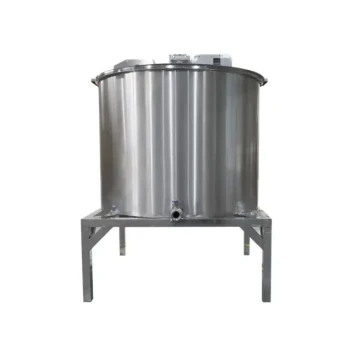
Double-jacketed pre-heating tanks and heated revolving drums can help evaporate excess water and improve honey flow. These systems may also be used for heat treatment intended to reduce yeast activity.
Heat must be controlled carefully. Excessive or prolonged exposure can raise Hydroxymethylfurfural, or HMF, levels and diminish natural flavors or heat-sensitive enzymes. Equipment selection should therefore include accurate temperature control, monitoring, and sufficient residence-time management.
Dehumidification and Vacuum Systems Add Capacity
Vacuum dehumidifiers and dedicated moisture-reduction units can accelerate evaporation under controlled conditions. They help commercial operations standardize honey across different harvests instead of depending entirely on natural hive ripening.
For high-volume processors, this can improve production planning and reduce the likelihood that variable incoming moisture will interrupt extraction or packaging schedules.
Why Harvest Timing Matters
Capped Comb Usually Signals Readiness
Bees generally cap cells after they have reduced nectar to a stable honey density. Harvesting capped comb helps beekeepers avoid placing immature, high-moisture honey into extractors and storage tanks.
This is not a substitute for measurement. Floral source, weather, hive conditions, and localized uncapped areas can create variation, so moisture testing remains necessary for commercial quality control.
Premature Extraction Creates Downstream Risk
If honey is extracted before enzymatic conversion and evaporation are complete, the resulting product may contain too much water. That moisture can cause fermentation during storage and create inconsistent behavior in pumps and filling machines.
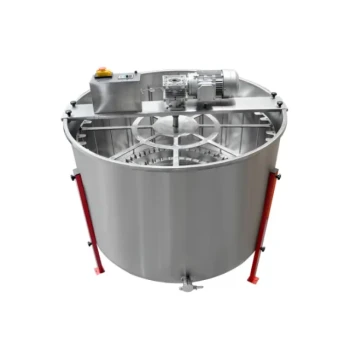
Uncapping machines, centrifugal extractors, filters, and fillers all operate more reliably when the incoming honey has already reached an appropriate moisture level.
Honey Supers Support Efficient Ripening
Dedicated honey supers give colonies additional storage space above the brood chambers. This allows bees to store and dry surplus nectar without crowding the brood area.
For commercial beekeepers, properly timed super placement also supports efficient frame removal and more predictable loading of extraction equipment during harvest.
Understanding the Trade-offs
More Heat Is Not Always Better
Heating can reduce viscosity and assist evaporation, but higher temperature does not automatically produce better honey. Uncontrolled heat may damage aroma, alter natural characteristics, and increase HMF formation.
Processing equipment should provide the lowest effective thermal load for the intended result, with temperature and exposure time recorded as operating parameters.
Moisture Reduction Requires Environmental Control
Honey can absorb moisture again after drying. Open tanks, humid rooms, uncovered combs, and poorly sealed storage can undermine earlier moisture-reduction work.
Dehumidifiers, covered sump tanks, controlled room conditions, and disciplined transfer procedures help preserve the target moisture level throughout processing.
Excessive Drying Can Complicate Handling
Very low moisture content can increase viscosity and make honey harder to pump or dispense. Crystallization behavior can create an additional handling challenge depending on the glucose-to-fructose ratio.
The objective is not simply to remove as much water as possible. It is to achieve a stable, specification-compliant product that remains compatible with the selected extraction, filtration, storage, and filling equipment.
Standardization Requires the Right Equipment Package
A moisture-reduction unit alone does not guarantee consistent output. Commercial systems may also require refractometers, climate control, pre-heating tanks, pumps, filters, storage vessels, and filling equipment configured for the honey's viscosity and crystallization characteristics.
For distributors and B2B resellers, a full equipment portfolio and responsive technical support are valuable because customers typically need an integrated process rather than an isolated machine.
Making the Right Choice for Your Goal
The correct approach depends on whether the priority is product stability, throughput, automation, or service reliability.
- If your primary focus is fermentation prevention: Measure incoming honey with a refractometer and reduce moisture to an appropriate safe range before bulk storage or packaging.
- If your primary focus is high-volume production: Combine controlled drying or dehumidification with suitable tanks, pumps, filtration, and filling equipment so moisture control does not become a production bottleneck.
- If your primary focus is preserving natural quality: Use controlled temperatures and residence times, monitoring heat exposure to limit HMF formation and protect flavor and heat-sensitive components.
- If your primary focus is equipment sourcing: Work with a supplier that can provide the full processing chain, rapid technical response, dedicated service, and efficient fulfillment across extraction, moisture reduction, filtration, and filling needs.
Reliable honey processing begins with treating moisture as a measurable process variable, not an afterthought.
Summary Table:
| Factor | Impact on Honey Quality | Relevance to Equipment |
|---|---|---|
| Moisture >18.5% | Fermentation & spoilage | Requires moisture reduction systems |
| Enzyme activity | Sugar conversion & flavor | Supports natural ripening |
| Viscosity | Flow & filling accuracy | Influences pump and filler selection |
| Heat exposure | HMF formation & flavor loss | Needs precise temperature control |
| Crystallization | Texture & handling | Affects storage and packaging equipment |
| Ambient humidity | Hygroscopic reabsorption | Necessitates climate control and sealed storage |
Ensure consistent honey quality and production efficiency with HONESTBEE's complete commercial processing line — from refractometers and moisture reduction units to heated tanks, pumps, and filling machines. Our one-stop sourcing, rapid response, and dedicated support help distributors and beekeepers optimize yields, reduce waste, and meet shelf-life standards. Get tailored equipment for your specific moisture goals — contact our team today for a free consultation and custom solution.
Related Products
- 32 Frame Commercial Electric Honey Extractor for Beekeeping and Honey Production
- Electric Double Wall Honey Filtering Machine Purifier Equipment for Honey Processing Plant
- 40 Frame Commercial Electric Honey Extractor for Beekeeping
- Commercial 48-Frame Stainless Steel Honey Extractor
- Professional Honey Filter with Tripod Support Stand
People Also Ask
- What are commercial honey extractors used for? Boost Your Apiary's Efficiency & Profitability
- What is a commercial honey extractor? The Essential High-Volume Solution for Large Apiaries
- Who are commercial honey extractors designed for? Scaling Your Industrial Beekeeping Success
- How is honey extracted commercially? Maximize Your Apiary's Efficiency and Honey Yield
- What are commercial honey extractors and for what scale of beekeeping are they intended? Scale Your 200+ Colony Apiary