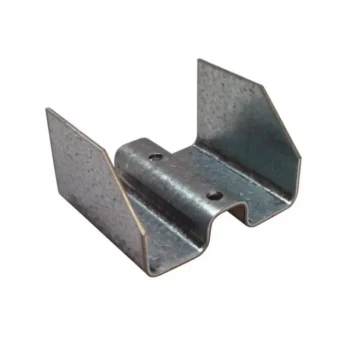
Hot-dip galvanized metal sheets and anti-slip sleeves act as mechanical friction barriers. When installed around the base of trees hosting beehives, the smooth surface of these materials prevents climbing predators, such as honey badgers, from gripping the trunk. This simple alteration of physical friction effectively blocks access to the hive, significantly reducing biological damage.
By eliminating the threat of climbing predators, these barriers can reduce colony loss rates by approximately 30%, serving as a vital line of defense in resource-scarce environments.
The Mechanics of Predator Exclusion
Altering Physical Friction
The core function of galvanized sheets or anti-slip sleeves is the modification of surface texture. Tree bark naturally provides the roughness and grip required for predators to climb.
By covering the bark with a smooth metal surface, you effectively remove the friction points necessary for ascent. This renders the tree unclimbable for specific biological threats, most notably honey badgers.
Creating a Secure Perimeter
These components are not installed on the hive itself, but around the tree trunk or stand base. This establishes a perimeter of safety at the ground level.
Because the predator cannot bypass this lower barrier, the hive located higher up remains undisturbed. This prevents the physical destruction of the hive structure and the consumption of the colony's resources.
Contextual Importance in Arid Regions
Mitigating Biological Damage
In arid regions, resources are scarce for all species, making beehives highly attractive targets for predators.
The primary reference indicates that using these barriers reduces colony loss rates by roughly 30%. This preservation is critical in dry climates where colony recovery is slow due to limited flora.
Supporting Energy Conservation
While the metal sheets primarily address predation, they play a role in the colony's broader energy budget.
When a colony is not defending against or rebuilding after a badger attack, bees can redirect energy toward foraging and internal regulation. In arid environments, minimizing stress allows the colony to focus on survival during limited nectar flows.
Understanding the Trade-offs
Specificity of Protection
It is important to recognize that these sleeves are a single-vector defense. They specifically target climbing predators.
They offer no protection against airborne pests, such as wasps or moths, nor do they protect against microbial diseases. They must be viewed as part of a physical security system, not a cure-all.
Environmental Defense vs. Predator Defense
While metal sheets protect against biological threats, they do not solve the environmental challenges of an arid region.
As noted in supplementary findings, arid climates require hives with superior insulation to manage internal temperature and humidity. The metal sheets do not provide this insulation; they simply ensure the hive survives long enough for insulation strategies to matter.
Making the Right Choice for Your Goal
To maximize hive survival in arid environments, you must address both physical security and environmental stress.
- If your primary focus is preventing colony destruction: Install hot-dip galvanized sheets around tree bases to create a friction barrier against honey badgers and reduce loss rates by ~30%.
- If your primary focus is optimizing honey production: Combine these predator barriers with insulated hive structures to reduce the energy the colony spends on temperature regulation.
Effective hive management in arid regions requires a dual approach: blocking predators with smooth barriers and blocking heat with optimized insulation.
Summary Table:
| Feature | Mechanism | Benefit in Arid Regions |
|---|---|---|
| Material Surface | Smooth, low-friction texture | Prevents honey badgers from climbing tree trunks |
| Installation Site | Base of trees or hive stands | Creates a secure ground-level perimeter |
| Colony Protection | Mechanical exclusion | Reduces colony loss rates by approximately 30% |
| Resource Focus | Minimizes physical stress | Allows bees to focus on foraging during scarce nectar flows |
Secure Your Apiary’s Future with HONESTBEE
Protecting your colonies in harsh, resource-scarce environments requires more than just high-quality hives—it demands professional-grade physical security and climate management. HONESTBEE specializes in serving commercial apiaries and distributors with a complete range of wholesale beekeeping solutions.
From durable hive-making and honey-filling machinery to essential consumables and predator-resistant hardware, we provide the tools you need to minimize loss and maximize yield. Whether you are scaling a commercial operation or supplying the industry, our expertise ensures your success.
Ready to upgrade your equipment and safeguard your honey production?
Contact HONESTBEE Today to discuss our wholesale offerings and customized machinery solutions!
References
- Nashon K.R. Mushimba, Elijah M. Mutungi. The Socio-Economics, Culture and Ecology of Bee-Keeping Among the Akamba Community of Southern Kenya. DOI: 10.1080/09709274.2001.11907604
This article is also based on technical information from HonestBee Knowledge Base .
Related Products
- Heavy-Duty Galvanized Steel W-Style Pallet Clip
- Professional Galvanized Steel Frame Rest for Beehives
- Professional Galvanized Hive Strap with Secure Locking Buckle for Beekeeping
People Also Ask
- How do migratory beekeepers transport their hives? A Guide to Nocturnal, Large-Scale Bee Movement
- How is the metal clip of a beehive connector attached? Simple Fastening Guide for Secure Hives
- How does a four-colony pallet function within migratory beekeeping? Scale Your Apiary with Industrial Logistics
- How do industrial four-way migratory pallets improve efficiency? Mechanized Apiary Management and Logistics
- How is the metal clip attached to the attachment? A Guide to Secure Mechanical Fastening