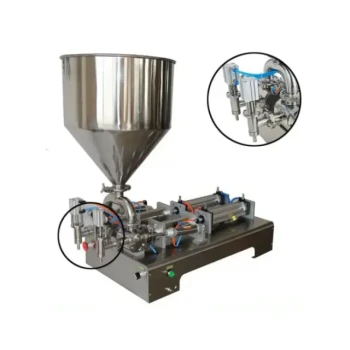
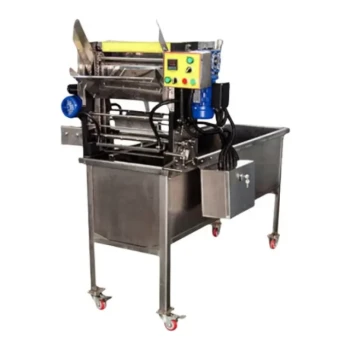
Industrial-grade automated honey filling machines fundamentally mitigate production risks by decoupling packaging capacity from the limitations of manual labor. They provide a stable, high-velocity bridge between extraction and the market, ensuring that large volumes of raw honey can be processed rapidly during peak harvest years. By standardizing this critical transition, these systems prevent secondary spoilage, reduce waste, and secure the financial predictability of the operation.
By eliminating the bottleneck of manual packaging, industrial automation transforms the harvest process from a variable risk into a controlled, standardized operation. This consistency is the key to maintaining supply chain resilience and stabilizing income expectations.
Mitigating Volume-Related Risks
Handling Peak Harvest Surges
Commercial apiaries often face the "risk of abundance," where a bumper crop exceeds manual processing capacity. Industrial automation allows facilities to rapidly process these large volumes without delay. This speed is critical for capitalizing on high-yield years rather than letting excess inventory sit unprocessed.
Preventing Secondary Spoilage
The primary reference highlights that slow manual filling creates a window for spoilage. Automated systems reduce the exposure time of raw honey. By accelerating the move from bulk storage to sealed containers, the risk of secondary loss due to environmental factors is minimized.
Enhancing Quality Control and Standardization
Precision Volume Control
Manual filling carries the financial risk of overfilling (product loss) and the regulatory risk of underfilling (compliance violations). Automated machines utilize high-precision metering pumps and sensors to ensure exact fill volumes. This significantly reduces raw material waste and ensures every unit sold yields the calculated profit margin.
Minimizing Contamination
Human interaction is the primary vector for contamination in food processing. Industrial machines use technologies like vacuum suction and sterile filling heads to maintain a hygienic environment. This protects the physical and chemical indicators of the honey—such as Hydroxymethylfurfural (HMF) levels—ensuring the final product meets strict food safety standards.
Preserving Sensory Characteristics
Oxidation can degrade the unique flavor profiles of honey. Automated sealing capabilities reduce the honey's contact with air. This preservation of sensory characteristics protects the market value of differentiated or single-origin honey products.
Operational Resilience
Stabilizing Income Expectations
Reliance on manual labor creates volatility in production schedules. By ensuring a standardized, predictable throughput, automated systems help apiaries meet delivery deadlines reliably. This reliability stabilizes income streams and strengthens relationships with large-scale distributors.
Reallocating Technical Focus
Automating repetitive packaging tasks reduces the dependency on temporary labor. This allows beekeepers and researchers to redirect their attention to core technical activities. Resources can be shifted toward population genetic improvement and honeybee health monitoring, which are the true drivers of long-term apiary success.
Understanding the Trade-offs
Capital Expenditure vs. Operational Cost
While automation lowers labor costs, it introduces a significant upfront capital expense. This shifts the financial risk profile of the apiary from variable operational expenses (wages) to fixed capital costs, which requires careful ROI calculation based on annual volume.
Maintenance Dependencies
High-precision equipment introduces a new risk: technical downtime. Reliance on complex sensors and pumping systems means that a mechanical failure can halt production. Apiaries must balance this by investing in preventive maintenance and technical training, rather than just general labor.
Optimizing Your Production Strategy
To determine if industrial automation aligns with your current risk management profile, consider your specific operational bottlenecks.
- If your primary focus is Volume Security: Prioritize machines with high flow rates to ensure you can process peak-year harvests without a backlog that leads to spoilage.
- If your primary focus is Brand Reputation: Select equipment with advanced vacuum suction and sealing technology to minimize oxidation and guarantee sterile, consistent product quality.
Investing in the right automation level does not just speed up production; it insures your harvest against the unpredictability of nature and the market.
Summary Table:
| Risk Category | Manual Filling Challenges | Automated Machine Solutions | Impact on Apiary |
|---|---|---|---|
| Volume Surges | Bottlenecks & spoilage during peak harvest | High-velocity processing & rapid throughput | Secures large-scale inventory |
| Fill Accuracy | Human error (underfill/overfill) | High-precision metering pumps | Maximizes ROI & compliance |
| Contamination | High human contact risk | Vacuum suction & sterile filling heads | Ensures food safety & HMF standards |
| Consistency | Variable production schedules | Standardized, predictable output | Stabilizes supply chain & income |
Streamline Your Commercial Apiary with HONESTBEE
Transitioning from manual labor to high-capacity automation is the most effective way to protect your harvest and stabilize your margins. HONESTBEE specializes in empowering commercial apiaries and global distributors with professional-grade beekeeping infrastructure. From high-precision honey-filling machines and automated hive-making equipment to a comprehensive range of industry consumables and honey-themed merchandise, we provide the tools you need to scale safely.
Ready to eliminate production bottlenecks and secure your supply chain?
Contact us today to discuss your wholesale equipment needs!
References
- Ilaria Colivicchi, Vincenzo Russo. A parametric insurance policy for beekeepers and honey production: random forest regressions and real-world pricing. DOI: 10.1007/s10203-025-00508-x
This article is also based on technical information from HonestBee Knowledge Base .
Related Products
- Fully Automatic Honey Filling Packaging Machine for Processing Line
- Automatic Honey Filling and Filtering Machine for Beekeeping Bottle Filling
- Precision Durable Efficient HONESTBEE Rotary Honey Filling Machine
- Precision Automated Packaging Turntable Honey Spoon Filling Sealing Packing Machine
- Semi Automatic Small Honey Bottle Filling Machine Honey Filler
People Also Ask
- Why are fully automatic honey filling and packaging lines essential? Boost Your Honey's Market Value and Quality
- What is a fully-automatic honey filler? Streamline Your Production with High-Precision Automation
- How do automated honey filling and packaging machines affect profitability? Boost Margins with HONESTBEE Technology
- How do automated honey filling and packaging machines contribute to the market value of honey products? Maximize Your ROI
- How do industrial-grade automated honey filling and packaging machines mitigate the risk of physical contamination?