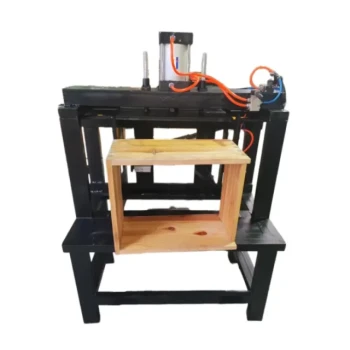
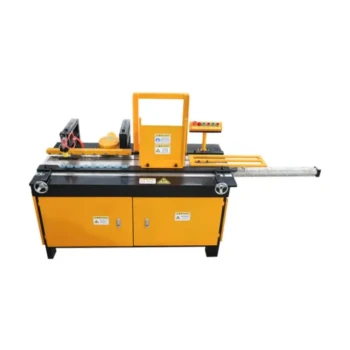
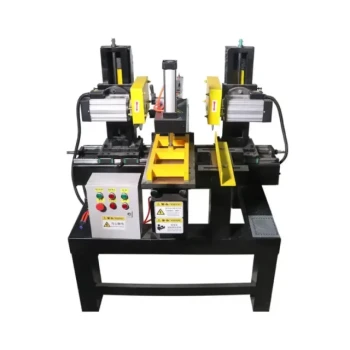
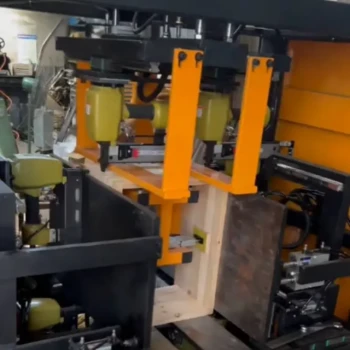
Industrial-grade hive-making machines revolutionize efficiency primarily through precise standardization. By manufacturing hive bodies and internal frames with exact dimensional consistency, these machines ensure every component is fully interchangeable across the entire apiary. This precision eliminates the need for manual adjustments during assembly and guarantees technical compatibility with downstream automated equipment, such as centrifugal extractors and filling machines.
The core operational advantage is the transition from artisanal variation to industrial uniformity. By establishing a rigid hardware standard, these machines allow apiaries to scale operations rapidly without the bottleneck of mismatched equipment or labor-intensive maintenance.
The Power of Standardization and Compatibility
Achieving Dimensional Consistency
In manual hive construction, slight variations are inevitable. Industrial machines eliminate this variable, producing components with high-precision dimensions. This ensures that a frame from one hive fits perfectly into any other hive in the operation.
Enabling Downstream Automation
Efficiency in a modern apiary extends beyond the bees; it includes the processing line. As noted in the primary reference, machine-made hives are critical for the smooth operation of automated centrifugal extractors. If frames vary in size, they can jam machinery or cause imbalances, halting production lines.
Simplifying Maintenance Workflows
Standardized components significantly reduce the complexity of routine maintenance. When a part breaks, it can be swapped immediately with a stock replacement without sizing or modification. This reduces the labor time required per unit, allowing staff to manage a larger number of colonies effectively.
Scaling and Logistics Optimization
Accelerating Production Speed
Industrial woodworking machinery utilizes automated assembly processes that vastly outpace manual labor. This allows commercial operations to rapidly scale their infrastructure to meet pollination demands or honey flow seasons without incurring prohibitive labor costs.
Facilitating Migratory Beekeeping
Commercial beekeeping often requires moving hives across regions for pollination services. Machine-produced hives offer superior structural stability, making them more resistant to the wear and tear of frequent loading and transportation. This durability lowers long-term operational costs by extending the lifespan of the equipment.
Impact on Biological Management
Stabilizing the Micro-Environment
Precise joinery creates a tighter seal on the hive structure. This helps maintain a stable internal micro-environment, reducing the energy bees must expend on temperature regulation. A stable environment mitigates losses caused by environmental stress.
Reducing Biological Risks
High-precision processing creates smoother surfaces and tighter fits, which can help minimize risks associated with parasites and pests that hide in structural gaps. furthermore, using standardized equipment prevents "bee space" violations—mismatched parts that lead to burr comb buildup—thereby reducing bee mortality during inspections.
Understanding the Trade-offs
Capital Investment vs. Operational Cost
While these machines reduce per-unit labor costs, they represent a significant upfront capital expenditure. Smaller operations may find the ROI takes longer to realize compared to large-scale commercial setups.
Rigidity of Standards
Once an industrial machine is set to a specific standard (e.g., Langstroth dimensions), altering that standard is difficult. The apiary becomes committed to a specific ecosystem of equipment, making it harder to experiment with alternative hive designs without retooling.
Making the Right Choice for Your Goal
To determine if industrial hive-making machinery is the right investment for your operation, consider your primary operational objectives:
- If your primary focus is Automation Integration: Prioritize machines that guarantee strict tolerance levels to ensure jam-free operation of your extraction and filling lines.
- If your primary focus is Rapid Scaling: Look for equipment with high throughput capabilities to lower the per-unit construction cost and meet aggressive expansion timelines.
- If your primary focus is Migratory Services: Select machinery known for producing reinforced, high-durability joints to withstand the rigors of cross-regional transport.
Invest in precision manufacturing not just to build boxes, but to build a scalable, predictable, and compatible infrastructure for your business.
Summary Table:
| Efficiency Driver | Key Benefit | Impact on Apiary Operations |
|---|---|---|
| Dimensional Consistency | Universal interchangeability | Eliminates manual adjustments and sizing errors |
| Automation Readiness | Machine-compatible frames | Ensures jam-free operation of extractors and filling lines |
| Production Speed | High-volume output | Enables rapid scaling to meet seasonal pollination demands |
| Structural Durability | Reinforced joinery | Extends equipment lifespan during migratory transport |
| Biological Stability | Optimized bee space | Reduces burr comb and improves hive micro-climate control |
Transform Your Commercial Apiary with HONESTBEE Precision
At HONESTBEE, we empower commercial apiaries and distributors with the industrial-grade infrastructure needed to dominate the market. Our comprehensive wholesale offering includes high-precision hive-making machines, honey-filling machinery, and a complete spectrum of professional beekeeping tools and industry consumables.
Why partner with us?
- Seamless Scaling: Our machinery ensures your hardware standards are perfectly aligned for rapid expansion.
- Full-Spectrum Supply: From specialized hardware to honey-themed cultural merchandise, we are your one-stop industrial partner.
- Reduced Operational Costs: High-durability equipment lowers long-term maintenance and replacement expenses.
Ready to transition from artisanal limitations to industrial-scale profitability? Contact us today to explore our wholesale solutions and see how HONESTBEE can optimize your production line.
References
- Benyam Tadesse, Zelalem Adimasu. Factors influencing organic honey production level and marketing: evidence from southwest Ethiopia. DOI: 10.1016/j.heliyon.2021.e07975
This article is also based on technical information from HonestBee Knowledge Base .
Related Products
- High-Efficiency Pneumatic Bee Hive Making Machine for Rapid Box Assembly
- Beehive Handle and Frame Rest Cutting Machine: Your Specialized Hive Machine
- Beehive Machine Double End Saw for Precision Hive Component Manufacturing
- Mini Desktop Bee Hive Frame Forming Making Machine
- Automatic High-Speed Bee Hive Box Stapling Machine
People Also Ask
- How does the introduction of professional beehive-making machinery benefit sustainable beekeeping? Scale Your Apiary
- Why is specialized beehive-making machinery critical for low-defense breeding? Enhance Selection with Precision Tools
- How does the introduction of specialized beehive making machinery contribute to increasing the scale of regional beekeeping industries?
- What is the importance of specialized beehive making machinery in a circular bio-economy? Build Local Sustainability
- Why is specialized beehive-making machinery essential? Scale Your Apiary with Precision Industrial Standards