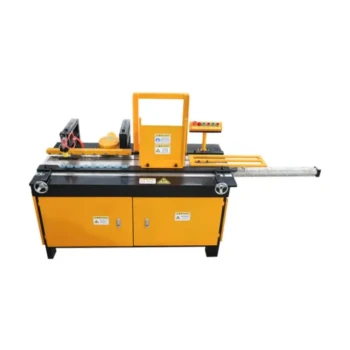
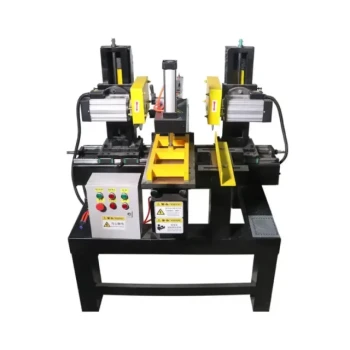
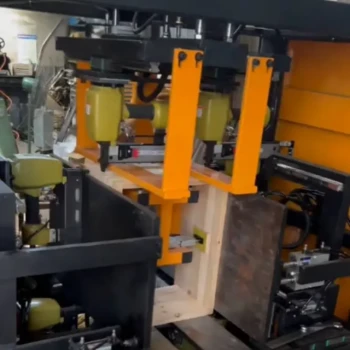
Industrial-grade hive-making machines drive global expansion by automating the production of standardized, species-specific habitats. These machines allow producers to rapidly manufacture hives tailored to the unique biological needs of stingless bee species like Melipona or Tetragonisca while significantly lowering equipment costs. This transition from manual to mechanized production creates the consistent foundation necessary for replicating successful management techniques across international borders.
By replacing fragmented, manual construction with high-precision manufacturing, these machines solve the industry's two biggest scaling hurdles: the high cost of custom equipment and the lack of standardized infrastructure required for scientific colony management.
Transforming Fragmented Operations into Industrial Clusters
The shift from traditional beekeeping to a global industry requires consistency. Industrial machinery provides the structural uniformity needed to manage thousands of colonies efficiently.
Achieving Structural Uniformity
In traditional settings, hives are often handmade and variable. Industrial machines ensure that every hive produced has precise, consistent specifications.
This uniformity allows beekeepers to apply the same management protocols across all colonies, regardless of location.
Enabling Component Interchangeability
High-precision processing ensures that all hive parts—such as lids, supers, and brood chambers—are fully interchangeable.
This drastically lowers long-term maintenance costs, as damaged parts can be replaced instantly without the need for custom fitting or carpentry.
Supporting Scientific Colony Splitting
Standardized dimensions provide the material foundation for scientific colony splitting.
When hive volumes are identical, beekeepers can predict colony growth accurately and split hives systematically to increase stock, a process that is risky and difficult with irregular equipment.
Precision Engineering for Biological Requirements
Global expansion cannot succeed if the bees do not survive. Industrial machines allow for mass production without sacrificing the biological suitability of the hive.
Species-Specific Customization
Different stingless bee species, such as Melipona and Tetragonisca, have distinct nesting habits.
Industrial machines can be programmed to manufacture hives that match the specific biological characteristics of these target species, ensuring the physical structure supports their natural behaviors.
Mimicking Natural Habitats
Stingless bees typically nest in tree hollows and require specific environmental conditions.
Machine-made hives can be engineered to simulate these controlled environments, protecting colonies from predators and facilitating routine inspections.
Critical Temperature Regulation
Stingless bees thrive at an optimal temperature of approximately 26°C.
Precision manufacturing ensures tight joinery and consistent wall thickness, which helps regulate internal hive temperature and improves colony stability.
Understanding the Trade-offs
While mechanization is essential for scale, it introduces new variables that producers must manage objectively.
The Risk of Design Rigidity
Mass production replicates a single design thousands of times. If the initial prototype does not perfectly account for local climate variations, the flaw is amplified across the entire operation.
Initial Infrastructure Costs
Transitioning to industrial clusters requires significant upfront capital.
While the per-unit cost of a hive drops, the investment in machinery shifts the financial burden from operational expenses (labor) to capital expenses (equipment).
Making the Right Choice for Your Goal
When integrating industrial hive-making machinery into your operation, align your hardware choice with your specific strategic objective.
- If your primary focus is rapid apiary expansion: Prioritize machines that ensure high-speed production and 100% component interchangeability to streamline logistics.
- If your primary focus is colony health and survival: Prioritize equipment capable of precise customization to match the specific insulation and volume needs of your local bee species.
Ultimately, industrial hive-making machinery serves as the bridge between localized, artisanal beekeeping and a reproducible, globally viable industry.
Summary Table:
| Feature | Impact on Global Expansion | Key Benefit |
|---|---|---|
| Structural Uniformity | Standardizes management protocols across borders | Scalable colony management |
| Component Interchangeability | Lowers maintenance and replacement costs | Reduced operational overhead |
| Species-Specific Precision | Tailors habitats for Melipona, Tetragonisca, etc. | Higher colony survival rates |
| Thermal Regulation | Maintains 26°C optimal internal temperature | Improved biological stability |
| Automated Splitting Support | Facilitates systematic stock increases | Faster apiary growth |
Scale Your Beekeeping Operation with HONESTBEE
Transition from artisanal methods to industrial-grade efficiency. HONESTBEE empowers commercial apiaries and distributors with high-precision hive-making machines, honey-filling equipment, and a comprehensive range of beekeeping tools.
Our machinery is designed to help you manufacture standardized, species-specific habitats that ensure colony health and operational scalability. Whether you are expanding your own apiary or supplying the global market, we provide the hardware and industry consumables needed to succeed.
Ready to industrialize your honey production? Contact HONESTBEE Today for a Wholesale Quote
References
- Marilda Cortopassi-Laurino, Paulo Nogueira‐Neto. Global meliponiculture: challenges and opportunities. DOI: 10.1051/apido:2006027
This article is also based on technical information from HonestBee Knowledge Base .
Related Products
- High-Efficiency Pneumatic Bee Hive Making Machine for Rapid Box Assembly
- Beehive Handle and Frame Rest Cutting Machine: Your Specialized Hive Machine
- Beehive Machine Double End Saw for Precision Hive Component Manufacturing
- Mini Desktop Bee Hive Frame Forming Making Machine
- Automatic High-Speed Bee Hive Box Stapling Machine
People Also Ask
- How does the introduction of professional beehive-making machinery benefit sustainable beekeeping? Scale Your Apiary
- Why is specialized beehive-making machinery critical for low-defense breeding? Enhance Selection with Precision Tools
- How does the introduction of specialized beehive making machinery contribute to increasing the scale of regional beekeeping industries?
- What is the importance of specialized beehive making machinery in a circular bio-economy? Build Local Sustainability
- Why is specialized beehive-making machinery essential? Scale Your Apiary with Precision Industrial Standards