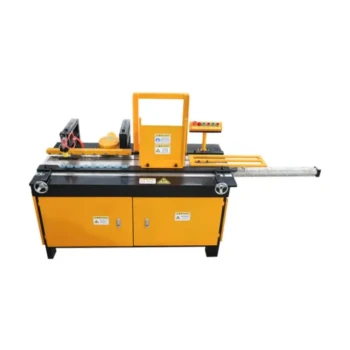
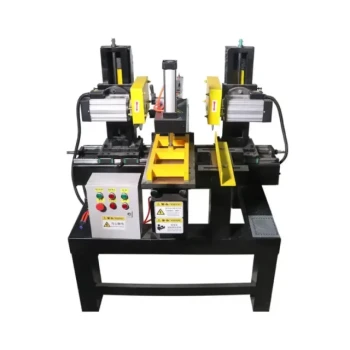
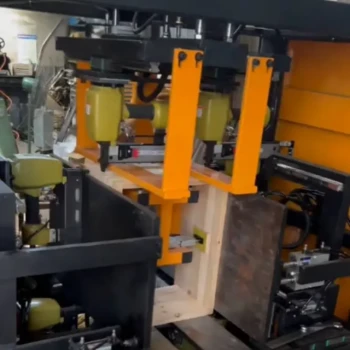
Industrial-grade hive-making machines serve as the logistical foundation for scalable commercial beekeeping. By enabling the mass production of standardized, high-precision wooden components, these machines ensure that apiaries can expand operations without compromising structural integrity. This standardization reduces long-term maintenance costs and supports the mechanized handling necessary for modern, large-scale hive management.
The sustainability of a commercial apiary relies on balancing biological health with operational efficiency. Industrial hive-making machinery solves the logistical bottleneck of expansion by providing interchangeable, durable hardware that allows for automated extraction and seamless colony management.
The Power of Standardization
Achieving Complete Interchangeability
The primary contribution of these machines is the absolute uniformity of hive components. In a manual setup, minor variations can prevent frames from fitting different boxes.
Industrial machines utilize automated processing to ensure every frame and hive body has precise dimensions. This allows beekeepers to exchange combs between colonies effortlessly, a requirement for balancing populations and resources.
Enabling Mechanized Management
Standardized hardware is the prerequisite for automation in the field. Uniform hive sizes allow for the use of unified extraction equipment and mechanized pallet handling.
When dimensions are consistent, machinery can handle lifting and honey harvesting, significantly reducing the manual labor required per hive.
Economic and Operational Efficiency
Reducing Infrastructure Costs
Relying on pre-made hives can be prohibitively expensive for large operations. Owning the production means reduces dependence on external suppliers and lowers the per-unit construction cost.
This autonomy allows apiaries to conduct customized hardware maintenance and renewal at a fraction of the market price, making the operation more cost-competitive.
Facilitating Rapid Scalability
Commercial sustainability often depends on the ability to expand quickly during specific seasons. Hive-making machinery provides the capacity for large-scale production on demand.
This ensures that infrastructure is never the limiting factor during colony expansion or when renewing old equipment, supporting industrial beekeeping models.
Supporting Migratory Beekeeping
Many commercial apiaries rely on migratory practices to follow seasonal blooms. This puts immense physical stress on hive equipment.
Machine-produced hives feature high-precision woodworking joints that offer superior structural stability. This durability is essential for surviving the transport required in migratory operations without frequent repair.
Biological Implications
Creating a Stable Environment
Beyond logistics, the precision of these machines supports the biological needs of the bees. A standardized, well-constructed hive provides a stable breeding environment free from structural gaps that could invite pests or weather instability.
Aligning with Honeybee Biology
Specialized machinery produces systems that align with specific biological requirements. By adhering to rational structures, these hives optimize the colony environment, which is necessary for maintaining health and pursuing quality certifications.
Understanding the Trade-offs
Capital Intensity vs. Operational Savings
While these machines reduce the cost of individual hives, they represent a significant upfront capital investment.
Small-scale operations may find the ROI (Return on Investment) too slow. This technology is best leveraged by apiaries where volume justifies the initial expense of the machinery.
Maintenance Shift
Adopting this technology shifts the maintenance burden from the woodenware to the machinery itself.
Operators must possess or hire the technical skills to maintain high-precision woodworking equipment. A breakdown in the machine can halt the critical production of infrastructure during peak seasons.
Making the Right Choice for Your Goal
To determine if industrial hive-making machinery fits your operational model, consider your specific targets:
- If your primary focus is Rapid Expansion: Prioritize machinery with high throughput speeds to ensure infrastructure availability never bottlenecks your colony growth.
- If your primary focus is Cost Efficiency: Focus on the machine's ability to utilize raw lumber effectively to lower your per-unit cost compared to buying pre-made hives.
- If your primary focus is Automation: Ensure the machine produces components strictly adherent to international standards to guarantee compatibility with automated extraction lines.
Industrial-grade machinery transforms the beehive from a variable craft object into a reliable industrial asset, providing the structural consistency required for sustainable growth.
Summary Table:
| Key Feature | Benefit to Commercial Apiaries | Impact on Sustainability |
|---|---|---|
| Component Uniformity | Complete interchangeability of frames and boxes | Reduces labor and simplifies colony management |
| High-Precision Joints | Superior structural stability during transport | Enhances durability for migratory beekeeping |
| Mass Production | Lower per-unit infrastructure costs | Enables rapid scaling without external supply risks |
| Standardized Sizing | Compatibility with automated extraction lines | Maximizes operational efficiency and throughput |
| Optimized Design | Stable breeding environment and pest resistance | Improves colony health and biological success |
Scale Your Apiary with Precision Engineering
Transitioning to industrial-grade infrastructure is the key to long-term profitability and operational stability. HONESTBEE empowers commercial apiaries and distributors with the high-performance machinery needed to dominate the market.
From industrial hive-making machines and honey-filling lines to a comprehensive range of professional beekeeping tools and industry consumables, we provide the hardware that turns craft beekeeping into a scalable industrial success. Partner with us to reduce your per-unit costs and enhance your honey-themed cultural merchandise offerings.
Contact HONESTBEE Today to Optimize Your Production
References
- Erik Stange, Megan Nowell. Ecosystem services mapping for municipal policy: ESTIMAP and zoning for urban beekeeping. DOI: 10.3897/oneeco.2.e14014
This article is also based on technical information from HonestBee Knowledge Base .
Related Products
- High-Efficiency Pneumatic Bee Hive Making Machine for Rapid Box Assembly
- Mini Desktop Bee Hive Frame Forming Making Machine
- Beehive Handle and Frame Rest Cutting Machine: Your Specialized Hive Machine
- Beehive Machine Double End Saw for Precision Hive Component Manufacturing
- Automatic High-Speed Bee Hive Box Stapling Machine
People Also Ask
- How does the introduction of professional beehive-making machinery benefit sustainable beekeeping? Scale Your Apiary
- Why is specialized beehive-making machinery critical for low-defense breeding? Enhance Selection with Precision Tools
- How does the introduction of specialized beehive making machinery contribute to increasing the scale of regional beekeeping industries?
- What is the importance of specialized beehive making machinery in a circular bio-economy? Build Local Sustainability
- Why is specialized beehive-making machinery essential? Scale Your Apiary with Precision Industrial Standards