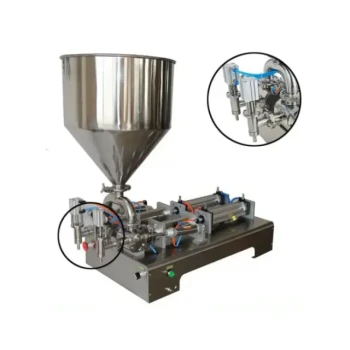
Industrial-grade honey-filling machines preserve antibacterial properties by operating within highly controlled sterile or semi-sterile environments. This automated process creates a "social immunity" extension, replicating the protective conditions of the hive to block external microbial contamination during the transition from extraction to bottling. By eliminating manual handling, these systems maximize the retention of honey's natural bioactive components and antibacterial characteristics.
By automating the transition from hive to bottle, industrial equipment replaces high-risk manual contact with a closed, aseptic loop. This approach safeguards heat-sensitive enzymes and ensures the final product retains the same biological potency found inside the colony.
Extending Hive Protection to the Factory
The "Social Immunity" Logic
Industrial machines are designed to mimic the social immunity protections found within a bee colony. Just as bees maintain a strict hygienic environment to protect the hive, these machines utilize sterile or semi-sterile processing zones to effectively block external pathogens.
Controlled Transition
The primary risk to honey's antibacterial power is the exposure that occurs between extraction and packaging. Automated logic ensures a seamless, controlled transition, significantly reducing the window of time honey is exposed to the open environment.
Aseptic Filling Environments
Advanced hygienic sealing technologies create a barrier against ambient air and contaminants. This ensures that the bioactive stability established by the bees is not compromised during the final packaging stage.
Mechanisms for Preserving Biological Activity
Precision Temperature Control
Honey often requires warming to manage high viscosity and crystallization, but excessive heat destroys antibacterial enzymes. Industrial equipment uses integrated temperature control systems to improve flow without exceeding the thermal threshold that would damage biological activity.
Protecting Glucose Oxidase
The core antibacterial component of honey is often hydrogen peroxide, produced by the enzyme glucose oxidase. Specialized extraction and filling machinery are engineered to protect these heat-sensitive components, ensuring the catalytic process remains active in the bottled product.
Non-Destructive Metering
Precision metering pumps allow for rapid, quantitative filling. Unlike manual methods which may require prolonged manipulation, these pumps move specific volumes of honey quickly and gently, preserving the product's structural and chemical integrity.
Eliminating Secondary Contamination
Removing the "Human Factor"
Manual handling is the leading cause of secondary contamination in food processing. Automated equipment replaces human contact with robotic precision, serving as a technological foundation for safe, large-scale operations.
Chemical Stability of Materials
Professional-grade machines utilize stainless steel components. This material provides chemical stability, ensuring no metal impurities are introduced that could alter the honey's unique aromatic properties or trace elements.
Preventing Cross-Contamination
For high-value varieties like monofloral or Manuka honey, maintaining purity is essential for ratings (such as UMF). Industrial-grade systems prevent cross-contamination between batches, ensuring the specific antibacterial profile of the honey source is maintained.
Understanding the Trade-offs
Complexity of Sterility Maintenance
While these machines effectively block microbes, the equipment itself requires rigorous cleaning protocols. If the internal sterile environment is breached due to poor maintenance, the high throughput can lead to rapid, large-scale batch contamination.
The Balance of Viscosity vs. Heat
Even with advanced controls, handling extremely thick honeydew or crystallized honey requires a delicate balance. Operators must carefully calibrate the machine's thermal settings to ensure flow does not come at the expense of enzyme degradation.
Making the Right Choice for Your Goal
To maximize the value of your honey production, align your equipment choice with your specific quality targets.
- If your primary focus is Medical-Grade/High-Activity Honey (e.g., Manuka): Prioritize equipment with advanced, low-temperature viscosity management and stainless steel paths to protect glucose oxidase and ensure UMF stability.
- If your primary focus is High-Volume Commercial Distribution: Focus on systems with rapid, aseptic sealing and precision metering pumps to maximize throughput while eliminating the risks of manual secondary contamination.
Automation is not merely a tool for speed; it is the critical preservation mechanism that allows the biological integrity of the hive to survive the journey to the consumer.
Summary Table:
| Feature | Preservation Mechanism | Impact on Honey Quality |
|---|---|---|
| Aseptic Filling Loop | Mimics hive social immunity by blocking external pathogens | Eliminates secondary contamination & protects purity |
| Precision Heat Control | Integrated thermal sensors maintain low-temperature flow | Prevents degradation of heat-sensitive glucose oxidase |
| Stainless Steel Path | Chemically stable food-grade material contact | Ensures no metallic impurities or aromatic alteration |
| Automated Metering | High-speed, non-destructive volumetric pumps | Maintains structural integrity and biological potency |
Scale Your Production Without Sacrificing Purity
At HONESTBEE, we understand that for commercial apiaries and distributors, the biological integrity of your honey is your most valuable asset. Our industrial-grade honey-filling machines and specialized beekeeping machinery are engineered to protect the unique antibacterial properties of your product while maximizing efficiency.
Whether you are processing high-activity Manuka honey or managing high-volume distribution, HONESTBEE provides the full spectrum of wholesale tools—from hive-making equipment to advanced aseptic bottling systems.
Ready to upgrade your facility with technology that replicates the protection of the hive?
Contact HONESTBEE Today for a Professional Consultation
References
- Christopher D. Pull, Dino P. McMahon. Superorganism Immunity: A Major Transition in Immune System Evolution. DOI: 10.3389/fevo.2020.00186
This article is also based on technical information from HonestBee Knowledge Base .
Related Products
- Precision Durable Efficient HONESTBEE Rotary Honey Filling Machine
- Commercial Rotary Honey Filling Machine for Production
- Fully Automatic Honey Filling Packaging Machine for Processing Line
- Precision Automated Packaging Turntable Honey Spoon Filling Sealing Packing Machine
- Automatic Honey Filling and Filtering Machine for Beekeeping Bottle Filling
People Also Ask
- How do honey filling and processing machines aid native bee product conservation? Boost Value with HONESTBEE Technology
- What is a key feature of the new generation of the honey filling machine? The Advanced Electronic Control Unit
- What quality control role does professional honey filling equipment perform? Ensure Consistency and Product Stability
- How do honey filling machines work? Achieve Precision & Speed for Your Apiary
- How do high-precision honey filling machines ensure quality? Optimize Your Commercial Production with HONESTBEE