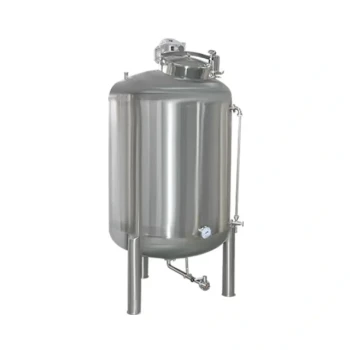
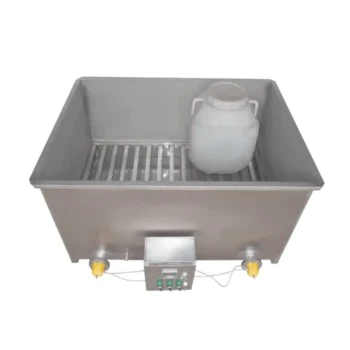
Industrial-grade temperature control systems inhibit Hydroxymethylfurfural (HMF) by creating a strictly regulated environment that is stable, dark, and cool. By maintaining these specific conditions, the system actively suppresses the thermal decomposition of sugars—specifically fructose—and slows the chemical reactions that naturally accelerate in honey's acidic environment. This process is essential for keeping HMF levels safely below the regulatory threshold of 60mg/kg.
Core Takeaway: By stabilizing temperature and eliminating light, these systems act as a preventative brake on honey chemistry. They do not just store the product; they actively interrupt the breakdown of fructose into HMF, ensuring the honey retains its medicinal value and legal compliance.
The Science of Stabilization
Preventing Thermal Decomposition
The primary driver of HMF formation is heat. Industrial systems utilize precise cooling mechanisms to maintain a low-temperature environment.
This cooling significantly reduces the kinetic energy within the honey. By lowering the temperature, the system prevents the spontaneous thermal decomposition of sugars, particularly fructose, which is the main precursor to HMF.
Counteracting Acidic Reactions
Honey is naturally acidic, a property that usually acts as a catalyst for HMF production when combined with heat.
Temperature control systems mitigate this risk by keeping the honey cool enough to render the acidity less reactive. In a stable, low-temperature state, the chemical reactions between the acids and sugars are drastically slowed, preventing the rapid spike in HMF levels often seen in uncontrolled storage.
The Role of Light Exclusion
In addition to temperature, the primary reference highlights the necessity of a "dark" environment.
Industrial systems are designed to block light exposure. Light can introduce radiant heat and photochemical energy that destabilize the honey's structure, accelerating the very decomposition processes the cooling system is trying to prevent.
Impact on Quality and Compliance
Adhering to Legal Standards
HMF levels are the standard metric for honey freshness and safety.
Regulatory bodies enforce a strict limit of 60mg/kg for HMF content. Industrial temperature control is the only reliable method to ensure large batches of honey remain compliant with this legal ceiling over long periods.
Preserving Bioactivity
Beyond simple compliance, these systems protect the product's value.
HMF is a marker of heat exposure; low HMF correlates with high enzymatic activity. By inhibiting HMF, the system simultaneously preserves the active ingredients and biological quality, ensuring the honey retains the medicinal properties that consumers pay a premium for.
Understanding the Trade-offs
Prevention vs. Reversal
It is critical to understand that these systems are preventative, not corrective.
Temperature control inhibits the formation of HMF, but it cannot remove HMF that has already formed. If honey enters the system after being exposed to high heat during processing or transport, the storage system can only maintain the current quality, not improve it.
The Cost of Stability
While essential for quality, maintaining a "stable, low-temperature environment" requires continuous energy input.
The trade-off for extended shelf life and higher biological value is the operational cost of running industrial cooling constantly. Any failure in the stability of the system—such as temperature fluctuations—can allow the chemical breakdown of fructose to restart immediately.
Making the Right Choice for Your Goal
To maximize the effectiveness of your storage strategy, align your approach with your specific end-goals:
- If your primary focus is Regulatory Compliance: Ensure your system's set point is low enough to keep HMF levels well below the 60mg/kg limit to account for potential fluctuations during transport.
- If your primary focus is Premium Quality: Prioritize the stability of the temperature and darkness to preserve enzyme activity, using HMF levels as a proxy for medicinal value.
Effective temperature control is not merely storage; it is an active investment in the chemical integrity and marketability of your honey.
Summary Table:
| Feature | Mechanism of Action | Impact on Honey Quality |
|---|---|---|
| Precise Cooling | Reduces kinetic energy & stops fructose thermal decomposition | Keeps HMF levels safely below the 60mg/kg legal limit |
| Acid Mitigation | Renders natural honey acids less reactive through low temps | Slows chemical breakdown and preserves medicinal enzymes |
| Light Exclusion | Blocks radiant heat and photochemical energy | Prevents structural destabilization and heat-induced decay |
| Environment Stability | Eliminates fluctuations that trigger sugar breakdown | Ensures long-term storage viability and premium bioactivity |
Maximize Your Honey's Market Value with HONESTBEE
Preserving the medicinal integrity and regulatory compliance of your honey requires more than just storage—it requires precision engineering. At HONESTBEE, we specialize in empowering commercial apiaries and distributors with high-performance beekeeping machinery and industrial-grade equipment designed to inhibit HMF and maintain premium enzymatic activity.
From automated honey-filling machines to professional-grade storage solutions, we provide the full spectrum of tools needed to scale your operations efficiently. Contact HONESTBEE today to discover how our wholesale beekeeping equipment and industry expertise can protect your product quality and enhance your global market competitiveness.
References
- Letícia Damasia-Gomes, Carlos de Melo e Silva‐Neto. PHYSICAL-CHEMICAL CHARACTERISTICS OF HONEY ON BRAZIL. DOI: 10.18677/enciclopedia_biosfera_2015_110
This article is also based on technical information from HonestBee Knowledge Base .
Related Products
- Professional Honey Storage Tank with Agitation System
- Stainless Steel Honey Storage and Settling Tank with Double Strainer
- Stainless Steel Honey Storage Tank with Lid for Honey
- Heavy Duty Stainless Steel Honey Processing Machine Decrystallizing Tank
- Plastic Honey Gate Spout with Wing Nut for Beekeeping Honey Bucket
People Also Ask
- What economic role do honey storage tanks play? Boost Your Revenue Through Strategic Inventory Management
- What roles do industrial honey storage tanks and filtration meshes play in processing? Ensure Purity & Consistency
- What is the purpose of a honey storage tank? Streamline Your Honey Processing for Quality & Efficiency
- What are honey storage tanks used for? Essential Features for Quality Preservation and Profit
- How do large honey storage tanks and gravity fall filling systems improve honey packaging efficiency and safety?