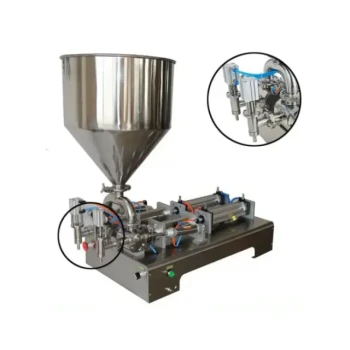
Industrial honey-filling machines overcome the unique physical challenges of honey—specifically its high viscosity and crystallization—by utilizing integrated heating temperature control systems and precision metering pumps. These technologies allow the machine to liquefy and move the product efficiently without overheating it, ensuring the honey is packaged aseptically while retaining its biological activity.
The Core Challenge: Honey is a temperature-sensitive fluid that resists flow and hardens over time, making manual handling slow and inconsistent. Industrial solutions solve this by balancing thermal management to improve flow with precision mechanics to ensure accurate dosing, effectively bridging the gap between raw harvest and retail-ready commodities.
Mastering Viscosity and Crystallization
The Role of Integrated Heating
Honey is naturally viscous (thick) and prone to crystallization, which can clog standard machinery. Industrial filling machines address this with integrated heating temperature control systems.
These systems apply controlled heat to lower the honey's viscosity, transforming it into a fluid state that flows easily through the system. This eliminates the blockages and inconsistencies caused by crystallization.
Preserving Biological Integrity
While heat improves flow, excessive heat destroys the enzymes and nutrients that give honey its value. The "technical win" of these machines is their ability to regulate temperature precisely.
They maintain the honey at a specific thermal set point that facilitates movement but remains low enough to prevent damage to the honey's biological activity.
Achieving Precision Through Mechanics
Precision Metering Pumps
To move the conditioned honey, these machines rely on precision metering pumps. Unlike gravity-fed systems that struggle with thick fluids, metering pumps use positive displacement to force exact amounts of honey into containers.
This technology allows for high-precision quantitative filling, ensuring that every jar contains the exact volume required despite the honey's resistance to flow.
Consistency at Scale
Manual filling often results in high error rates and inconsistent weights. Industrial machines eliminate this variability.
By automating the dosing process, producers can convert large-scale annual harvests into standardized products that meet strict commercial weight specifications.
Eliminating Contamination Risks
Closed-Loop Conveying
Honey is sticky and attracts contaminants. Industrial machines utilize enclosed conveying and dispensing paths to isolate the product from the outside environment.
This "closed-loop" design drastically reduces the risk of secondary contamination that is common during manual handling or open-air pouring.
Aseptic Processing Standards
For honey to enter high-end markets or supermarket chains, it must meet rigorous hygiene standards.
These machines facilitate aseptic filling, ensuring the final product is not only aesthetically consistent but also hygienically safe for long-term storage and distribution.
Understanding the Trade-offs
Complexity of Maintenance
While these machines solve flow problems, handling a viscous, sticky substance like honey introduces mechanical complexity.
The precision pumps and heating elements require rigorous cleaning and maintenance protocols to prevent residue buildup, which could otherwise lead to cross-contamination or mechanical failure over time.
Balancing Speed and Quality
There is often a tension between throughput speed and product integrity.
Running machines at maximum speed requires optimal temperature conditions; if the heating system is pushed too hard to increase flow rates, you risk compromising the biological quality of the honey.
Making the Right Choice for Your Goal
To select the right filling technology, you must identify your primary production objective:
- If your primary focus is Market Competitiveness: Prioritize machines with high-precision quantitative controls to ensure the standardized weight and packaging consistency required by retail chains.
- If your primary focus is Product Quality: Ensure the equipment features advanced temperature modulation capabilities to maximize flow without degrading the honey's enzymes.
- If your primary focus is Hygiene: Look for systems with fully enclosed conveying paths to minimize human contact and secondary contamination risks.
By automating the delicate balance between heat, pressure, and hygiene, industrial filling machines transform a difficult-to-handle raw material into a valuable commercial asset.
Summary Table:
| Feature | Technical Solution | Impact on Production |
|---|---|---|
| High Viscosity | Integrated Heating Systems | Lowers flow resistance without nutrient loss |
| Crystallization | Thermal Control Units | Prevents clogs and maintains fluid state |
| Dosing Inaccuracy | Precision Metering Pumps | Ensures consistent weight for retail compliance |
| Contamination | Closed-loop Conveying | Enables aseptic filling and high hygiene standards |
Scale Your Apiary with HONESTBEE Precision
Transitioning from manual labor to industrial automation is the key to global market competitiveness. HONESTBEE empowers commercial apiaries and distributors with professional-grade beekeeping tools and advanced machinery.
Our specialized honey-filling machines are engineered to preserve the biological integrity of your harvest while maximizing throughput. Beyond filling, we provide a full spectrum of equipment—from hive-making machines to honey-themed cultural merchandise—designed to streamline your operations and grow your brand.
Ready to optimize your honey production line? Contact our experts at HONESTBEE today to discover the perfect wholesale solutions for your business.
References
- Gard W. Otis. The Bee, A Natural History, by Noah Wilson-Rich (2014, Princeton University Press. ISBN: 9780691161358. US$27.95). DOI: 10.22543/0090-0222.2315
This article is also based on technical information from HonestBee Knowledge Base .
Related Products
- Commercial Rotary Honey Filling Machine for Production
- Precision Durable Efficient HONESTBEE Rotary Honey Filling Machine
- Fully Automatic Honey Filling Packaging Machine for Processing Line
- Economy Small Honey Filling Machine Honey Bottle Filler Packaging Machine
- Precision Automated Packaging Turntable Honey Spoon Filling Sealing Packing Machine
People Also Ask
- What role do commercial honey filling machines play in honey distribution? Scaling Efficiency and Quality Control
- What technical support do commercial-grade filling machines provide? Convert Honey NTFPs into Marketable Commodities
- What is the significance of specialized honey filling equipment? Scaling from Beekeeping to Commercial Success
- Why is professional honey filling machinery critical for honey production? Scale Your Apiary's Profit & Efficiency
- Why is high-capacity honey filling machinery necessary for Giant Honey Bees? Solve the Apis dorsata Volume Crisis