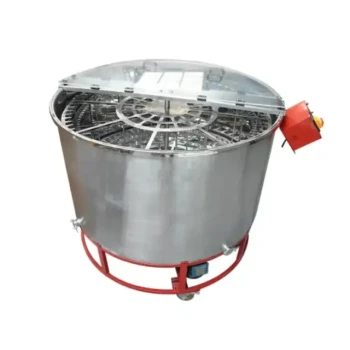
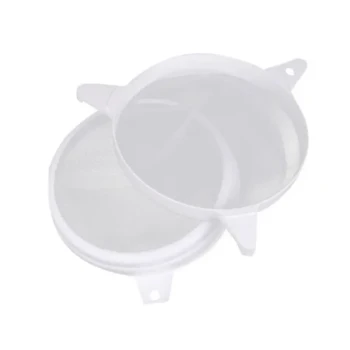
Industrial honey filtration and processing equipment prevent American Foulbrood (AFB) outbreaks primarily by severing the transmission pathway between contaminated honey and healthy bee colonies. By automating the extraction, filtration, and packaging process, this machinery ensures that honey—potentially carrying pathogens—is securely contained and removed from the apiary environment before bees can re-consume it.
The critical value of this equipment lies in containment, not just purification; it processes honey into sealed, commercial packaging, physically blocking the "robbing" behavior that spreads disease from infected hives to healthy ones.
Blocking the Transmission Cycle
Understanding the Food-Borne Threat
AFB is a food-borne pathogen that spreads when bees consume spores present in infected honey. In a traditional or unmanaged setting, stronger colonies often "rob" honey from weaker, infected colonies, bringing the disease back to their own hive.
The Mechanism of Isolation
Industrial processing equipment interrupts this cycle by facilitating immediate specialized packaging. Rather than leaving harvested honey exposed or returning wet frames to the apiary where they might be robbed, the machinery processes the honey into sealed containers.
Permanent Removal from the Ecosystem
Once the honey passes through industrial filtration and packaging lines, it is effectively removed from the biological loop. The equipment ensures that the product is labeled and destined for consumer use, making it physically impossible for bees to access and consume the potentially contaminated food source.
Enhancing Product Hygiene
Removal of Physical Contaminants
Industrial-grade filtration utilizes fine-filtration technology to strip away impurities. This process removes beeswax residues and, critically, larval remains, which can harbor high concentrations of pathogens.
Improving Export Standards
By automating the removal of debris while preserving nutrients and enzymes, these machines ensure the final product meets rigorous export standards. This allows honey from threatened areas to be sold safely as a value-added product rather than becoming a biological liability in the field.
Understanding the Trade-offs
Filtration is Not Sterilization
It is vital to understand that while industrial filtration removes macroscopic debris and larval remains, it does not necessarily sterilize the honey of microscopic AFB spores. The safety mechanism is the containment of the honey, not the elimination of the spore itself from the liquid.
Equipment Sanitation is Critical
Because this equipment processes large volumes of honey, the machinery itself can become a vector for cross-contamination if not sanitized. If infected honey is run through a line, subsequent batches could theoretically pick up spores unless strict cleaning protocols are followed between batches.
Making the Right Choice for Your Goal
To effectively manage AFB risks using industrial infrastructure, consider the following approach:
- If your primary focus is Disease Prevention: Prioritize packaging lines that rapidly seal honey, ensuring no open product remains accessible to foraging bees.
- If your primary focus is Hive Management: Utilize industrial hive-making machinery to rapidly produce sterile replacement hives, allowing for the immediate destruction of infected woodenware.
- If your primary focus is Product Quality: Rely on fine-filtration systems to remove larval debris and wax, ensuring the visual clarity required for high-value export markets.
Industrial processing transforms honey from a potential vector of disease into a contained, commercial product, safeguarding the health of the remaining apiary.
Summary Table:
| Feature | Mechanism for AFB Prevention | Benefit to Apiary |
|---|---|---|
| Automated Packaging | Seals honey in containers immediately | Prevents "robbing" behavior and cross-hive infection |
| Fine Filtration | Removes larval remains and organic debris | Eliminates concentrated pathogen reservoirs from the product |
| Industrial Extraction | Efficiently clears wet frames in closed environments | Reduces the time contaminated honey is exposed to foraging bees |
| Hygienic Design | Stainless steel surfaces and easy-clean protocols | Prevents equipment from becoming a cross-contamination vector |
Secure Your Apiary’s Future with HONESTBEE Professional Solutions
Preventing the spread of American Foulbrood requires more than just vigilance—it requires the right infrastructure. HONESTBEE specializes in supporting commercial apiaries and distributors with high-performance honey-filling machines, advanced filtration systems, and specialized hive-making machinery designed to maintain the highest hygiene standards.
Whether you are scaling your wholesale operation or upgrading your processing line to meet global export requirements, our comprehensive range of beekeeping tools and industrial machinery ensures your honey remains a premium product rather than a biological risk.
Ready to upgrade your biosecurity and production efficiency?
Contact HONESTBEE today to discuss your equipment needs
References
- Ireneusz Nowak, Aleksandra Leska. American foulbrood, as an infectious disease of honey bees – selected legal and environmental aspects. DOI: 10.26485/spe/2020/115/5
This article is also based on technical information from HonestBee Knowledge Base .
Related Products
- Electric Double Wall Honey Filtering Machine Purifier Equipment for Honey Processing Plant
- 0.5T Capacity Honey Dehumidifier Dryer with Vacuum Heating and Thickening Filtering Machine
- Honey Concentrating and Filtering Dehumidifier Machine 2T Capacity for Honey
- Professional Honey Filter with Tripod Support Stand
- Professional Stainless Steel Honey Filtering Machine with Water Bath Heating for Beekeeping
People Also Ask
- What is the process of filtering honey? A Guide to Clean, Pure, and Market-Ready Honey
- What types of equipment are used in honey filtering? Build an Efficient System for Pure, Marketable Honey
- What is the overall importance of using the right equipment in honey filtering? Boost Quality & Marketability
- What are the benefits of drying honey filtering equipment after use? Protect Your Honey Quality & Equipment Investment
- What steps are involved in maintaining honey filtering equipment? A Guide to Protecting Your Honey Quality