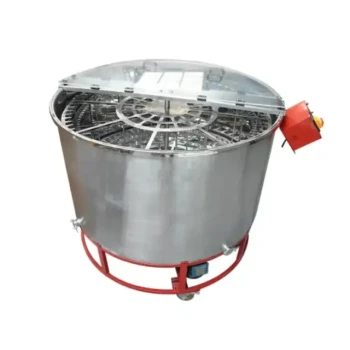
Industrial Honey Filtration Systems drive operational efficiency by drastically reducing the time and manual labor traditionally required for post-harvest handling. These systems automate the removal of physical impurities—such as wax debris and bee fragments—to produce honey with superior clarity and consistency. By standardizing the final product, this technology allows producers to meet the rigorous demands of large-scale commercial distribution, ultimately enhancing business profitability.
The core operational value of industrial filtration is not just hygiene, but uniformity. It transforms a variable raw agricultural product into a consistent commercial commodity, removing the bottleneck of manual processing to unlock higher market throughput.
Accelerating Post-Harvest Operations
Reducing Labor Overheads
Traditional honey processing often involves labor-intensive straining methods that scale poorly.
Industrial filtration systems automate this stage, significantly lowering the man-hours required per batch. This reduction in labor costs directly improves the margin on every liter processed.
Streamlining Production Time
Time is a critical factor in preventing honey crystallization and degradation.
Advanced filtration equipment processes high volumes rapidly, ensuring the product moves from extraction to packaging without bottlenecks. This speed is essential for maintaining a continuous production flow.
Enhancing Product Quality and Stability
Achieving Commercial Clarity
To compete in large-scale markets, honey must meet strict visual and physical standards.
Filtration systems efficiently remove micro-impurities and solid debris that can cloud the product. This results in a clear, visually appealing product that meets consumer expectations for high-quality honey.
Material Compatibility and Safety
Honey is naturally acidic, which poses a challenge for processing equipment.
Industrial systems utilize food-grade stainless steel to resist corrosion. This prevents metal ions from leaching into the honey, ensuring the product remains chemically stable and free from metallic off-flavors.
Ensuring Physicochemical Stability
Impurities are not just cosmetic; they can act as nucleation points for crystallization or harbor spoilage organisms.
By thoroughly removing these solids, filtration systems stabilize the honey’s physical state. This extends shelf life and reduces the risk of secondary contamination.
Understanding the Trade-offs
The Risk of Over-Processing
While clarity is desirable for mass markets, excessive filtration can strip honey of its unique character.
High-pressure or ultra-fine filtration may remove beneficial pollen grains that provide honey with its specific floral identity and nutritional value. This can inadvertently reclassify the product from "honey" to "syrup" in certain regulatory jurisdictions.
Capital Investment vs. Output
Industrial systems represent a significant upfront cost compared to simple gravity straining.
For smaller operations, the efficiency gains may not immediately offset the capital expenditure. These systems are most effective when the volume of production justifies the need for high-speed throughput.
Making the Right Choice for Your Goal
Selecting the right filtration level depends entirely on your target market and volume requirements.
- If your primary focus is Mass Market Distribution: Prioritize fine filtration systems that ensure maximum clarity and shelf stability to meet strict retailer standards.
- If your primary focus is Artisan or "Raw" Honey: Opt for coarse filtration that removes macro-debris (wax and bee parts) but retains pollen to preserve the "raw" label and flavor profile.
Industrial filtration is the bridge between a raw harvest and a scalable business. carefully balancing clarity with character ensures you optimize efficiency without compromising product integrity.
Summary Table:
| Feature | Manual Straining | Industrial Filtration Systems |
|---|---|---|
| Processing Speed | Slow, gravity-dependent | Rapid, high-volume throughput |
| Labor Intensity | High (manual handling) | Low (automated operation) |
| Product Consistency | Variable quality | Uniform commercial standard |
| Material Safety | Potential for contamination | Food-grade stainless steel |
| Market Suitability | Local / Artisan | Commercial / Export Grade |
Elevate Your Honey Production with HONESTBEE
Maximize your apiary's throughput and product quality with HONESTBEE. As a premier partner for commercial apiaries and global distributors, we provide a complete range of professional beekeeping machinery—from advanced honey filtration and filling systems to specialized hive-making equipment.
Our solutions are designed to bridge the gap between raw harvest and scalable business success, ensuring your honey meets the highest commercial standards. Contact us today to discover how our wholesale beekeeping tools and industrial consumables can streamline your operations and grow your brand.
References
- Nermin BAHSI, Dilek Bostan Budak. CAUSES OF LOW YIELD IN BEE PRODUCTS IN OSMANIYE, TURKEY. DOI: 10.21474/ijar01/178
This article is also based on technical information from HonestBee Knowledge Base .
Related Products
- Electric Double Wall Honey Filtering Machine Purifier Equipment for Honey Processing Plant
- Professional Stainless Steel Honey Filtering Machine with Water Bath Heating for Beekeeping
- Professional Stainless Steel Honey Filter with Support Handle
- Honey Concentrating and Filtering Dehumidifier Machine 2T Capacity for Honey
- Professional Honey Filter with Tripod Support Stand
People Also Ask
- What is the process of filtering honey? A Guide to Clean, Pure, and Market-Ready Honey
- What types of equipment are used in honey filtering? Build an Efficient System for Pure, Marketable Honey
- What is the overall importance of using the right equipment in honey filtering? Boost Quality & Marketability
- What is a potential concern associated with filtering honey? Balancing Clarity and Pollen Preservation
- How should honey filtering equipment be properly maintained? Extend Equipment Life & Protect Honey Purity