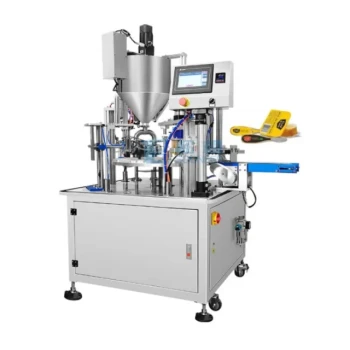
Industrial honey processing enhances market value by transforming a raw, variable agricultural product into a stable, standardized consumer good. Through functions like precise filtration, dehydration, and automated filling, this machinery removes impurities and strictly controls moisture levels. This process ensures the final product meets the rigorous hygiene and physicochemical standards required to enter premium international markets and modern retail chains.
The Core Transformation Raw honey is naturally hygroscopic and prone to fermentation, limiting its shelf life and geographic reach. Industrial processing bridges the gap between local agriculture and global trade, providing the stability and standardization necessary to transition from low-cost bulk sales to high-margin, certified export brands.
Elevating Product Integrity and Stability
To command a premium price, honey must be physically and chemically stable. Industrial machinery addresses the two primary threats to honey quality: moisture and impurities.
Precise Moisture Control
Raw honey naturally absorbs moisture from the air, which can lead to fermentation and spoilage. Industrial dehydration units effectively remove excess water to reach a specific, safe moisture content. This mechanical intervention is critical for extending shelf life and ensuring the product remains stable during long-distance shipping.
Purification for International Standards
Export markets demand "table honey" that is free of physical contaminants. Industrial filtration systems remove beeswax, debris, and other particulate matter. This step refines the product, ensuring it meets the strict hygiene and clarity standards required by international food safety authorities and discerning consumers.
Transitioning from Commodity to Brand
The shift from selling raw material to selling a branded product relies heavily on packaging technology.
Standardization and Consistency
Manual filling often leads to weight deviations and inconsistent liquid levels, which damage consumer trust. Industrial filling machines utilize automated dosing to ensure high-precision volume control. This guarantees that every unit is identical, a requirement for stocking products in major retail outlets.
Traceability and Hygiene
Automated packaging creates a physical barrier against contaminants. By integrating labeling tools, producers can ensure full product traceability, linking the final bottle back to its origin. This transparency is often a prerequisite for obtaining global quality certifications and entering ecological or premium niche markets.
The Economic Multiplier Effect
Investing in industrial processing is not just about quality control; it is a direct driver of revenue growth.
Doubling Market Value
There is a distinct price gap between raw agricultural goods and finished consumer products. By refining and professionally packaging honey, producers can capture significantly higher retail margins. Market data suggests that professionally packaged, processed honey can command a price more than double that of raw, unprocessed bulk honey.
Enabling Export Scalability
Local producers often struggle to compete with imported brands due to production inefficiencies. Mechanized lines allow for rapid scaling, enabling producers to meet large-volume orders without sacrificing quality. This capability allows local brands to compete effectively on the global stage, replacing low-value bulk exports with high-value branded goods.
Understanding the Operational Stakes
While the benefits of industrial processing are clear, it introduces a layer of operational rigor that must be managed.
The Necessity of Precision
The transition to industrial processing removes the "forgiveness" of small-scale sales. Once you aim for retail and export markets, standardization is non-negotiable. Any deviation in moisture content or seal integrity can lead to widespread spoilage or rejection at customs. The machinery acts as the enforcer of these standards, meaning the quality of your output is entirely dependent on the precise calibration and maintenance of your equipment.
Making the Right Choice for Your Goal
To leverage this technology effectively, align your equipment choice with your specific market objective.
- If your primary focus is International Export: Prioritize dehydration and filtration capabilities to ensure the moisture control and purity required for customs clearance and long shelf life.
- If your primary focus is Retail Profit Margins: Focus on automated packaging and labeling solutions to create a standardized, visually premium brand that commands higher shelf prices.
By mechanizing the refinement and packaging process, you convert a perishable commodity into a high-value, globally tradable asset.
Summary Table:
| Feature | Function | Impact on Market Value |
|---|---|---|
| Dehydration Units | Removes excess moisture to prevent fermentation | Extends shelf life and ensures stability for long-distance shipping |
| Filtration Systems | Purifies honey of beeswax, debris, and contaminants | Meets international hygiene standards for "table honey" classification |
| Automated Filling | High-precision volume and weight control | Ensures brand consistency and satisfies retail stocking requirements |
| Integrated Labeling | Provides full product traceability | Builds consumer trust and enables entry into premium niche markets |
Elevate Your Honey Brand with HONESTBEE
At HONESTBEE, we specialize in transforming raw honey into a premium, export-ready asset. As a dedicated partner to commercial apiaries and global distributors, we provide the full spectrum of industrial solutions—from specialized honey-making and filling machines to comprehensive beekeeping tools and essential consumables.
Whether you are looking to scale your production, meet international hygiene certifications, or maximize your retail margins with professional packaging, our equipment is engineered to deliver the precision you need. Let us help you transition from bulk commodity to a high-value global brand.
Contact HONESTBEE Today to Discuss Your Wholesale Requirements
References
- M Taha, Gudina Terefe Tucho. Knowledge, Attitudes, and Practices of Beekeepers on Pesticide Risk Mitigation and Bee Mortality in Southwest Ethiopia. DOI: 10.1177/11786302251328178
This article is also based on technical information from HonestBee Knowledge Base .
Related Products
- Fully Automatic Honey Filling Packaging Machine for Processing Line
- Automatic Single-Dose Snap & Squeeze Honey Sachets Packing Machine
- Precision Automated Packaging Turntable Honey Spoon Filling Sealing Packing Machine
- Small Honey Filling Machine Sachet Packing Equipment Single Nozzle
- Double Nozzle Small Honey Filling Machine Honey Sachet Packing Packaging Equipment
People Also Ask
- Why are fully automatic honey filling and packaging lines essential? Boost Your Honey's Market Value and Quality
- What is a fully-automatic honey filler? Streamline Your Production with High-Precision Automation
- How do automated honey filling and packaging machines affect profitability? Boost Margins with HONESTBEE Technology
- How do automated honey filling and packaging machines contribute to the market value of honey products? Maximize Your ROI
- How do industrial-grade automated honey filling and packaging machines mitigate the risk of physical contamination?