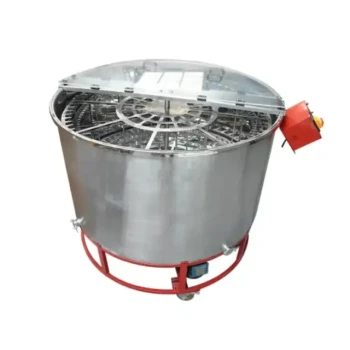
Industrial honey processing mitigates natural toxin risks primarily through physical dilution via homogenization. By utilizing large-scale automated mixing equipment, producers blend honey harvested from diverse geographical sources. This process lowers the concentration of naturally occurring toxins, such as grayanotoxin, to safe levels that are statistically unlikely to cause harm.
Core Insight: Unlike bacterial contaminants which are eliminated through sterilization, natural chemical toxins are managed through standardization. The industrial safety mechanism relies on the volume of blending: mixing high-toxin batches with low-toxin batches to ensure the final product consistently meets safety thresholds.
The Mechanics of Toxin Mitigation
The Principle of Physical Dilution
The primary defense against natural toxins in industrial honey is homogenization. Raw honey can vary wildly in chemical composition based on the specific flora bees visit.
Some plants naturally produce compounds like grayanotoxins, which can be toxic to humans in high concentrations. Industrial equipment mixes vast quantities of honey, ensuring that any localized "hot spots" of toxicity are diluted by the larger aggregate volume.
Geographical Diversification
Industrial processing relies on sourcing raw material from multiple geographical locations. This prevents the final product from being defined by a single harvest area that might be experiencing a bloom of toxic plants.
Automated mixing equipment blends these varied sources into a uniform batch. This ensures that the chemical profile of the final output is stable, predictable, and compliant with safety regulations.
Broader Hygiene and Quality Control
While dilution addresses natural toxins, industrial equipment plays a critical role in managing other safety factors.
Sterile Processing Environments
Supplementary to toxin management, industrial-grade equipment maintains a strictly sterile environment. This hardware prevents external bacterial contamination during filtration and handling, which is a separate but equally critical safety risk.
Precision Moisture and Impurity Control
Automated processing centers integrate dehydration and refining technologies. These machines precisely control moisture levels to prevent fermentation and remove physical impurities.
This standardization extends shelf life and improves hygiene without relying on chemical additives.
Retention of Nutritional Value
Modern industrial equipment is designed to balance safety with quality. Advanced systems facilitate filtration and sterilization while maximizing the retention of natural antibacterial components, phenolic compounds, and vitamins.
Understanding the Trade-offs
Homogenization vs. Unique Character
The very process that ensures safety—blending—removes the unique characteristics of specific honey harvests. By homogenizing honey to dilute toxins, the distinct "terroir" or flavor profile of a specific region is effectively neutralized in favor of uniformity.
The Sensitivity of Heating
Industrial equipment employs heating to manage viscosity and prevent crystallization. However, this requires precise control.
If the temperature profiles are not managed correctly by the equipment, there is a risk of degrading the honey’s natural aroma or increasing Hydroxymethylfurfural (HMF) levels, even as transparency is achieved.
Making the Right Choice for Your Goal
- If your primary focus is safety and consistency: Rely on industrially processed honey, where homogenization ensures natural toxins are diluted to negligible levels and bacterial risks are managed via sterile equipment.
- If your primary focus is unique flavor profiles: Seek small-scale, single-origin honey, but acknowledge that this bypasses the safety net of large-scale dilution and requires trust in the specific apiary's flora management.
- If your primary focus is commercial scalability: Utilize automated filling and processing hardware to ensure standardized packaging, moisture control, and compliance with international export standards.
Industrial processing ultimately transforms a variable natural resource into a standardized, safe commodity through the power of precision blending.
Summary Table:
| Mitigation Strategy | Mechanism | Benefit |
|---|---|---|
| Homogenization | Physical dilution of high-toxin batches with low-toxin batches | Reduces toxin concentration (e.g., grayanotoxin) to safe levels |
| Geographical Diversification | Sourcing raw honey from multiple regions | Prevents single-source toxicity hotspots from affecting the final product |
| Automated Mixing | Precision blending using large-scale equipment | Ensures consistent chemical profiles and regulatory compliance |
| Sterile Processing | Industrial-grade filtration and handling | Prevents secondary bacterial contamination and preserves hygiene |
| Moisture Control | Integrated dehydration technology | Prevents fermentation and extends shelf life without chemical additives |
Scale Your Honey Production with HONESTBEE Precision
At HONESTBEE, we understand that safety and scalability go hand-in-hand. We empower commercial apiaries and global distributors with the professional-grade infrastructure needed to transform raw harvests into safe, standardized commodities. Our comprehensive portfolio includes:
- Advanced Processing Machinery: High-capacity honey-filling, homogenization, and dehydration machines designed for toxin mitigation and quality control.
- Specialized Hardware: Durable hive-making equipment and precision filtration systems.
- Essential Consumables: A full spectrum of beekeeping tools and industry essentials to keep your operations running smoothly.
- Cultural Merchandise: Unique honey-themed products to diversify your brand's market presence.
Whether you are expanding a commercial apiary or optimizing a distribution network, HONESTBEE provides the tools and expertise to ensure your honey meets international safety standards while maximizing efficiency.
Ready to elevate your production standards? Contact us today to explore our wholesale solutions!
References
- Abdülkadır Gündüz, Faik Ahmet Ayaz. Worldwide distribution and clinical characteristics of mad honey poisoning cases. DOI: 10.21101/cejph.a7501
This article is also based on technical information from HonestBee Knowledge Base .
Related Products
- Electric Double Wall Honey Filtering Machine Purifier Equipment for Honey Processing Plant
- 0.5T Capacity Honey Dehumidifier Dryer with Vacuum Heating and Thickening Filtering Machine
- Electric Honey Press Machine for Squeezing Honey Comb Press Equipment
- Heavy Duty Stainless Steel Honey Processing Machine Decrystallizing Tank
- HONESTBEE 72 Frame Industrial Electric Honey Extractor for Beekeeping
People Also Ask
- What is the process of filtering honey? A Guide to Clean, Pure, and Market-Ready Honey
- What types of equipment are used in honey filtering? Build an Efficient System for Pure, Marketable Honey
- What is the overall importance of using the right equipment in honey filtering? Boost Quality & Marketability
- Why is filtering important in honey processing, and what equipment is used? A Guide to Quality & Efficiency
- What are the benefits of drying honey filtering equipment after use? Protect Your Honey Quality & Equipment Investment