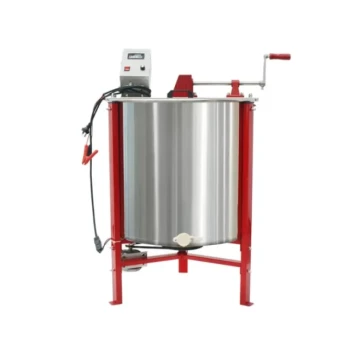
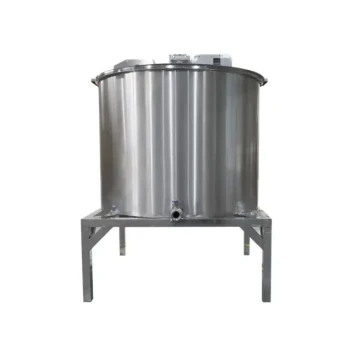
Modern honey extraction and filling machines act as the financial anchor for commercial apiaries. By maximizing processing efficiency and industrializing the workflow, these systems provide the stable cash flow necessary to offset the significant costs of colony replenishment and general management. They effectively convert a variable agricultural yield into a consistent, marketable product, ensuring long-term viability.
The core value of automation lies in decoupling operational success from biological volatility. By lowering unit production costs and ensuring high-throughput processing, modern machinery creates the economic buffer required to sustain apiary operations through fluctuations in climate and colony health.
Transforming Volatility into Stability
Stabilizing Cash Flow
The primary economic contribution of modern machinery is the creation of stable cash flow. Commercial beekeeping incurs high fixed costs, particularly for colony replenishment and apiary management. Automated systems maximize the speed and volume of the harvest, ensuring that revenue generation is consistent enough to cover these substantial operational expenses.
Reallocating Critical Resources
Automation does more than just speed up bottling; it optimizes human capital. By reducing the labor required for backend processing, apiaries can redirect skilled staff toward critical biological tasks. Personnel can shift their focus to winter preparation, disease management, and genetic improvement, which are the root drivers of hive health and future yield.
Mitigating Scale Effects
Implementing automated machinery lowers unit production costs through technical scale effects. As production volume increases, the cost per unit of processed honey decreases. This efficiency is essential for maintaining margins in a competitive market where yield sizes can fluctuate unpredictably due to climate variability.
The Mechanics of Quality and Efficiency
Managing Peak Harvests
During years of exceptional yield, speed is a financial necessity. Industrial-grade filling machines enable apiaries to rapidly process massive volumes of raw honey, significantly reducing the risk of secondary loss or spoilage. This capability ensures that a bumper crop translates directly into profit rather than waste caused by manual bottlenecks.
Precision and Standardization
Automated filling machines utilize high-precision weighing sensors and vacuum suction technology to ensure quantitative precision. This eliminates the inconsistencies inherent in manual handling. By strictly controlling flow and sealing, these systems ensure that critical chemical indicators, such as Hydroxymethylfurfural (HMF) levels, remain stable and within regulatory limits.
Ensuring Market Competitiveness
Economic sustainability relies on the ability to sell the product at a premium. Automated processing ensures compliance with rigorous hygiene standards and prevents secondary contamination. This product consistency strengthens the brand's reputation and market position, which is particularly vital for facilities focused on high-quality genetic breeding and premium honey sales.
Understanding the Trade-offs
Capital Intensity vs. Long-Term Gain
While automation provides economic resilience, it introduces a requirement for significant upfront capital investment. The shift to industrialization requires a business model capable of absorbing the initial cost of equipment to realize the long-term benefits of reduced labor costs and improved throughput.
Operational Rigidity
Automated systems rely on standardized inputs to function at peak efficiency. While this ensures consistency, it requires the apiary to adopt strict operational protocols regarding honey viscosity and container specifications. Deviation from these standards can disrupt the high-speed flow that makes the machinery economically viable.
Optimizing Your Apiary for Sustainability
To maximize the economic impact of automation, align your equipment choice with your specific operational goals:
- If your primary focus is Volume and Throughput: Prioritize extraction machinery with high-speed capacity to mitigate spoilage risks during peak harvest windows.
- If your primary focus is Premium Brand Positioning: Invest in filling machines with vacuum suction and precision sensors to guarantee low HMF levels and sterile packaging.
- If your primary focus is Operational Resilience: Choose automation that significantly reduces manual labor hours, allowing you to reinvest that time into colony health and genetic improvement.
True economic sustainability is achieved when technology handles the processing, allowing the beekeeper to focus on the bees.
Summary Table:
| Economic Factor | Impact of Modern Machinery | Strategic Benefit |
|---|---|---|
| Cash Flow | Converts harvests into marketable products rapidly | Covers high fixed costs like colony replenishment |
| Labor Efficiency | Automates bottling and extraction | Reallocates human capital to hive health & biology |
| Unit Cost | Achieves technical scale effects | Lower production costs per unit as volume grows |
| Product Quality | Precision sensors and vacuum sealing | Maintains low HMF levels and meets hygiene standards |
| Risk Mitigation | High-throughput processing | Prevents spoilage and secondary loss during peak harvests |
Scale Your Apiary Operations with HONESTBEE Industrial Solutions
At HONESTBEE, we empower commercial apiaries and distributors to achieve true economic sustainability through advanced industrialization. Our comprehensive wholesale portfolio includes high-speed honey extraction systems, precision honey-filling machines, and specialized hive-making machinery designed to lower your unit production costs and eliminate manual bottlenecks.
Whether you are looking to upgrade your processing facility with industrial-grade hardware or source essential beekeeping consumables and honey-themed merchandise, our team provides the technical expertise to optimize your workflow. Contact HONESTBEE today to discover how our professional equipment can transform your harvest efficiency and secure your competitive edge in the market.
References
- Nicola Seitz, Dennis vanEngelsdorp. A national survey of managed honey bee 2014–2015 annual colony losses in the USA. DOI: 10.1080/00218839.2016.1153294
This article is also based on technical information from HonestBee Knowledge Base .
Related Products
- Precision Durable Efficient HONESTBEE Rotary Honey Filling Machine
- Automatic Honey Filling and Filtering Machine for Beekeeping Bottle Filling
- Economy Small Honey Filling Machine Honey Bottle Filler Packaging Machine
- Fully Automatic Honey Filling Packaging Machine for Processing Line
- Small Honey Filling Machine Sachet Packing Equipment Single Nozzle
People Also Ask
- How do high-precision honey filling machines ensure quality? Optimize Your Commercial Production with HONESTBEE
- What are the common types of bottling machines used for honey? Choosing the Right Solution for Your Apiary
- What is a key feature of the new generation of the honey filling machine? The Advanced Electronic Control Unit
- How do honey filling and processing machines aid native bee product conservation? Boost Value with HONESTBEE Technology
- How do honey filling machines work? Achieve Precision & Speed for Your Apiary