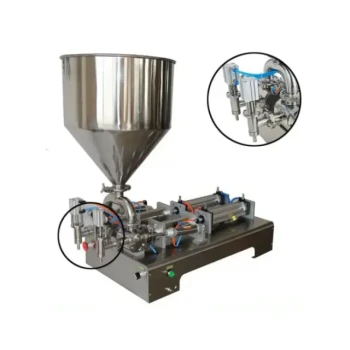
Modern honey filling machines extend shelf life primarily through bottom-up filling and foam-reduction technologies. By submerging the filling nozzle and raising it in sync with the liquid level, these machines eliminate the splashing and turbulence that trap air bubbles. This physical reduction of aeration is the critical first step in protecting the honey's chemical integrity.
The Core Insight Preventing air bubbles is not merely an aesthetic choice; it is a chemical necessity for preservation. By minimizing oxygen exposure, these machines protect glucose oxidase, the enzyme responsible for producing hydrogen peroxide—honey’s primary natural preservative and antibacterial defense.
The Mechanics of Air Reduction
To understand how shelf life is extended, we must first look at the specific mechanical processes that prevent air from entering the jar.
Bottom-Up Filling
Standard filling methods often drop liquid from a height, causing turbulence. Modern machines utilize bottom-up filling, where the nozzle dives to the bottom of the container before dispensing.
The nozzle retracts slowly as the honey rises, ensuring the filling outlet remains submerged. This prevents the "waterfall effect" that introduces atmospheric air into the viscous liquid.
Precision Foam Control
Honey is highly viscous, making trapped air bubbles difficult to remove once introduced. Advanced machines employ foam-reduction techniques and anti-drip devices on piston or rotor pumps.
These components ensure a "clean cut-off" after each cycle. By eliminating drips and uncontrolled flow, the system prevents the formation of surface foam, which is essentially a dense mat of air bubbles that accelerates oxidation.
Closed-System Architecture
Beyond the nozzle, the entire transfer process is often enclosed. Closed-system packaging limits the honey's exposure to the ambient environment.
This prevents the absorption of atmospheric moisture—a critical factor since honey is hygroscopic (water-attracting)—and blocks airborne microbial contaminants that could compromise stability.
The Chemical Impact of Aeration
The deep value of reduced aeration lies in how it influences the microscopic chemistry of the honey. The primary reference highlights that shelf life is biologically determined by enzyme activity.
Preserving Glucose Oxidase
The most critical component to protect is glucose oxidase. This enzyme is sensitive to oxidation.
When honey is aerated, the introduction of oxygen accelerates the degradation of this enzyme. By keeping the honey air-free, the machinery preserves the enzyme's capacity to function.
Sustaining Antibacterial Activity
Glucose oxidase is responsible for producing hydrogen peroxide, a potent antibacterial substance.
If the enzyme degrades due to aeration, hydrogen peroxide production ceases. Without this natural antiseptic, the honey loses its pharmacological stability and becomes more susceptible to spoilage over time.
Protecting Phenolic Compounds
Honey is rich in phenolic compounds, which provide antioxidant activity.
These compounds are highly susceptible to oxidation. Reducing aeration slows their degradation, maintaining the honey's nutritional profile and its ability to resist oxidative stress, which contributes to long-term preservation.
Understanding the Trade-offs
While modern machines are effective, there are operational balances that must be maintained to ensure quality.
Speed vs. Aeration
There is often a tension between throughput speed and fill quality. Running a machine at maximum velocity can induce cavitation or turbulence, even with bottom-up filling.
Operators must tune the flow rate to the specific viscosity of the honey to maintain a bubble-free injection, rather than prioritizing speed alone.
Temperature vs. Enzyme Integrity
To lower viscosity and make filling easier (and less prone to bubbles), honey is sometimes heated.
However, excessive heat destroys the very enzymes and volatile aromas you are trying to protect. The machinery must be capable of handling high-viscosity fluids without relying on overheating, utilizing gentle material transport to preserve delicate flavor nuances.
Making the Right Choice for Your Goal
Selecting the right filling technology depends on which aspect of shelf life is most critical to your product strategy.
- If your primary focus is Pharmacological/Medical Grade: Prioritize machines with bottom-up filling and closed systems to maximize glucose oxidase retention and hydrogen peroxide production.
- If your primary focus is Retail Aesthetics: Focus on anti-drip and foam-reduction features to ensure a visually clear product free of unsightly bubbles and crystallization triggers.
- If your primary focus is Standardization: Ensure the machine offers volumetric control to prevent moisture ingress and ensure consistent weight, meeting strict hygiene regulations.
By mechanically excluding air, you are not just packaging honey; you are actively stabilizing its biological defenses.
Summary Table:
| Feature | Mechanical Process | Impact on Shelf Life |
|---|---|---|
| Bottom-Up Filling | Nozzle submerges and rises with liquid | Eliminates air bubbles and prevents oxidation |
| Foam Reduction | Anti-drip devices & clean cut-off | Prevents surface foam and maintains chemical integrity |
| Closed-System | Enclosed transfer environment | Blocks moisture absorption and microbial contaminants |
| Enzyme Protection | Minimizes oxygen exposure | Preserves glucose oxidase for natural antibacterial defense |
| Precision Control | Flow rate & temperature management | Protects phenolic compounds and delicate flavor nuances |
Maximize Your Honey Quality with HONESTBEE
As a dedicated partner to commercial apiaries and distributors, HONESTBEE provides the advanced machinery you need to protect your product's biological integrity. From specialized honey-filling machines that minimize aeration to high-efficiency hive-making hardware, our comprehensive wholesale offering ensures your operation stays competitive.
Our value to you:
- Preserve Potency: Protect glucose oxidase and antibacterial properties with our precision filling technology.
- Complete Solutions: Access a full spectrum of beekeeping tools, equipment, and industry consumables.
- Expert Support: Benefit from high-performance machinery designed for the specific demands of the honey industry.
Ready to enhance your packaging efficiency and product shelf life? Contact us today for a wholesale consultation!
References
- Rizwana Afroz, Tanvir EM. Molecular Pharmacology of Honey. DOI: 10.4172/2161-1459.1000212
This article is also based on technical information from HonestBee Knowledge Base .
Related Products
- Precision Durable Efficient HONESTBEE Rotary Honey Filling Machine
- Semi Automatic Small Honey Bottle Filling Machine Honey Filler
- Economy Small Honey Filling Machine Honey Bottle Filler Packaging Machine
- Fully Automatic Honey Filling Packaging Machine for Processing Line
- Commercial Rotary Honey Filling Machine for Production
People Also Ask
- What is a key feature of the new generation of the honey filling machine? The Advanced Electronic Control Unit
- What quality control role does professional honey filling equipment perform? Ensure Consistency and Product Stability
- How do honey filling and processing machines aid native bee product conservation? Boost Value with HONESTBEE Technology
- What are the common types of bottling machines used for honey? Choosing the Right Solution for Your Apiary
- How do high-precision honey filling machines ensure quality? Optimize Your Commercial Production with HONESTBEE