Modern movable-frame hives are substantially better suited to commercial apiculture than traditional fixed-comb backyard hives. Removable frames and stackable supers make inspections, feeding, swarm management, colony expansion, and honey harvesting more controlled and less destructive. Traditional hives may remain practical for low-intervention backyard beekeeping, but they limit inspection accuracy, operational efficiency, and yield optimization at commercial scale.
Core takeaway: Movable-frame systems turn hive management into a repeatable, measurable process. They preserve reusable comb, provide expandable storage, and allow targeted interventions—advantages that directly support higher productivity and more efficient commercial operations.
Why Hive Architecture Determines Commercial Performance
Traditional fixed-comb hives restrict access
In a traditional fixed-comb hive, the comb is attached to the internal structure and cannot be removed easily. Inspecting brood, food stores, queen performance, or disease conditions often requires cutting into the colony’s structure.
This makes routine management disruptive and can damage brood, comb, and honey stores. It also makes consistent inspection procedures difficult across a large apiary.
Movable-frame hives create a modular workspace
Modern movable-frame hives use standardized rectangular boxes with removable frames. Boxes can be stacked vertically and configured according to colony strength, seasonal conditions, and honey-flow expectations.
This modularity allows beekeepers to add brood space, insert honey supers, remove full frames, and reorganize colonies without dismantling the entire hive.
Standardization supports scale
Consistent box and frame dimensions simplify equipment handling across multiple colonies. The same system can support inspections, splitting, merging, breeding programs, feeding, and honey extraction.
For distributors and commercial buyers, standardization also improves product compatibility, replacement planning, inventory management, and order fulfillment.
How Inspection Capabilities Compare
Movable frames enable precise colony assessment
A beekeeper can remove individual frames and inspect brood development, queen activity, honey stores, pollen availability, and signs of pests or disease. This supports evidence-based decisions rather than relying mainly on external observations.
The beekeeper can also return each frame to its original position, minimizing unnecessary disturbance to the colony.
Fixed comb makes diagnosis more difficult
Traditional fixed-comb hives limit visibility into the colony’s internal condition. Beekeepers may be unable to inspect the brood area thoroughly or determine whether a problem is localized or widespread.
When intervention is necessary, cutting or breaking comb can increase colony stress and reduce the quality of subsequent harvests.
Better inspection improves management timing
Movable frames allow interventions to be timed more accurately. Beekeepers can identify when a colony needs additional space, when swarm-control measures are necessary, or when honey is sufficiently mature for harvesting.
This timing advantage is particularly important during major nectar flows, when missed expansion opportunities can lead to congestion, swarming, and lost production.
How Movable Frames Improve Hive Management
Supers provide controlled expansion
Honey supers add storage capacity above the brood area without requiring major changes to the existing colony structure. Additional supers can be added as the population and nectar flow increase.
This gives commercial operators a practical way to match hive capacity to seasonal demand instead of using a fixed-volume structure.
Reusable comb reduces colony labor
When honey is harvested from removable frames and the comb is returned to the hive, bees do not need to rebuild the entire structure. The colony can therefore devote more effort to brood rearing, foraging, and honey storage.
This does not guarantee a specific yield increase, because production also depends on forage, weather, colony strength, genetics, and management quality. However, preserving comb removes a major source of repeated biological work.
Colony splitting and merging become more practical
Individual frames can be transferred between colonies during controlled splitting, strengthening, or merging operations. This provides commercial beekeepers with greater flexibility when balancing colony populations.
Such interventions are considerably more difficult in fixed-comb systems because the comb cannot be repositioned without structural damage.
Feeding and seasonal management are more controlled
Movable-frame designs make it easier to assess food stores and provide supplementary feed when required. Beekeepers can also adjust the internal arrangement of frames and boxes as colony needs change.
This supports more consistent seasonal management across a commercial apiary.
Honey Yield Optimization
Space management reduces production bottlenecks
A colony needs adequate storage space during a strong nectar flow. If the hive becomes crowded, bees may have less room for incoming nectar and may become more likely to swarm.
Movable-frame systems allow supers to be added before space becomes a constraint. This helps colonies continue storing nectar during peak production periods.
Non-destructive harvesting preserves production capacity
Honey can be removed from selected mature frames while the broader hive structure remains intact. After extraction, suitable combs can be returned to the colony for reuse.
This improves operational efficiency because the bees spend less time reconstructing comb after each harvest.
Cleaner extraction supports product quality
Individual frames can be inspected and harvested according to honey maturity and condition. This makes it easier to separate suitable honey from brood areas, immature stores, or damaged comb.
The result is greater control over harvest quality and reduced risk of unnecessarily disturbing the colony.
Reported yield advantages require context
The supplementary material cites comparisons such as 33.2 kg per hive versus 10.8 kg for traditional hives, and broader production ranges of approximately 15–30 kg versus around 5 kg. These figures should be treated as indicative rather than universal benchmarks.
Yield comparisons depend heavily on region, forage availability, colony genetics, weather, migratory practices, equipment configuration, and beekeeper skill. The reliable conclusion is that movable-frame systems provide the management mechanisms needed to pursue higher yields—not that every operation will achieve the same numerical result.
What This Means for Commercial Operations
Movable-frame systems improve labor efficiency
Although inspections require training and regular handling, each inspection can produce more useful information. Beekeepers can work with individual frames rather than damaging an entire fixed-comb structure.
At scale, this improves repeatability and makes hive records, production planning, and intervention schedules more practical.
Equipment compatibility matters
Commercial buyers should evaluate more than the hive box itself. Frames, supers, covers, bottom boards, feeders, stands, queen-exclusion components, and extraction equipment should form a compatible system.
A supplier with a broad, coordinated product portfolio can reduce procurement complexity and avoid delays caused by mismatched or unavailable components.
Supply reliability affects apiary productivity
Commercial expansion often depends on receiving standardized equipment quickly and consistently. Delayed boxes or frames can prevent timely supering, colony expansion, or replacement of damaged components.
For distributors, wholesalers, and B2B resellers, responsive service, accurate product specifications, efficient order fulfillment, and dependable delivery are operational advantages—not merely purchasing conveniences.
Understanding the Trade-offs
Higher management potential requires more skill
Movable-frame hives make more interventions possible, but they do not make those interventions automatically correct. Poorly timed inspections, excessive handling, or incorrect frame placement can stress colonies and reduce productivity.
Operators need suitable training, inspection protocols, and recordkeeping practices to realize the system’s full value.
Initial costs are generally higher
Modern standardized hives typically require more components than simple fixed-comb structures. The investment may include boxes, frames, supers, protective equipment, tools, and compatible extraction infrastructure.
The commercial justification comes from greater reusability, inspectability, scalability, and harvesting efficiency over the operating life of the equipment.
More equipment creates maintenance responsibilities
Frames and boxes must be inspected, cleaned, repaired, and replaced when necessary. Standardization reduces complexity, but it does not eliminate routine equipment management.
A procurement plan should include replacement frames, spare hive bodies, and critical accessories to prevent avoidable downtime.
Yield is not determined by hive design alone
A movable-frame hive cannot compensate for poor forage, weak colonies, disease pressure, adverse weather, or inadequate swarm control. It is best understood as the hardware foundation for better management rather than a standalone production guarantee.
Making the Right Choice for Your Goal
A practical decision should match the hive system to the operation’s scale, labor model, and production objectives.
- If your primary focus is commercial honey yield: Choose a movable-frame system with compatible supers and reusable frames so storage capacity can expand during major nectar flows.
- If your primary focus is colony health and inspection: Prioritize standardized removable frames that allow detailed checks of brood, queen performance, food stores, and disease indicators.
- If your primary focus is operational scalability: Select a modular hive platform with consistent dimensions and a complete portfolio of replacement parts and accessories.
- If your primary focus is procurement efficiency: Work with a supplier that can provide one-stop sourcing, rapid technical responses, dependable quality, and fast, coordinated delivery.
- If your primary focus is low-intervention backyard beekeeping: A traditional hive may remain acceptable where simple construction and minimal management are more important than inspection precision and maximum yield.
For commercial apiculture, a well-supported movable-frame system provides the clearest path to controlled management, reusable infrastructure, and optimized honey production.
Summary Table:
| Aspect | Traditional Backyard Hives | Modern Movable-Frame Hives |
|---|---|---|
| Inspection | Difficult, destructive | Easy, non-destructive |
| Management | Limited, disruptive | Modular, precise |
| Honey Yield | Lower, variable | Higher potential, optimized |
| Scalability | Poor | Excellent |
| Cost | Lower initial | Higher initial, better ROI |
Elevate your commercial apiculture with HONESTBEE's premium movable-frame hive systems. Our one-stop sourcing and full-spectrum portfolio ensure rapid delivery and dedicated support. For distributors and beekeepers, we offer OEM/ODM services, certifications, and supply reliability to maximize your productivity. Contact us today to discuss your requirements!
Related Products
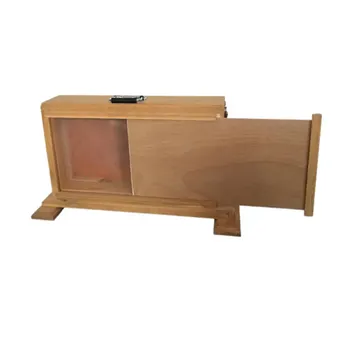
- Professional Observation Hive: The Ultimate Portable Solution for Beekeeping Education, Exhibitions, and Colony Displays
- Professional Grade Foldable Beehive Handles
- Modern Flat-Mount Hive Number Set for Beekeeping
- Heavy-Duty Stainless Steel Clip-On Frame Perch
- Heavy Duty Adjustable Hive Connector
People Also Ask
- How does transitioning to modern hives boost honey yield? Increase production and product quality for your commercial apiary
- How do Langstroth and Dadant standard beehives compare regarding brood chamber management and component compatibility? Find the Perfect Fit for Your Apiary
- What are the key operational differences and structural trade-offs between Langstroth beehives and top-bar beehives for apiary management? Discover which hive system fits your operational needs.
- What are the primary differences between Langstroth, horizontal top bar, and Warré hive box designs when selecting beekeeping equipment? Choose the Right Hive for Your Apiary
- Why do commercial apiary operators transition from traditional hive structures, such as clay cylinders, to standardized Langstroth hive boxes? Discover Scalable Beekeeping Solutions