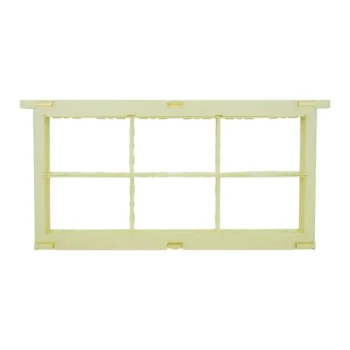
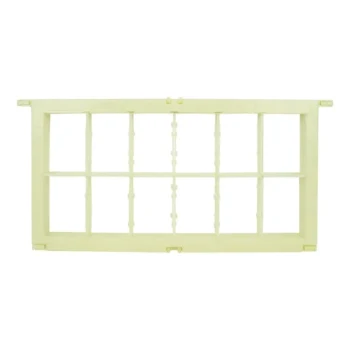
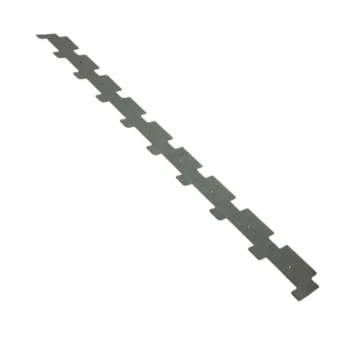
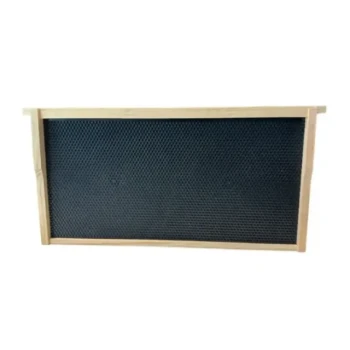
Modular assembled section frames simplify comb honey production by turning each retail unit into a built-in harvest and packaging format. Instead of cutting large comb sheets into pieces, commercial apiaries let bees fill and cap individual plastic or wooden section boxes installed inside a frame. Once harvested, each completed section can be removed, closed, labeled, and prepared for sale with far less handling, leakage, and comb damage.
The central advantage is process integration: the frame supports comb construction in standardized sections, and those same sections become the retail product after harvesting. This reduces labor between hive and customer while improving consistency, hygiene, and presentation.
How Modular Section Frames Change the Production Workflow
Bees build comb inside individual units
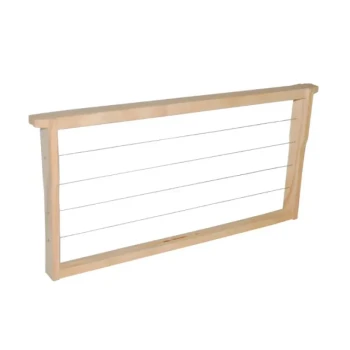
A modular assembled frame contains fitted section boxes, typically made from plastic or wood, with thin comb foundation inserted into each unit. The frame is placed in a hive super, where bees extend the foundation, store honey, and cap the comb within the individual sections.
This avoids producing one large sheet that must later be cut into smaller retail pieces.
The frame standardizes the finished product
Each section box establishes a consistent size and shape before the bees begin building. That standardization helps apiaries produce uniform packages suitable for retail displays, wholesale orders, and repeat product specifications.
Square wooden sections and circular plastic cassette-style systems can support different product presentations while following the same basic production principle.
Harvesting becomes a removal operation
When the honey is filled and capped, the beekeeper removes the completed sections from the frame rather than cutting through bulk comb. The sections can then be inspected, closed or covered, labeled, and transferred into their final sales or shipping format.
This is a simpler workflow than cutting, draining, trimming, and repacking large comb sheets.
Where the Main Commercial Benefits Come From
Less cutting means less labor
Traditional cut-comb production requires operators to remove large combs, cut them accurately, manage scraps, and clean equipment and work areas. Modular sections largely eliminate those steps.
For commercial apiaries, the result is a more repeatable labor process that is easier to schedule during busy harvest periods.
Reduced leakage and product loss
Cutting a filled comb opens cells and can release honey onto tools, racks, packaging surfaces, and adjacent product. Individual section boxes remain structurally intact during normal handling.
This helps preserve more of the finished comb honey and reduces cleanup associated with exposed honey.
Better comb appearance
Comb honey is purchased partly for its visual quality. A section that remains intact inside a clean, uniform box generally presents better than a manually cut piece with uneven edges, crushed cells, or visible leakage.
That consistency is particularly valuable for premium retail products and distributor catalogs.
Improved hygiene control
The fewer times a product is touched, cut, transferred, and repacked, the easier it is to maintain a controlled handling process. Modular sections reduce direct contact with the comb and simplify the movement from hive to packaging area.
They do not replace sanitation procedures, but they can reduce the number of handling points that must be managed.
Why Packaging Becomes More Efficient
The product format is defined at the hive
With cut comb, packaging determines the final shape after harvest. With modular section frames, the section box defines the product format during production.
This makes packaging procurement and order planning more predictable because the apiary knows the approximate unit format before harvest.
Sections can move directly into retail preparation
Once capped and removed, the completed units can be fitted with covers or placed into suitable retail packaging. Circular plastic systems may use snap-on covers, while wooden sections may be packaged in cartons, film, or other protective formats appropriate to the product design.
The exact packaging method depends on the section system, market requirements, and branding strategy.
Uniform units support wholesale fulfillment
Standardized sections make it easier to assemble case quantities, apply labels, prepare mixed orders, and communicate specifications to distributors or resellers. Uniform dimensions also simplify storage, shelf presentation, and shipping arrangements.
For suppliers serving multiple markets, compatibility between the frame system and available packaging should be confirmed before purchasing.
Conditions Required for Reliable Results
Use suitable foundation
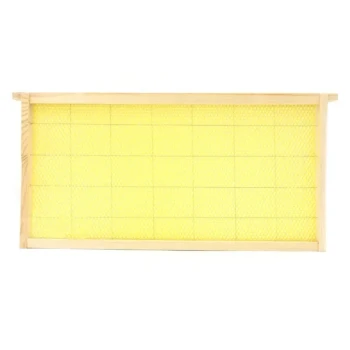
Section boxes should be fitted with ultra-thin, non-wired wax foundation so bees can build properly within the small units. Foundation should be trimmed to fit at room temperature, because cold wax is more brittle and more likely to crack during preparation.
The foundation provides an organized starting point and reduces the amount of wax-building work required from the colony.
Match the equipment to a strong colony
Section supers should be placed on populous colonies during an active honey flow. Strong bee populations are more likely to draw the foundation, fill the sections, and cap the honey efficiently.
Weak colonies or poor nectar availability can leave sections partially built or inconsistently filled.
Manage ventilation and harvest timing
Adequate hive ventilation supports the colony while it is working in the section super. Once the sections are capped, they should be harvested promptly to reduce the risk of discoloration caused by continued bee activity.
Operational timing matters because the equipment simplifies harvesting only when the apiary maintains suitable colony and flow conditions.
Plan the full equipment system
The section frame is one part of a larger production setup that includes supers, foundation, covers, labels, cartons, and storage or shipping materials. Commercial buyers should evaluate the complete system rather than treating the frame as an isolated component.
A coordinated product portfolio can reduce compatibility problems and make replenishment faster during the production season.
Understanding the Trade-offs
Modular sections require more preparation upfront
The boxes must be assembled, fitted with foundation, and installed correctly before the bees begin production. This creates preparation work that does not disappear; it is simply moved earlier in the workflow.
For larger apiaries, standardized assembly procedures and stocked replacement components help control this burden.
Small sections depend on accurate fitting
Poorly trimmed foundation, cracked wax, or loose components can interfere with comb construction. Every section must be prepared consistently so bees receive a stable and usable building surface.
Quality control before installation is therefore essential.
The system is less flexible than cut comb
Cut-comb production allows an operator to vary piece sizes after harvest. Modular section frames produce predetermined units, which is an advantage for consistency but a limitation when customers require highly customized dimensions.
The chosen section format should reflect the target retail and wholesale channels.
Harvest timing still affects quality
Modular packaging does not prevent discoloration, incomplete capping, or quality variation caused by unsuitable hive conditions. Sections must still be harvested at the appropriate stage and protected from damage during removal and transport.
The equipment improves process control; it does not replace colony management or inspection.
Different systems may not be interchangeable
Plastic cassette systems, wooden section boxes, covers, and labels can have different dimensions and assembly requirements. Buyers should verify fit, material compatibility, packaging availability, and replacement-part supply before standardizing across an apiary.
This is especially important for distributors and resellers supporting customers with different hive and packaging preferences.
Why the Format Fits Commercial Distribution
It creates a clear product specification
A modular section can be defined by its material, shape, dimensions, cover type, and packaging configuration. That makes it easier for distributors and B2B buyers to quote, compare, and reorder products.
Clear specifications also reduce misunderstandings between equipment suppliers, apiaries, and downstream retailers.
It supports premium positioning
Intact, neatly packaged comb honey communicates freshness and craftsmanship while preserving the natural structure of the comb. The presentation can support higher-value retail positioning when supported by suitable labeling and quality control.
The premium result depends on both the production system and the care taken during final packaging.
It simplifies replenishment
Commercial operations need dependable access to frames, section boxes, foundation, covers, and related hive hardware. A supplier with broad product coverage, responsive service, and efficient fulfillment can help apiaries avoid interruptions during active production periods.
For resellers, offering the complete section-honey setup is often more useful than supplying frames alone.
Making the Right Choice for Your Goal
Select the frame and packaging system according to the product format, colony strength, expected volume, and customer requirements.
- If your primary focus is reducing labor: Choose assembled section frames that eliminate bulk-comb cutting and minimize post-harvest handling.
- If your primary focus is premium retail presentation: Prioritize uniform section dimensions, intact comb, clean covers, and packaging that protects appearance.
- If your primary focus is wholesale distribution: Standardize section sizes and confirm reliable availability of compatible boxes, foundation, covers, and labels.
- If your primary focus is operational reliability: Source a complete, compatible equipment system and maintain spare components before the main honey flow.
- If your primary focus is production quality: Use suitable thin foundation, strong colonies, proper ventilation, and prompt harvesting once the sections are capped.
With the right equipment configuration and colony management, modular section frames turn comb honey production into a more consistent, lower-handling, retail-ready process.
Summary Table:
| Benefit | Description |
|---|---|
| Reduced Labor | Eliminates cutting and trimming of large comb sheets, simplifying the harvest workflow. |
| Less Waste | Individual section boxes stay intact, reducing honey leakage and product loss. |
| Better Appearance | Uniform, intact sections improve visual quality and consumer appeal. |
| Enhanced Hygiene | Fewer handling points reduce contamination risks and simplify sanitation. |
| Efficient Packaging | Sections become the retail unit, enabling direct packaging and reduced processing. |
| Wholesale Convenience | Standardized sizes facilitate case packing, labeling, and distributor orders. |
Ready to streamline your comb honey production? At HONESTBEE, we supply the full spectrum of beekeeping tools, machinery, and equipment, including modular section frames and compatible packaging supplies. Designed for commercial apiaries and distributors, our one-stop sourcing ensures fast delivery, dedicated support, and wholesale-friendly options like OEM/ODM and reliable supply. Contact us today to discuss your operational needs and boost your efficiency!
Related Products
- Professional 500g Sectional Comb Honey Frame System for Beekeeping
- Professional Sectional Comb Honey Frame with 250g Cassette System for Beekeeping
- Assembled Wooden Bee Frames with Beeswax Foundation Ready to Use by HONESTBEE
- Heart-Shaped Comb Honey Frame and Honeycomb Cassette
- Plastic Honey Comb Frames Cassette Box for Honey
People Also Ask
- How are honeybee combs utilized for non-destructive colony monitoring? Master Population Density Tracking
- What frame to use for honeycomb? Choose the Right System for Pure, Edible Comb
- What is a honeycomb frame? The Key to Modern, Sustainable Beekeeping
- What is the technical purpose of exchanging honeycomb frames? Master Apiary Equalization for Growth
- What is the significance of sampling honeycomb frames and hive bottoms? A Guide to Scientific Sanitation Monitoring