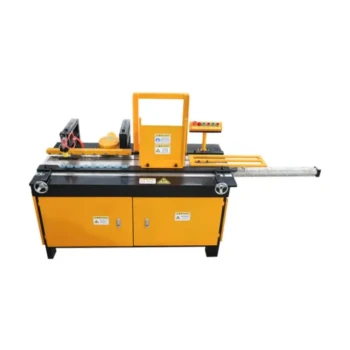
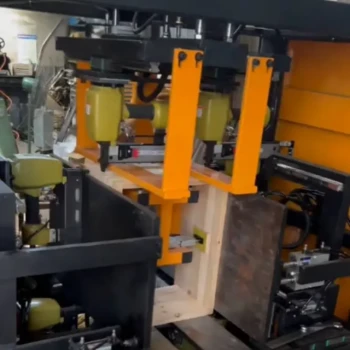
Professional beekeeping machinery acts as the industrial backbone for sustainable ecosystem management. It supports biological communities by automating the production of hives and the processing of honey, which drastically lowers the cost of large-scale bee breeding. This operational efficiency ensures a consistent supply of colonies, creating the foundation necessary for ecological compensation initiatives and stable agricultural pollination.
By shifting apiculture from subsistence farming to a standardized industry, automation ensures the consistent supply of healthy bee colonies required for large-scale ecological restoration and agricultural security.
The Role of Industrialization in Ecological Stability
Enabling Large-Scale Breeding
The primary contribution of professional machinery is the increase in industrialization levels within apiculture. By automating labor-intensive tasks, producers can manage significantly larger populations of bees with reduced overhead.
Reducing Operational Costs
Efficient equipment lowers the financial barrier to entry for large-scale colony breeding. This cost reduction is critical for maintaining the high turnover and supply of bee colonies needed to support broader ecosystem services.
Supporting Ecological Compensation
A robust supply of affordable bee colonies makes ecological compensation mechanisms feasible. This ensures that bee-facilitated landscaping and agriculture are not limited by a shortage of pollinators, fostering a positive interaction between conservation and production.
Protection Through Standardization
Preventing Habitat Destruction
Advanced hive-making machinery allows for the rapid production of uniform, species-appropriate nesting boxes. This creates a sustainable alternative to wild honey hunting, which often involves felling trees to access hives.
Transitioning to Regulated Management
By providing standardized hardware, machinery helps local communities transition from extractive practices to regulated beekeeping management. This protects natural timber and habitats while maintaining economic viability for the producers.
Minimizing Colony Disturbance
Professional tools allow for precision in pest control and honey extraction. This minimizes physical disturbances to the colony and optimizes the internal hive environment, directly improving bee health and yield per colony.
Economic Sustainability and Quality Control
Meeting Market Standards
Honey-filling machinery and industrial processing tools enable rural producers to generate high-quality products that meet strict market standards. This allows operators to move from subsistence farming to competitive participation in the modern ecological honey market.
Customization for Durability
Dedicated hive-making machines allow for the customization of hive specifications to meet specific environmental needs, such as those required for migratory beekeeping. This increases equipment durability and reduces the waste associated with frequent infrastructure replacement.
Understanding the Trade-offs
Initial Capital Intensity
While automation reduces long-term costs, the initial investment in professional machinery can be substantial. This creates a barrier for small-scale independent beekeepers who may not have the capital to modernize immediately.
Technical Maintenance Requirements
Industrial-grade equipment requires a higher level of technical skill to operate and maintain compared to traditional manual tools. A lack of local technical support can lead to operational bottlenecks if machinery fails.
Standardization vs. Biodiversity
While standardized hives are efficient, over-standardization must be monitored. It is essential to ensuring that "uniform" housing solutions still accommodate the specific biological needs of diverse local bee species, rather than forcing a single industrial standard on all biological communities.
Scaling Your Operations Sustainably
Integrating machinery into your apiculture management requires aligning equipment choices with your specific ecological or economic targets.
- If your primary focus is Ecological Conservation: Prioritize hive-making machinery to produce standardized artificial nesting boxes, reducing reliance on wild habitats and curbing deforestation.
- If your primary focus is Commercial Viability: Invest in honey-filling and processing equipment to ensure your product meets the hygiene and quality standards required for competitive market entry.
- If your primary focus is Colony Health: Focus on precision management tools that minimize hive disturbance during pest control and extraction to lower stress levels on the biological community.
True sustainability is achieved when industrial efficiency is used not just to extract resources, but to build a resilient infrastructure that supports both the bees and the environment they pollinate.
Summary Table:
| Sustainable Factor | Role of Professional Machinery | Impact on Biological Communities |
|---|---|---|
| Habitat Protection | Hive-making machines create standardized boxes | Prevents deforestation and wild habitat destruction |
| Operational Efficiency | Automation of hive production and honey processing | Lowers costs for large-scale breeding and pollination |
| Colony Health | Precision management and extraction tools | Minimizes physical disturbance and reduces colony stress |
| Economic Stability | Standardized honey-filling and quality control | Moves producers from subsistence to market-ready operations |
| Environmental Impact | Customization for migratory beekeeping durability | Reduces equipment waste and optimizes resource usage |
Elevate Your Bee Management with HONESTBEE
At HONESTBEE, we specialize in empowering commercial apiaries and distributors with the industrial tools needed for sustainable growth. From high-precision hive-making machines that protect natural habitats to automated honey-filling machines that meet global market standards, our comprehensive wholesale portfolio covers every beekeeping need.
Whether you are scaling a commercial operation or supplying the next generation of beekeepers, our specialized machinery and industry consumables provide the reliability and efficiency your business deserves. Partner with us today to discover how our tailored hardware solutions can enhance your productivity and support ecological health.
References
- I. N. Mishin. Dynamics of population change, pollinators biodiversity and their role in managing the sustainability of biocenosis. DOI: 10.1088/1755-1315/1045/1/012157
This article is also based on technical information from HonestBee Knowledge Base .
Related Products
- Economy Small Honey Filling Machine Honey Bottle Filler Packaging Machine
- Automatic Honey Filling and Filtering Machine for Beekeeping Bottle Filling
- Precision Durable Efficient HONESTBEE Rotary Honey Filling Machine
- Fully Automatic Honey Filling Packaging Machine for Processing Line
- Double Nozzle Small Honey Filling Machine Honey Sachet Packing Packaging Equipment
People Also Ask
- Why is the hygiene and precision of honey filling machinery critical? Maximize Your Honey's Retail Value
- Why are professional honey filling machinery and specialized storage consumables vital? Ensure Quality & Scalability
- Why is high-precision honey filling machinery required for stingless bee honey? Ensure Stability and Market Value
- Why is professional honey filling machinery critical for honey production? Scale Your Apiary's Profit & Efficiency
- Why is high-capacity honey filling machinery necessary for Giant Honey Bees? Solve the Apis dorsata Volume Crisis