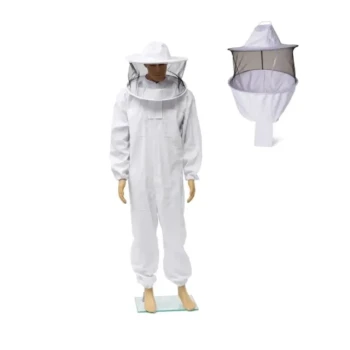
Professional beekeeping tools function as the critical interface between the apiarist and the colony, directly influencing both safety and yield. By utilizing high-quality protective gear like veils and precision instruments like hive scrapers, operators ensure personal safety while minimizing physical disturbance to the hive. This reduction in disruption prevents defensive bee behavior, directly safeguarding colony stress levels and maintaining consistent production output.
The true value of professional tooling extends beyond simple operator protection; it is essential for maintaining a calm, stable colony environment. By mitigating stress-induced aggressive responses, these tools prevent production drops and enable a precise, standardized workflow.
The Mechanics of Colony Stability
Minimizing Stress-Induced Production Drops
The primary function of specialized tools is to interact with the hive without triggering an alarm response. When bees exhibit defensive or aggressive behaviors due to clumsy handling, the colony experiences stress.
Stress is a production killer. As noted in industry standards, stress-induced responses can lead to significant drops in production capacity. Professional hive tools allow for smooth manipulation of frames, preventing the vibrations and crushing that provoke these defensive reactions.
Precision Through Operator Confidence
Protective gear, such as industrial-grade veils and suits, provides a comprehensive physical barrier against stings. This safety assurance is operational, not just personal.
When an operator is confident they will not be stung, they can perform complex inspections and delicate harvesting tasks with greater calmness and accuracy. Fear leads to errors; proper protection eliminates fear, allowing for the consistent execution of delicate tasks.
Operational Efficiency and Hygiene
Standardization and Hygiene Standards
Transitioning to professional operations requires adherence to strict hygiene and efficiency standards. Specialized machinery, such as honey extractors and hive-making equipment, reduces labor intensity while maintaining cleanliness.
In a professional setting, manual inconsistency is a liability. Industrial-grade tools ensure that honey extraction and hive management meet international safety standards, preventing contamination and ensuring a standardized product.
Health Management and Disease Control
Specialized colony treatment tools are vital for maintaining the biological integrity of the apiary. These tools enable the precise application of treatment protocols for pests like Varroa mites.
Proper tooling increases colony survival rates and ensures honey safety. By applying treatments accurately, beekeepers prevent chemical contamination at the source, ensuring the final product meets quality regulations.
Maximizing Resource Utilization
Economic Recovery of Byproducts
Professional processing equipment allows for the recovery of resources that are often discarded in smaller operations. For example, specialized beeswax processing machinery uses temperature-controlled melting and filtration.
This technology transforms old combs—often treated as waste—into high-purity beeswax. This maximizes the economic return of every hive resource, turning a potential disposal cost into a revenue stream.
Logistical Scalability
While hand tools manage the individual hive, specialized vehicles and trailers manage the apiary. These tools facilitate colony migration, allowing hives to be relocated based on flowering periods.
This mobility optimizes resource allocation, potentially increasing honey yield to approximately 60 kg per hive. It supports the logistical leap from stationary hobbyist beekeeping to high-yield commercial enterprises.
Understanding the Trade-offs
Investment vs. Operational Scale
Professional tools represent a shift toward industrial-grade hardware. While they significantly reduce labor intensity and improve safety, they require upfront capital investment.
For small-scale operations, the cost of specialized machinery or custom vehicles may outweigh the immediate efficiency gains. These tools are designed to counteract rising labor costs, meaning their value is realized most fully when the operation scales up to a volume where manual labor becomes the primary bottleneck.
Making the Right Choice for Your Goal
To select the appropriate tooling for your apiary, assess your current operational bottlenecks:
- If your primary focus is Colony Health: Prioritize precision hive tools and specialized treatment application gear to minimize stress and manage pests like Varroa mites without contaminating the hive.
- If your primary focus is Operational Efficiency: Invest in industrial-grade processing machinery and ergonomic protective gear to reduce labor intensity and improve the speed and hygiene of inspections.
- If your primary focus is Economic Maximization: Look toward byproduct processing equipment (wax recovery) and logistical vehicles to extend foraging range and capture value from waste streams.
Professional beekeeping is not defined by the size of the apiary, but by the precision and stability achieved through the correct application of specialized tools.
Summary Table:
| Tool Category | Primary Impact | Key Benefit |
|---|---|---|
| Protective Gear | Operator Confidence | Reduces handling errors & ensures calm, precise hive inspections. |
| Precision Hive Tools | Colony Stability | Minimizes vibrations and bee crushing to prevent stress-induced production drops. |
| Processing Machinery | Hygiene & Efficiency | Standardizes honey extraction and wax recovery while meeting food safety codes. |
| Treatment Equipment | Health Management | Enables accurate application of protocols for pests like Varroa mites. |
| Logistical Hardware | Scalability | Facilitates hive migration and maximizes resource utilization across locations. |
Elevate Your Commercial Success with HONESTBEE
Transitioning from a hobbyist to a high-yield commercial enterprise requires more than just bees—it requires industrial-grade precision. HONESTBEE empowers commercial apiaries and distributors with a comprehensive range of professional beekeeping tools, specialized machinery, and essential consumables.
How we add value to your operation:
- Comprehensive Inventory: From hive-making and honey-filling machines to protective hardware and cultural merchandise.
- Operational Efficiency: Our tools are designed to reduce labor intensity, ensuring your workflow meets international hygiene and safety standards.
- Economic Maximization: Utilize our advanced wax recovery and processing equipment to turn waste streams into revenue.
Ready to scale your production and secure your colony health? Contact HONESTBEE today to explore our wholesale offerings and customized equipment solutions.
References
- Veer Sain. Economics and Importance of Beekeeping. DOI: 10.26717/bjstr.2017.01.000561
This article is also based on technical information from HonestBee Knowledge Base .
Related Products
- Beekeeper Cowboy Hat and Veil for Beekeeping
- Professional Beekeeper Suit with Square Folding Cotton Veil
- Professional Square Folding Wire Mesh Beekeeping Veil
- Premium Cowboy Beekeeper Hat with Visibility Veil Outdoor Professional Beekeeping Protective Gear
- White Cotton Beekeeping Jacket and Veil for Bee Keepers
People Also Ask
- What is the correct way to wash a beekeeping hat and veil? Safe Hand-Washing Guide to Protect Your Gear
- What are the components and importance of a beekeeper's hat and veil? Essential Safety Gear for Apiary Success
- What are the differences between a separated and an attached beekeeping hat and veil? Security vs. Versatility
- What are the design specifications for an effective beekeeping hat and veil? Professional Standards for Protection
- What is the function of a beekeeping hat and veil? Essential Protection for Safe Hive Management