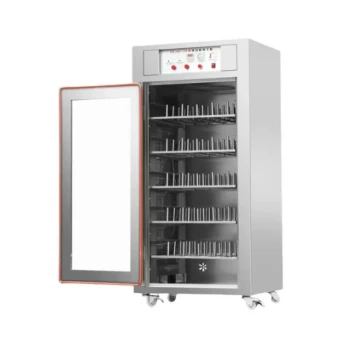
Professional-grade Pollen Drying Ovens preserve active ingredients by utilizing a synchronized system of precise temperature control and uniform airflow circulation. By dehydrating pollen at relatively low temperatures, these units remove moisture without triggering the thermal degradation that destroys heat-sensitive compounds like enzymes and vitamins.
Core Takeaway: The effectiveness of a professional oven lies in its ability to decouple drying from overheating. It reduces moisture content to safe levels (below 10%) to inhibit mold, while strictly maintaining a thermal environment that keeps proteins and bioactive components intact.
The Mechanics of Nutrient Preservation
To understand how these ovens work, you must look beyond simple heating. The goal is not just to dry the product, but to suspend it in a stable state.
Precise Low-Temperature Regulation
The primary threat to bee pollen is high heat. High temperatures denature proteins and destroy the enzymes that give pollen its nutritional value.
Professional ovens operate at controlled, low temperatures. This ensures the drying process remains gentle enough to protect the biological activity of the pollen while still being effective enough to remove water.
Uniform Airflow Circulation
Heat alone cannot dry pollen efficiently; it requires movement. Professional ovens employ engineered airflow systems to ensure consistency.
This uniform circulation eliminates "hot spots" where nutrients could be scorched and "damp spots" where moisture could linger. Every granule is treated with the exact same atmospheric conditions.
Protection Against Environmental and Biological Threats
Preservation is a defensive act. You are protecting the pollen from two specific enemies: decomposition and radiation.
Eliminating Microbial Growth
Fresh pollen is naturally high in water content, making it a breeding ground for mold and pathogens like Salmonella.
By using hot air circulation to reduce moisture content to below 10%, these ovens inhibit the growth of these microorganisms. This secures long-term storage stability without requiring chemical preservatives.
Avoiding UV Radiation Damage
Traditional methods, such as sun drying, expose pollen to ultraviolet (UV) radiation.
UV rays can break down bioactive substances. Professional ovens perform the drying process in a closed environment, preventing ultraviolet destruction and ensuring the chemical profile of the pollen remains identical to its fresh state.
Understanding the Trade-offs
While professional-grade drying is superior for quality, it introduces specific operational constraints that you must plan for.
Processing Time vs. Heat Intensity
There is an inherent inverse relationship between temperature and time. Because these ovens operate at lower temperatures to save nutrients, the drying cycle is longer than high-heat industrial methods.
You are trading speed for quality. If your workflow requires rapid throughput, this method may create a bottleneck unless you scale your equipment capacity accordingly.
Energy Efficiency
Maintaining precise, low-temperature airflow over long periods can be energy-intensive compared to a quick, high-heat blast.
While the energy cost is higher per batch, it is the necessary "tax" for producing a premium, bioactive product rather than a generic dried ingredient.
Making the Right Choice for Your Goal
Selecting the right drying protocol depends entirely on what you intend to deliver to the end-user.
- If your primary focus is Pharmaceutical/Nutraceutical Quality: Prioritize ovens with the finest temperature modulation to maximize enzyme retention, accepting slower cycle times.
- If your primary focus is Long-Term Storage Safety: Ensure the airflow system is capable of reliably reaching sub-10% moisture levels to guarantee protection against Salmonella and mold.
True preservation requires a commitment to patience, ensuring the product you store is as biologically potent as the product you harvested.
Summary Table:
| Preservation Factor | Mechanism | Benefit to Bee Products |
|---|---|---|
| Temperature Control | Precise low-heat regulation | Prevents denaturation of proteins and enzymes |
| Airflow System | Uniform hot air circulation | Eliminates hot spots and ensures consistent dryness |
| Moisture Reduction | Targeted sub-10% levels | Inhibits mold, pathogens, and Salmonella growth |
| Environment | Closed, opaque chamber | Protects bioactive compounds from UV radiation damage |
Elevate Your Bee Product Quality with HONESTBEE
At HONESTBEE, we specialize in empowering commercial apiaries and distributors with the professional tools needed to maintain the highest nutritional standards. From advanced pollen drying ovens and honey-filling machines to full-scale beekeeping equipment, our wholesale solutions are designed for those who refuse to compromise on quality.
Ready to scale your production and protect your products' bioactive integrity? Contact our experts today to discover how our comprehensive machinery and industry consumables can optimize your operations.
References
- Ayşe KÜÇÜK, Orhan Yasin Şahinoğlu. Orman köylerinde arıcılık sorunları ve çözüm önerileri (Trabzon Orman Bölge Müdürlüğü örneği). DOI: 10.17568/ogmoad.997825
This article is also based on technical information from HonestBee Knowledge Base .
Related Products
- Economy Small Scale Honey Dryer Dehumidifier Thickening Machine
- Heavy-Duty Ergonomic Grip Galvanized Pollen Shovel
- Solar Beeswax Melter Easy Solar Wax Melter for Beeswax
- Premium Traditional Copper Bee Smoker with Bellows
- High Quality Honey Dehumidifier Dryer Thickening Machine for Beekeeping
People Also Ask
- What are the benefits of using a honey dryer for honey production? Boost Yield & Quality
- What are the features of the honey dryer? Achieve Premium Quality & Maximize Your Harvest
- What are the key features of the honey dryer? Essential Guide to Advanced Moisture Reduction Technology
- What is the primary construction material of the honey dryer? Durable AISI 304 Stainless Steel for Beekeepers
- How does the design of some honey dryers achieve high drying efficiency without a vacuum system? Boost Your Productivity