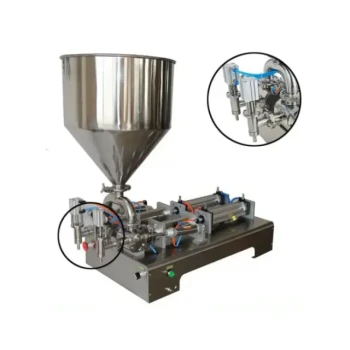
Professional honey processing transforms raw material into a stable commercial asset. It achieves this by efficiently removing impurities and beeswax to create refined table honey, while industrial filling machines utilize standardized, sealed packaging to prevent spoilage caused by honey's natural hygroscopic properties. These technologies provide the necessary physicochemical stability and packaging standards required to enter modern retail channels and meet international export certifications.
By automating filtration and packaging, these technologies do more than just speed up production; they ensure the physicochemical stability required for export certifications and modern retail, effectively turning a raw agricultural output into a high-value, traceable consumer brand.
Enhancing Product Stability and Quality
Purification and Refining
Raw honey contains natural debris that limits its commercial appeal. Professional processing equipment integrates functions such as filtration and dehydration to efficiently remove impurities and excess beeswax. This refining process is the first step in converting raw forest or farm honey into high-value table honey suitable for widespread consumption.
Controlling Moisture and Spoilage
Honey is hygroscopic, meaning it naturally absorbs moisture from the air, which can lead to fermentation and spoilage. Industrial filling machines address this by utilizing standardized, sealed packaging technologies. This creates a barrier that maintains the honey's physicochemical stability, ensuring a long shelf life without degradation.
Precision and Standardization
Manual filling often results in weight deviations and inconsistent liquid levels. Industrial-grade machines utilize high-precision quantitative control to eliminate these inconsistencies. This ensures that every unit meets strict volume standards, reducing material loss and guaranteeing that consumers receive exactly what is advertised.
Unlocking Market Access and Compliance
Meeting International Standards
For honey to be sold in premium markets, it must meet rigorous safety criteria. The standardized packaging provided by industrial machines is a necessary condition for meeting international export certification requirements. These systems often include hygienic sealing technologies that minimize contamination, ensuring the product complies with organic and food safety regulations.
Enabling Traceability and Branding
Value is often driven by consumer trust in the product's origin. Automated labeling equipment allows producers to present accurate geographical and nutritional information, such as "forest origin" or specific organic certifications. This visual professionalism builds brand trust and justifies premium pricing by validating the product's quality and traceability.
Operational Efficiency and Economic Impact
Transitioning from Bulk to Retail
Without automation, producers are often limited to selling low-margin bulk wholesale honey. Automated filling and labeling enable the transition to differentiated retail products. This shift allows local producers to capture higher added value effectively competing with imported brands rather than acting solely as raw material suppliers.
Reducing Overhead and Waste
Beyond quality control, industrial equipment significantly improves economic benefits by reducing labor costs and minimizing material waste. The automation of the filling process increases production efficiency, allowing suppliers to scale operations to meet the demands of the food, pharmaceutical, and cosmetic industries.
Understanding the Trade-offs
Capital Investment vs. Volume
While industrial equipment elevates product value, it requires significant upfront capital for machinery and maintenance. For very small producers, the cost of high-precision automation may outweigh the immediate returns unless there is a clear strategy to scale into retail or export markets.
Processing Sensitivity
Honey is a heat-sensitive natural product. While processing equipment removes impurities, operators must ensure that filtration and dehydration settings are calibrated correctly. Over-processing can strip honey of beneficial pollen or degrade natural enzymes, potentially lowering its value in markets that prize "raw" or minimally processed characteristics.
Making the Right Choice for Your Goal
To maximize the value of your honey products, align your equipment choice with your specific market strategy:
- If your primary focus is International Export: Prioritize equipment that offers standardized, hygienic sealing and filtration to meet strict physicochemical stability and safety certifications.
- If your primary focus is Retail Branding: Focus on machines with high-precision filling and advanced labeling capabilities to ensure visual consistency and communicate geographical origin clearly.
- If your primary focus is Operational Efficiency: Invest in automated metering and quantitative control systems to minimize material loss and reduce manual labor costs.
Investing in the right processing technology is not just an operational upgrade; it is the bridge between raw agriculture and a sustainable, high-value business.
Summary Table:
| Key Feature | Impact on Honey Value | Benefit to Producer |
|---|---|---|
| Refining & Filtration | Removes debris and beeswax for a clear, premium appearance. | Transforms raw material into high-grade table honey. |
| Precision Filling | Ensures consistent volume and prevents material waste. | Meets strict retail weight standards and reduces loss. |
| Hygienic Sealing | Prevents moisture absorption and fermentation. | Extends shelf life and ensures physicochemical stability. |
| Automated Labeling | Enables traceability and professional branding. | Facilitates access to premium markets and export certification. |
| High-Efficiency Automation | Lowers labor costs and increases output volume. | Scales production to meet food and pharmaceutical demands. |
Elevate Your Honey Business with HONESTBEE
At HONESTBEE, we specialize in transforming commercial apiaries into high-efficiency retail powerhouses. From specialized honey-filling machines and filtration hardware to high-capacity hive-making equipment, we provide the full spectrum of industrial tools and consumables needed to scale your operations.
Whether you are a distributor looking for wholesale equipment or an industrial producer aiming for international export certification, our solutions ensure your honey meets the highest standards of quality and traceability.
Ready to maximize your production value? Contact us today to discover how our tailored beekeeping machinery and industry expertise can grow your brand.
References
- Mulubrihan Bayissa, Wim Verbeke. Challenges for Improved Production and Value Share Along the Honey Value Chain in Ethiopia. DOI: 10.3390/agriculture15171871
This article is also based on technical information from HonestBee Knowledge Base .
Related Products
- Commercial Rotary Honey Filling Machine for Production
- Precision Durable Efficient HONESTBEE Rotary Honey Filling Machine
- Fully Automatic Honey Filling Packaging Machine for Processing Line
- Economy Small Honey Filling Machine Honey Bottle Filler Packaging Machine
- Precision Automated Packaging Turntable Honey Spoon Filling Sealing Packing Machine
People Also Ask
- What role do commercial honey filling machines play in honey distribution? Scaling Efficiency and Quality Control
- What technical support do commercial-grade filling machines provide? Convert Honey NTFPs into Marketable Commodities
- What is the significance of specialized honey filling equipment? Scaling from Beekeeping to Commercial Success
- Why is professional honey filling machinery critical for honey production? Scale Your Apiary's Profit & Efficiency
- Why is high-capacity honey filling machinery necessary for Giant Honey Bees? Solve the Apis dorsata Volume Crisis