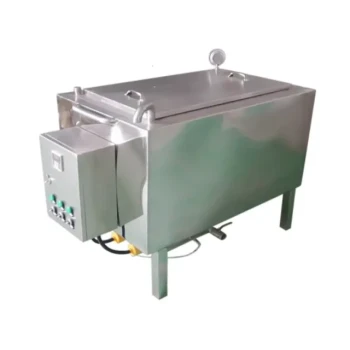
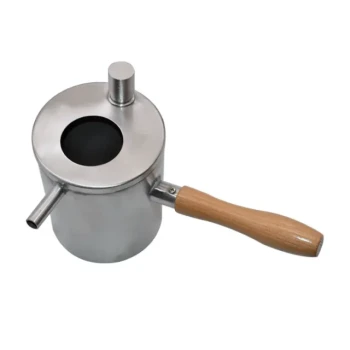
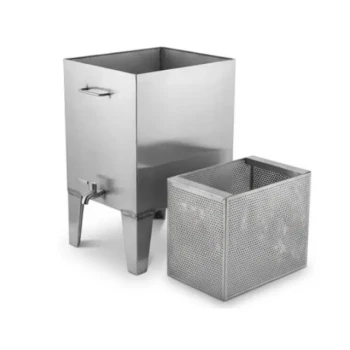
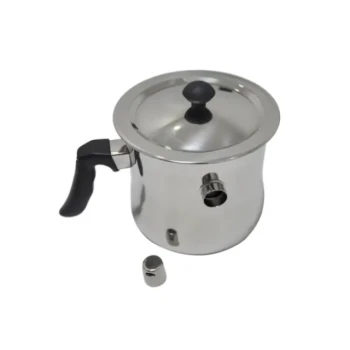
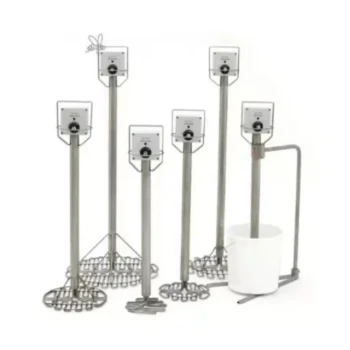
Specialized wax melting devices act as essential engines for resource recovery within an apiary. By thermally processing old honeycombs and wax cappings, these machines convert waste materials into purified beeswax, effectively turning biological by-products into a marketable commodity while simultaneously supporting colony health.
Core Takeaway Wax melting devices facilitate a dual-purpose resource strategy: they unlock immediate economic value by transforming raw by-products into commercial beeswax, and they preserve long-term biological resources by enabling the sanitary replacement of old combs to prevent disease.
The Economic Conversion of By-Products
To understand the value of a wax melter, you must view the apiary as a multi-component production facility rather than just a honey farm.
Transforming Waste into Revenue
In a traditional setup, old combs and cappings might be discarded or underutilized. Wax melting devices change this dynamic by offering commercial conversion of these materials.
High-Efficiency Purification
These devices do not simply melt; they purify. By separating impurities from the raw material, they produce high-quality beeswax. This processed wax can be sold as a high-value raw material or used to create value-added products like candles and cosmetics.
Diversifying the Business Model
Adopting this technology allows an apiary to transition from a single-product model (honey only) to a diversified model. This diversification stabilizes income by reducing reliance on nectar flows and maximizing the economic benefits of every hive component.
Preserving the Biological Resource
The most critical resource in an apiary is the health of the bee colonies themselves. Wax melters play a pivotal role in maintaining this biological asset.
Facilitating Comb Replacement
Old combs act as sponges for environmental toxins and pathogens. A wax melter provides the infrastructure needed to process these combs efficiently. This encourages the beekeeper to implement a regular replacement cycle for brood frames.
Disease Prevention and Hygiene
By thermally processing old wax, you effectively sanitize the hive's environment. Removing old material reduces the viral and bacterial load within the colony. This proactive hygiene prevents disease outbreaks, securing the long-term vitality of the workforce.
Understanding the Trade-offs
While wax melters are valuable, they represent an operational shift that requires careful consideration.
Energy Consumption vs. Yield
Thermal processing requires energy input, whether electric, gas, or solar. You must calculate whether the volume of wax recovered justifies the energy costs of operation. Small-scale operations may struggle to reach this break-even point compared to commercial apiaries.
Equipment Maintenance
These devices handle sticky, viscous materials that harden upon cooling. Regular cleaning and maintenance are required to prevent clogging and ensure consistent thermal efficiency. Neglecting this maintenance can lead to equipment failure and lost processing time.
Making the Right Choice for Your Goal
Integrating a wax melting device is about aligning equipment with your specific operational objectives.
- If your primary focus is Economic Diversification: Prioritize high-capacity melters with advanced filtration systems to produce premium, light-colored wax suitable for high-margin cosmetics or candle markets.
- If your primary focus is Colony Health: Choose a user-friendly, robust system that handles high volumes of brood frames to facilitate an aggressive comb rotation schedule (e.g., replacing 20-30% of combs annually).
Successful resource utilization relies on viewing wax not as waste, but as a renewable asset that funds its own extraction.
Summary Table:
| Resource Category | Contribution of Wax Melter | Primary Benefit |
|---|---|---|
| Waste Management | Converts old honeycombs and cappings into purified wax | High-value commodity creation |
| Economic Value | Enables business diversification beyond honey production | Stabilized and increased revenue |
| Biological Health | Facilitates sanitary comb replacement cycles | Pathogen and toxin reduction |
| Hive Maintenance | Sanitizes equipment through thermal processing | Long-term colony vitality |
Maximize Your Apiary’s Output with HONESTBEE
Transform your operation from a honey-only farm into a high-efficiency production facility. At HONESTBEE, we specialize in supporting commercial apiaries and distributors with a comprehensive range of professional beekeeping tools and machinery.
Our advanced wax melting systems and honey-filling machines are designed to help you unlock the full economic potential of every hive. Whether you need specialized hardware or essential industry consumables, our portfolio offers the quality and scale required for commercial success.
Ready to upgrade your resource recovery?
Contact HONESTBEE today to explore our wholesale offerings and see how our equipment can drive your business growth.
References
- P.P. Snegur, M. Yu. Dyakov. On the profitability of beekeeping in conditions of Kamchatka Territory. DOI: 10.30766/2072-9081.2025.26.2.426-436
This article is also based on technical information from HonestBee Knowledge Base .
Related Products
- Electric Commercial Beeswax Melter for Factory Use
- Professional Stainless Steel Wax Melter for Beekeeping and Crafts
- Steam Beeswax Melter Wax Warmer for Wax Processing
- Solar Beeswax Melter Easy Solar Wax Melter for Beeswax
- Beeswax Melter for Candle Making Honey Bee Wax Melter
People Also Ask
- Why might a commercial beekeeper prefer an electric beeswax melter? Maximize Profit with Speed & Scale
- What safety precautions should be taken when melting beeswax? A Guide to Flammable Wax Handling
- What types of beeswax melters are available for different scales of beekeeping? Solar vs. Electric Melters Compared
- What are the three popular methods for melting beeswax? Safely Process Your Wax with Ease
- How do you melt beeswax without making a mess? Master Safe & Clean Techniques