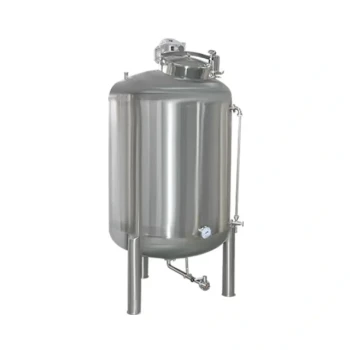
Temperature-controlled storage tank systems preserve the pharmacological value of honey by maintaining a stable, low-temperature environment that strictly regulates chemical changes. By eliminating thermal fluctuations, these systems inhibit the formation of degradation by-products like hydroxymethylfurfural (HMF) while protecting the bioactivity of essential enzymes and compounds.
Large-scale storage often subjects honey to ambient temperature swings that degrade its medicinal qualities. Temperature-controlled tanks solve this by locking in a consistent thermal range, ensuring that antibacterial enzymes, phenolic compounds, and oligosaccharides remain biologically active for the long term.
Preserving Bioactive Compounds
Protecting Enzymatic Activity
Honey derives much of its pharmacological value from sensitive enzymes that provide antibacterial and anti-inflammatory benefits.
High temperatures or fluctuating environments can denature these enzymes, rendering them biologically inert. Temperature-controlled systems maintain the specific environment required to keep these proteins in their active state.
Retaining Phenolic Compounds and Oligosaccharides
Phenolic compounds and oligosaccharides are complex molecules responsible for the antioxidant and prebiotic properties of honey.
Stable, cool temperatures prevent these compounds from breaking down during extended storage. This preservation ensures the honey retains the specific chemical profile required for medicinal or therapeutic classification.
Inhibiting Harmful By-Products
Controlling Hydroxymethylfurfural (HMF) Levels
Hydroxymethylfurfural (HMF) is a chemical byproduct formed from the breakdown of sugars, serving as the primary marker of poor quality or aged honey.
Heat exposure accelerates HMF production exponentially. By utilizing temperature-controlled tanks, producers inhibit this reaction, keeping HMF levels low and validating the freshness and purity of the product.
Managing Crystallization Rates
While crystallization is a natural process, uncontrolled temperature swings can lead to inconsistent textures that may require heating (and subsequent damage) to fix.
By maintaining a constant temperature, these tanks significantly slow the crystallization process. This preserves the honey in a liquid, workable state for longer periods without resorting to high-heat processing that would degrade nutrients.
Understanding the Trade-offs
The Risk of Over-Cooling
While avoiding heat is critical for enzyme preservation, excessive cold can introduce new problems.
As noted in broader storage guidelines, temperatures mimicking standard refrigeration can actually accelerate crystallization rather than slow it. It is vital that "temperature-controlled" means maintaining an optimal range (ideally 50°F to 70°F / 10°C to 21°C), not deep chilling.
Operational Cost vs. Product Value
Implementing precise thermal regulation increases the energy and capital costs of large-scale storage.
However, for honey intended for pharmacological or high-end nutritional markets, this expense is offset by the prevention of spoilage and the retention of premium biological certifications.
Making the Right Choice for Your Storage Strategy
Effective storage is about balancing the prevention of chemical degradation with physical stability.
- If your primary focus is Pharmacological Potency: Prioritize systems that strictly limit upper-temperature thresholds to prevent enzyme denaturation and HMF spikes.
- If your primary focus is Texture and Handling: Ensure your control settings target the 50°F–70°F (10°C–21°C) range to minimize crystallization without freezing the product.
Investing in thermal stability is the only way to bridge the gap between large-scale inventory management and the preservation of nature's chemistry.
Summary Table:
| Key Preservation Factor | Impact of Temperature Control | Pharmacological Benefit |
|---|---|---|
| Enzymatic Activity | Prevents protein denaturation from heat | Maintains antibacterial & anti-inflammatory properties |
| HMF Levels | Inhibits sugar breakdown byproducts | Ensures purity, freshness, and high-quality certification |
| Phenolic Compounds | Protects complex antioxidant molecules | Retains high-end medicinal and therapeutic value |
| Crystallization | Maintains stable 10°C–21°C range | Prevents the need for nutrient-damaging reheating |
| Shelf Life | Stabilizes chemical composition | Extends marketability for high-end nutritional sectors |
Maximize Your Honey Quality with HONESTBEE
At HONESTBEE, we understand that for commercial apiaries and distributors, honey isn't just a product—it's a biological asset. Our professional-grade temperature-controlled storage tanks and honey-filling machinery are engineered to protect the enzymatic integrity and pharmacological value of your harvest.
Whether you are scaling your operation or supplying premium pharmaceutical-grade honey, we provide the full spectrum of beekeeping tools, specialized hardware, and essential industry consumables to ensure your success. Protect your investment and elevate your brand value today.
References
- Roberto Bava, Ernesto Palma. Hive Products: Composition, Pharmacological Properties, and Therapeutic Applications. DOI: 10.3390/ph17050646
This article is also based on technical information from HonestBee Knowledge Base .
Related Products
- Professional Honey Storage Tank with Agitation System
- Stainless Steel Honey Storage Tank with Lid for Honey
- Stainless Steel Honey Storage and Settling Tank with Double Strainer
- Stainless Steel Heated Honey Tank Warming Heating Tank
- Heavy Duty Stainless Steel Honey Processing Machine Decrystallizing Tank
People Also Ask
- What economic role do honey storage tanks play? Boost Your Revenue Through Strategic Inventory Management
- What roles do industrial honey storage tanks and filtration meshes play in processing? Ensure Purity & Consistency
- What is the purpose of a honey storage tank? Streamline Your Honey Processing for Quality & Efficiency
- What are honey storage tanks used for? Essential Features for Quality Preservation and Profit
- How do large honey storage tanks and gravity fall filling systems improve honey packaging efficiency and safety?