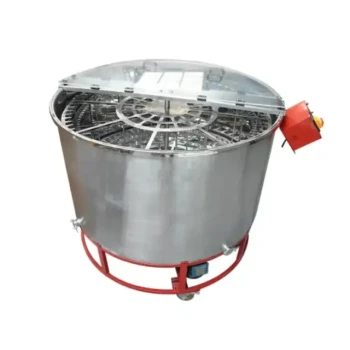
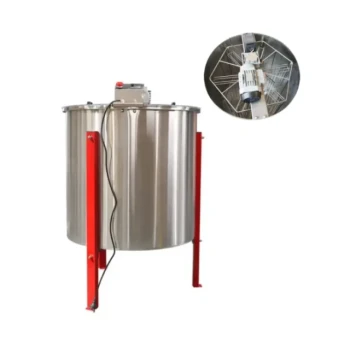
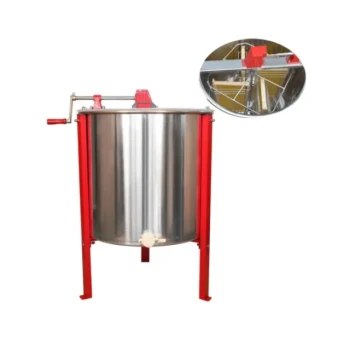
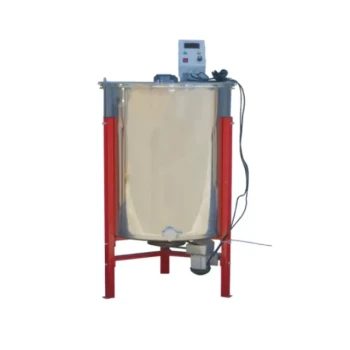
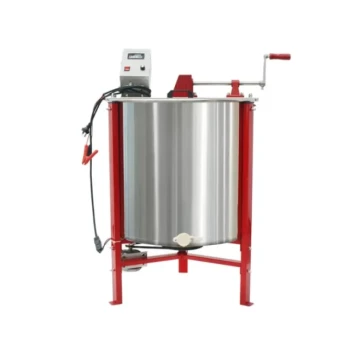
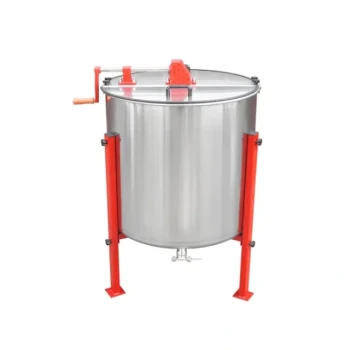
Physical objects serve as the bridge between historical theory and practical understanding. Traditional beekeeping tools, specifically honey extractors and uncapping knives, act as primary educational carriers in museum settings by providing tangible evidence of the evolution of craftsmanship. They allow visitors to visualize the precise structural designs and physical sequences required to transform raw nectar into a finished commercial product.
The core function of these artifacts is to anchor abstract knowledge. By showcasing the mechanics of extraction and uncapping, museums move beyond simple storytelling, offering an immersive look at the physical labor and technological progression that defines the industry.
Visualizing the Evolution of Craftsmanship
Tangible Evidence of History
Museums utilize traditional tools to create a physical timeline of the industry.
Instruments like uncapping knives and honey extractors serve as concrete proof of how beekeeping methods have matured over time.
They demonstrate the shift from rudimentary manual collection to more sophisticated, mechanized processing.
Showcasing Structural Design
The educational value lies heavily in the specific construction of these tools.
By examining the structural design of an extractor, a visitor can comprehend the engineering challenges early beekeepers faced.
This highlights the ingenuity required to solve problems related to centrifugal force and liquid separation without modern power sources.
The Educational Function of Processing Tools
Illustrating the Production Sequence
Tools are essential for explaining the "how" of honey production.
They allow the facility to map out the sequence of physical processing required to turn raw hive materials into consumable goods.
Visitors can trace the workflow from the initial uncapping of the comb to the final extraction, demystifying the journey from hive to jar.
Explaining Mechanical Separation
While modern supplementary contexts emphasize hygiene and organic standards, traditional tools in museums highlight the mechanical roots of these standards.
Displays explain how extractors mechanize the separation of honey from wax, a critical step in increasing purity.
This helps visitors understand that quality consistency and shelf-life stability have always been driven by the capabilities of the hardware.
Enhancing the Visitor Experience
Driving Immersion
Static text panels often fail to convey the reality of physical labor.
The presence of actual traditional beekeeping tools significantly enhances the immersion of the museum experience.
It transforms the space from a gallery of information into a simulated environment of historical production.
Serving as Educational Carriers
These objects are defined as vital "carriers" for the facility's educational mission.
They bear the weight of the narrative, allowing guides and educators to point to specific mechanisms when explaining complex topics like livelihood diversification and value chains.
Understanding the Limits of Static Displays
The Context Gap
A major pitfall in displaying technical tools is the lack of operational context.
Without understanding the biological needs of the bee—such as the stress caused by poor management—a visitor may view a tool merely as a metal object rather than a solution to a biological problem.
Tools must be presented alongside the "why" (hygiene, purity, efficiency) to be fully understood.
Visualizing Motion in Static Objects
Traditional tools were designed for movement, yet they often sit still in museums.
It can be difficult for a layperson to grasp the centrifugal mechanics of a honey extractor when it is stationary.
Museums must rely on the structural visibility of the tool to imply the motion that is no longer present.
Maximizing Educational Impact
To effectively utilize traditional tools for knowledge transfer, consider the specific learning outcome you wish to achieve.
- If your primary focus is historical context: Highlight the evolution of materials and design to show how craftsmanship has improved over generations.
- If your primary focus is technical understanding: Focus on the sequence of processing, using the tools to demonstrate how nectar is physically separated and purified.
- If your primary focus is visitor engagement: distinctively position the tools to create an immersive environment that simulates a working production facility.
Effective knowledge transfer relies not just on displaying the tool, but on revealing the mechanical logic and human effort embedded within its design.
Summary Table:
| Key Educational Function | Description in Museum Settings |
|---|---|
| Visualizing Evolution | Provides tangible evidence of the shift from manual to mechanized beekeeping. |
| Structural Design | Demonstrates the engineering logic used to solve centrifugal force challenges. |
| Production Sequence | Maps out the physical steps of turning raw hive materials into commercial honey. |
| Mechanical Education | Explains the roots of hygiene and purity standards through mechanical separation. |
| Visitor Immersion | Transforms static information into a simulated historical production environment. |
Elevate Your Beekeeping Operation with HONESTBEE
Whether you are managing a commercial apiary, an educational museum, or a global distribution network, HONESTBEE provides the professional-grade hardware required for excellence. We offer a comprehensive wholesale portfolio, including:
- Advanced Machinery: Specialized hive-making and honey-filling machines.
- Processing Tools: High-quality honey extractors and uncapping equipment for any scale.
- Industry Consumables: A full spectrum of essential tools and supplies for large-scale operations.
- Cultural Merchandise: Unique honey-themed items to engage and educate your audience.
Our expertise helps you bridge the gap between historical craftsmanship and modern production efficiency. Contact us today to discuss your wholesale needs and see how our premium equipment can drive your success.
References
- Nermin Ayaz Dönmez. Apiturizm Araştırmaları: Sistematik Literatür İncelemesi (Apitourism Researches: A Systematic Literature Review). DOI: 10.26677/tr1010.2023.1347
This article is also based on technical information from HonestBee Knowledge Base .
Related Products
- HONESTBEE 72 Frame Industrial Electric Honey Extractor for Beekeeping
- Commercial Electric 12 Frame Honey Extractor Spinner Motorized Honey Extractor
- HONESTBEE 6 Frame Self Reversing Electric Honey Extractor for Beekeeping
- HONESTBEE 3-Frame Manual Acrylic Honey Extractor
- Stainless Steel Manual 8 Frame Radial Honey Extractor Machine for Beehives
People Also Ask
- What is the importance of balancing honeycomb frames within a honey extractor? Ensure Stability and Protect Machinery
- How is honey separated from the frames after they are uncapped? Efficient Extraction Methods for High Yields
- What are the main benefits of using a honey extractor? Maximize Yields and Protect Your Honeycomb
- What are the recommended methods for removing honey from the honeycomb? Top Extraction Techniques for Maximum Efficiency
- How do manual honey extractors compare to electric honey extractors? Choosing the Right Tool for Your Apiary Growth