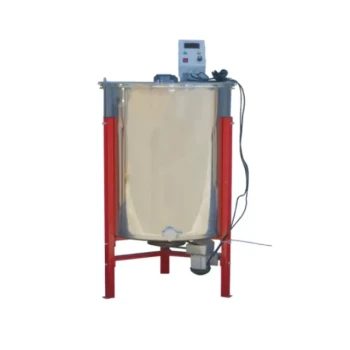
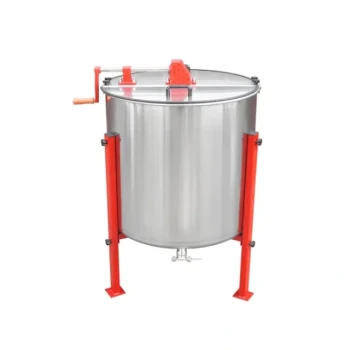
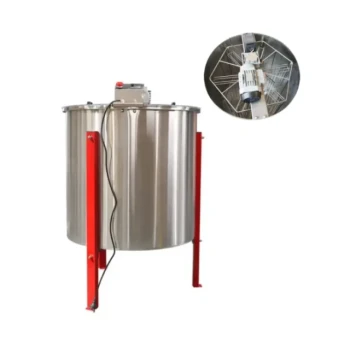
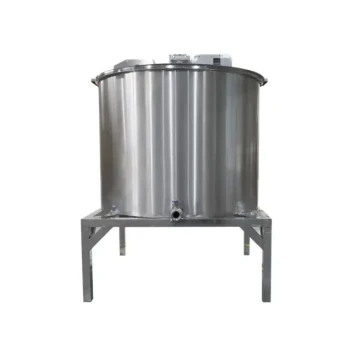
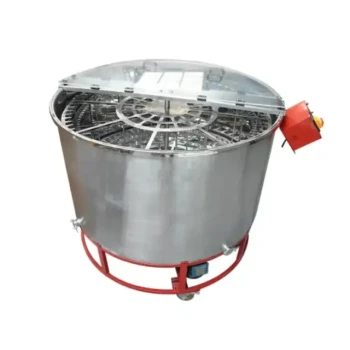
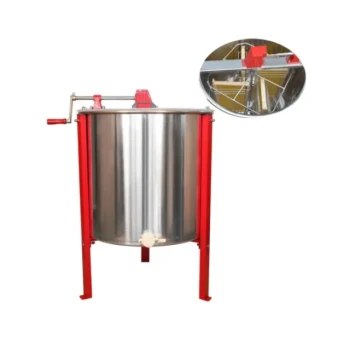
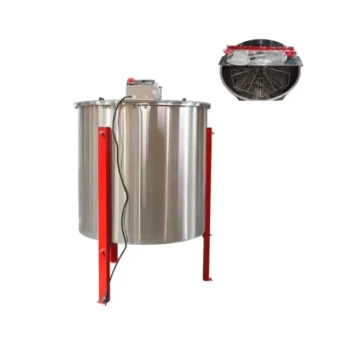
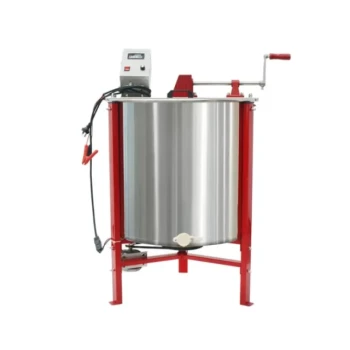
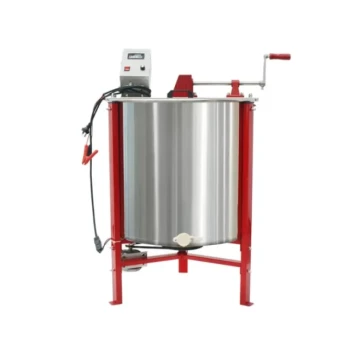
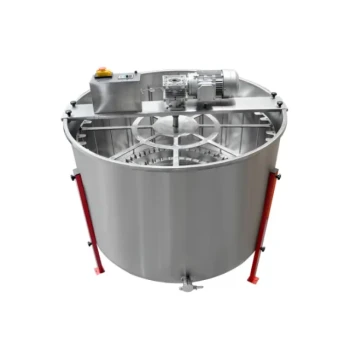
Centrifugal extraction utilizes simple physics to separate liquid honey from the comb without destroying the wax structure. The process involves placing uncapped frames into a cylindrical container that spins them at high speeds, generating centrifugal force that throws the honey out of the cells and against the inner walls of the drum.
Core Takeaway: The primary value of a centrifugal extractor is not just speed, but preservation. By extracting honey without crushing the comb, you can return intact frames to the hive, saving bees the immense energy required to secrete new wax and significantly shortening the production cycle.
The Mechanics of Extraction
Generating Centrifugal Force
The extractor consists of a drum containing a central fitting or basket that holds the honeycombs. When the device is activated (either manually or via a motor), it spins the frames around a central axis.
This rapid rotation creates centrifugal force. This force acts outward, pulling the honey away from the center of the drum and ejecting it from the open cells of the honeycomb.
Collection via Gravity
Once the honey is flung out of the comb, it hits the inner wall of the extractor.
At this point, gravity takes over. The honey runs down the walls to the bottom of the drum, where it pools and eventually drains out through a dedicated tap or gate.
The Operational Process
The Necessity of Uncapping
Before a frame can be placed in the extractor, it must be uncapped. The machine cannot extract honey from sealed cells.
Beekeepers must first remove the thin layer of wax cappings that seal the honey cells. Once the cells are open, the centrifugal force can effectively empty them.
Load Balancing
Proper operation requires careful attention to weight distribution.
It is critical to ensure the load is balanced across the extractor's baskets. An unbalanced load can cause dangerous wobbling, potentially damaging the equipment or the delicate frames inside.
Why Preservation Matters
Energy Efficiency for the Colony
The most distinct advantage of this method is that it leaves the wax comb structure intact.
Bees consume significant resources to produce wax. By reusing empty combs, you allow the colony to direct their energy toward foraging and honey production rather than rebuilding their home.
Quality and Purity
Centrifugal extraction is a "cold" process that minimizes handling.
Compared to crushing or filtering, this method reduces the honey's exposure to air. This lowers the risk of moisture absorption and environmental contamination, preserving the natural flavor and physicochemical properties of the honey.
Understanding the Trade-offs
Structural Requirements
While efficient, the centrifugal force places significant physical stress on the comb.
This method should not be used for frames that lack wire or plastic foundation for support. Without this internal reinforcement, the intense force of the spinning basket will likely cause the wax comb to break apart.
Equipment Complexity
Unlike simple crush-and-strain methods, this approach requires specialized machinery.
Whether using a hand-crank or motorized version, the operator must manage mechanical variables like speed and balance to ensure safety and efficiency.
Making the Right Choice for Your Goal
Whether you are managing a few hives or a commercial operation, the centrifugal extractor is designed to maximize yield.
- If your primary focus is Production Volume: This is the essential choice, as returning intact combs allows bees to refill them immediately, leading to faster turnovers.
- If your primary focus is Comb Preservation: Ensure your frames are wired or have a plastic foundation to withstand the rotational force without blowing out.
Ultimately, the centrifugal extractor is the industry standard because it treats the wax comb as a reusable asset rather than a disposable byproduct.
Summary Table:
| Feature | Centrifugal Extraction Benefit | Importance for Beekeepers |
|---|---|---|
| Comb Integrity | Leaves wax cells intact for reuse | Saves bees energy; faster honey production cycles |
| Efficiency | Rapidly extracts honey from multiple frames | Crucial for scaling commercial operations |
| Honey Quality | Cold-process extraction with minimal air exposure | Preserves natural flavors and prevents moisture absorption |
| Sustainability | Treats wax as a reusable asset | Reduces resource consumption within the hive |
Scale Your Honey Production with HONESTBEE
At HONESTBEE, we specialize in empowering commercial apiaries and distributors with the high-performance machinery needed to thrive. Our comprehensive wholesale catalog includes industrial-grade centrifugal extractors, honey-filling machines, and specialized hive-making equipment designed for durability and precision.
Whether you are looking to upgrade your extraction facility or source essential consumables for your distribution network, we provide the full spectrum of beekeeping tools and honey-themed cultural merchandise to set you apart in the market.
Ready to optimize your harvest? Contact us today to explore our wholesale solutions!
Related Products
- electric honey extractor honey centrifuge 3 frame honey extractor stainless steel honey frame extractor
- Manual Hand Crank 4 Frame Honey Extractor Centrifuge for Beekeeping
- Professional 4 Frame Self Reversing Electric Honey Extractor for Beekeeping
- Electric 4 Frame Tangential Honey Extractor
- 24 Frame Honey Extractor Commercial Radial Honey Frame Extraction Machine
People Also Ask
- What are the characteristics of electric honey extractors? Boost Your Apiary Efficiency with Automated Technology
- What are the disadvantages of using an electric honey extractor? Weighing Cost, Power, and Comb Safety
- What are the advantages of an electric honey extractor? Boost Efficiency and Scale Your Honey Production
- What are the technical advantages of electric honey extractors? Maximize Yield and Protect Your Bee Colony
- How does an electric honey extractor affect the quality of honey? Preserve Flavor & Purity with Precision Extraction