A double boiler or water bath melter functions by utilizing indirect heat to melt beeswax safely and uniformly. Instead of applying heat directly to the wax—which can cause scorching or fires—the device uses a layer of hot water to transfer thermal energy gently. In a dedicated unit, this typically involves a double-walled metal container where water fills the cavity between the walls, heating the inner chamber where the wax resides.
Core Takeaway The fundamental principle of a double boiler is thermal buffering. By interposing water between the heat source and the beeswax, the temperature is capped at the boiling point of water (212°F/100°C), significantly reducing the risk of accidental combustion while ensuring the wax retains its quality.
The Mechanics of Indirect Heating
The Thermal Barrier
The primary function of this apparatus is to separate the beeswax from the direct heat source (such as a stove burner or electric element).
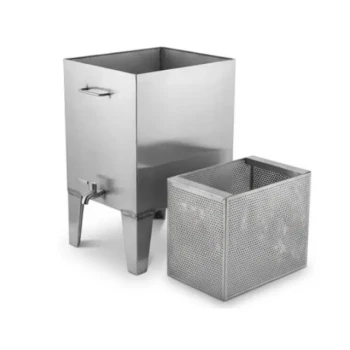
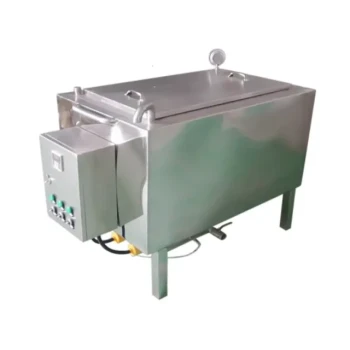
In a dedicated water bath melter, this is achieved through a double-walled construction. Water is poured into the void between the outer and inner metal walls.
In a makeshift double boiler, a smaller vessel containing the wax is suspended inside a larger stockpot filled with water.
Regulating Temperature
Beeswax is highly flammable and sensitive to overheating. Direct contact with a heat source creates "hot spots" that can instantly degrade the wax or ignite it.
The water acts as a regulator. Because water turns to steam at 212°F (100°C), the wax inside the inner vessel generally cannot exceed this temperature as long as liquid water remains in the jacket.
Operational Configurations
Dedicated Melters and Processing
High-volume water bath melters are often designed for simultaneous melting and straining.
As the water in the outer wall heats up, the wax in the inner chamber liquefies. In these specific units, the melted wax often drips through an integrated strainer into a collection bucket, removing larger debris automatically.
The "Pot-in-Pot" Setup
For smaller scale or makeshift operations, the function relies on suspension.
A metal bowl or saucepan is placed over a larger stockpot of simmering water. The inner container must rest on the rim of the stockpot, ensuring it is suspended and does not touch the bottom.
If the inner pot touches the bottom, the "double boiler" effect is lost, as conductive heat travels directly from the burner to the wax, reintroducing the risk of scorching.
Material Compatibility
The inner container functions best when made of metal, which conducts the gentle heat of the water efficiently.
Plastic and glass should be avoided. The supplementary data indicates that these materials can melt or shatter under thermal stress. Furthermore, because beeswax is incredibly sticky and difficult to remove, dedicated metal vessels should be used that are not intended for future food preparation.
Understanding the Trade-offs
Safety vs. Speed
The primary trade-off of a double boiler is time. Indirect heating is significantly slower than direct heating. However, this lack of speed is a safety feature, not a bug, preventing flash fires.
The Steam Hazard
While the method prevents wax burns, it introduces the risk of steam burns. As the water boils between the walls or in the bottom pot, hot steam escapes. Operators must be cautious when stirring or checking the wax.
Water Management
The function of the melter fails if the water evaporates completely. If the water bath runs dry, the inner container is exposed to direct heat, which can lead to catastrophic overheating of the wax and damage to the equipment.
Making the Right Choice for Your Goal
Whether you are using a dedicated double-walled tank or a kitchen makeshift setup, the goal determines the approach.
- If your primary focus is large-scale processing: Invest in a double-walled water bath melter with an integrated strainer to combine melting and debris removal in one step.
- If your primary focus is safety and budget: Use the "pot-in-pot" method, ensuring the inner vessel is metal and suspended strictly above (not touching) the bottom of the water pot.
- If your primary focus is heavy purification: Consider the "direct water bath" method mentioned in supplementary texts, where wax is melted in the water itself to allow impurities to settle, rather than just using the water as a heating jacket.
The safest melt is always a slow melt; let the water do the work so the fire doesn't have to.
Summary Table:
| Feature | Dedicated Water Bath Melter | Makeshift Double Boiler (Pot-in-Pot) |
|---|---|---|
| Heating Mechanism | Double-walled jacket filled with water | Inner pot suspended in a larger water pot |
| Temperature Limit | Capped at 212°F (100°C) | Capped at 212°F (100°C) |
| Safety Level | High (Integrated thermal barrier) | Medium (Requires careful suspension) |
| Scale | Large-scale commercial processing | Small-scale / Hobbyist use |
| Key Advantage | Often includes integrated strainers | Low cost using existing equipment |
Elevate Your Wax Processing with HONESTBEE
Maximize your apiary's efficiency and product quality with professional-grade equipment. HONESTBEE specializes in supporting commercial apiaries and distributors with a full spectrum of high-performance beekeeping machinery.
From heavy-duty wax melters and honey-filling machines to specialized hive-making hardware and essential industry consumables, we provide the tools you need to scale your operations. Partner with us to access wholesale solutions tailored to the unique demands of the beekeeping industry.
Ready to upgrade your processing line?
Contact our experts today to discuss how our equipment can streamline your production.
Related Products
- Beeswax Melter for Candle Making Honey Bee Wax Melter
- Steam Beeswax Melter Wax Warmer for Wax Processing
- Solar Beeswax Melter Easy Solar Wax Melter for Beeswax
- Electric Commercial Beeswax Melter for Factory Use
- Professional Stainless Steel Honey Filtering Machine with Water Bath Heating for Beekeeping
People Also Ask
- What is the best way to melt beeswax? Safely Preserve Quality with Indirect Heat
- What is the best way to melt beeswax? Use a Solar Wax Melter for Simple, Pure Results
- What types of beeswax melters are available for beekeepers? Choose the Right One for Your Operation
- What safety precautions should be taken when melting beeswax? A Guide to Flammable Wax Handling
- What types of beeswax melters are available for different scales of beekeeping? Solar vs. Electric Melters Compared