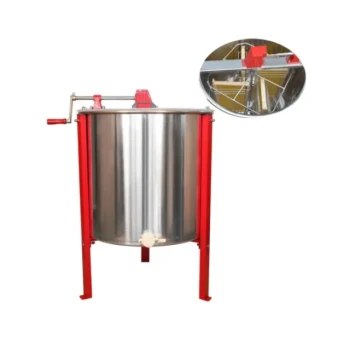
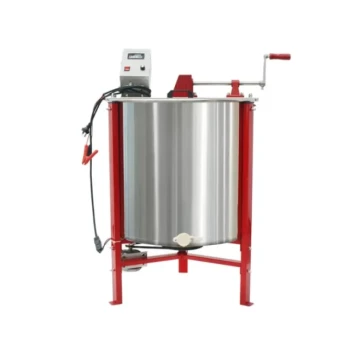
A honey extractor improves efficiency by utilizing centrifugal force to separate liquid honey from the honeycomb without destroying the wax structure. By spinning the frames rather than crushing them, the extractor preserves the comb for reuse, significantly reducing the energy bees must expend on rebuilding wax and allowing them to focus entirely on honey production. Additionally, this mechanical process naturally reduces the level of solid impurities in the harvest, resulting in a cleaner, more commercially viable product.
By decoupling honey harvesting from comb destruction, extractors transform beekeeping from a resource-intensive cycle into a renewable system. This technology enables higher yields per season and ensures the purity required for competitive market entry.
Maximizing Yield Through Asset Preservation
The Mechanics of Centrifugal Force
The primary function of the extractor is to apply consistent centrifugal force to uncapped frames. This force pulls the honey out of the cells and throws it against the drum walls, where it flows down for collection.
Preserving the Wax Infrastructure
Unlike traditional methods that crush the comb to release honey, extraction leaves the delicate wax matrix intact. This structural integrity is critical for commercial scalability.
Redirecting Colony Energy
Bees consume a significant amount of honey and energy to secrete wax and build combs. By returning intact empty combs to the hive, you allow the colony to bypass the building phase and immediately begin refilling cells, directly increasing the total honey yield per cycle.
Elevating Product Quality and Purity
Reducing Particulate Impurities
The extraction process offers a cleaner separation than pressing or straining crushed comb. It significantly reduces the inclusion of wax bits, propolis, and other hive debris in the final liquid.
Enhancing Market Competitiveness
Commercial markets demand honey with high clarity and low foreign matter content. Using an extractor ensures the final product meets these aesthetic and physical standards, improving its value and marketability.
Scaling Operations with Industrial Equipment
Multi-Frame Processing Capabilities
Industrial electric extractors are designed to process multiple frames simultaneously. This parallel processing drastically reduces the labor intensity required per hive, a necessity for managing large-scale apiaries.
Controlled Rotational Consistency
Electric extractors provide stable, consistent rotational speeds that manual cranking cannot match. This precision ensures thorough honey removal while preventing the centrifugal force from becoming strong enough to damage the comb structure.
Understanding the Trade-offs
Capital Investment vs. Return
High-capacity, multi-frame electric extractors represent a significant upfront financial cost compared to manual methods. Operations must calculate the break-even point based on hive count and expected yield increases.
Maintenance and Hygiene Requirements
While extractors reduce biological impurities, the machinery itself introduces a need for rigorous maintenance. Operators must adhere to strict cleaning protocols to prevent machinery-based contamination or residue buildup between harvests.
Making the Right Choice for Your Goal
To maximize the impact of a honey extractor on your operation, align your equipment choice with your specific commercial objectives:
- If your primary focus is maximizing volume: Prioritize extractors with precise speed controls to ensure maximum comb preservation, allowing for rapid re-use and faster colony turnover.
- If your primary focus is product purity: Focus on extractors designed for easy cleaning and integration with downstream filtration systems to ensure a premium, debris-free retail product.
The honey extractor is not just a harvesting tool; it is the fundamental infrastructure that allows a beekeeping operation to transition from resource consumption to sustainable commercial production.
Summary Table:
| Feature | Traditional Crushing | Centrifugal Extraction | Impact on Operation |
|---|---|---|---|
| Comb Integrity | Destroyed | Preserved | Reduced bee energy expenditure |
| Honey Purity | High impurities (wax/debris) | High clarity/low debris | Higher market value & grade |
| Harvest Speed | Slow & labor-intensive | Fast (multi-frame) | Scalability for large apiaries |
| Resource Cycle | Linear (rebuild every time) | Circular (reuse combs) | Increased annual honey cycles |
Scaling Your Apiary? Partner with HONESTBEE for Professional Solutions
Transition from manual labor to industrial efficiency with HONESTBEE. As a premier global supplier for commercial apiaries and distributors, we provide the full spectrum of high-capacity honey extractors, hive-making machinery, and honey-filling equipment.
Our mission is to help you maximize your harvest yield while maintaining the highest product standards. From specialized hardware to essential consumables and honey-themed merchandise, we offer everything you need to grow your beekeeping business.
Ready to elevate your production? Contact our expert team today to discuss wholesale opportunities and custom equipment solutions tailored to your operation.
References
- Birhanu Angasu, Nimona Sime. Factors Affecting Adoption of Improved Modern Beehive Technology in West Hararghe Zone, Oromia National Regional State, Ethiopia. DOI: 10.11648/j.stpp.20240802.12
This article is also based on technical information from HonestBee Knowledge Base .
Related Products
- HONESTBEE 72 Frame Industrial Electric Honey Extractor for Beekeeping
- Commercial Electric 12 Frame Honey Extractor Spinner Motorized Honey Extractor
- HONESTBEE 3-Frame Manual Acrylic Honey Extractor
- electric honey extractor honey centrifuge 3 frame honey extractor stainless steel honey frame extractor
- HONESTBEE 6 Frame Self Reversing Electric Honey Extractor for Beekeeping
People Also Ask
- What is the importance of balancing honeycomb frames within a honey extractor? Ensure Stability and Protect Machinery
- How is honey separated from the frames after they are uncapped? Efficient Extraction Methods for High Yields
- What are the main benefits of using a honey extractor? Maximize Yields and Protect Your Honeycomb
- What are the recommended methods for removing honey from the honeycomb? Top Extraction Techniques for Maximum Efficiency
- How do manual honey extractors compare to electric honey extractors? Choosing the Right Tool for Your Apiary Growth