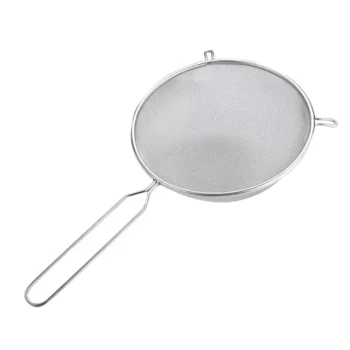
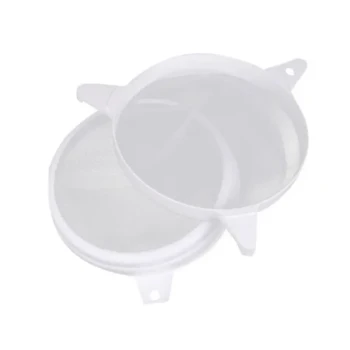
A perforated screening device dramatically improves efficiency by mechanically dividing a single continuous flow of honey into a multitude of small-diameter, parallel thin streams. This fragmentation creates a massive increase in the total surface area of the honey that is exposed to the surrounding dry air. By maximizing this exposure, the device accelerates the natural diffusion of moisture from the honey's core to its surface.
By transforming a thick bulk flow into thin streams, the device minimizes the distance moisture must travel to escape. This allows for rapid dehydration rates without requiring high temperatures, preserving the honey's delicate chemical structure.
The Physics of Surface Area Expansion
Breaking the Continuous Flow
In standard processing, honey flows as a thick, viscous sheet or bulk mass. A perforated screen interrupts this flow, forcing the liquid through numerous small apertures.
This action converts the bulk mass into thousands of individual, thin streams. The result is a significant multiplication of the exposed surface area relative to the volume of honey being processed.
Shortening the Diffusion Path
Moisture trapped in the center of a thick flow takes a long time to migrate to the surface where it can evaporate.
By thinning the streams, the perforated device drastically shortens the path moisture must travel. This ensures that water molecules from the "interior" of the stream reach the air interface much faster.
Thermal Benefits and Quality Preservation
Decoupling Heat from Efficiency
Traditionally, heat is used to lower viscosity and drive off moisture, but excessive heat damages honey quality (increasing HMF levels and destroying enzymes).
Because the perforated screen relies on surface area mechanics rather than thermal energy to drive evaporation, operators can run the equipment at lower temperatures.
Accelerating Process Rates
The combination of increased surface area and a shorter diffusion path leads to a direct increase in processing speed.
Equipment utilizing these screens can achieve target moisture content levels significantly faster than systems relying on bulk flow evaporation.
Understanding the Trade-offs
Maintenance and Cleaning
While efficient, introducing a perforated screen adds mechanical complexity to the fluid path.
Small apertures are more prone to clogging, particularly if the honey contains high levels of wax or particulate matter. Rigorous cleaning protocols are essential to prevent blockages that could disrupt the uniform flow of the thin streams.
Viscosity Limitations
The device relies on the honey flowing freely through small holes to create thin streams.
If the honey is too cool or exceptionally viscous (like thixotropic heather honey), it may struggle to pass through the screen effectively without initial pre-warming or pressure assistance.
Making the Right Choice for Your Goal
To maximize the utility of a perforated screening device, align your operational settings with your specific production targets:
- If your primary focus is Product Quality: Utilize the increased surface area to lower your operating temperature, ensuring enzymes and flavor profiles remain intact.
- If your primary focus is Throughput Speed: Maintain standard temperatures to maximize flow rate, allowing the expanded surface area to rapidly drive off moisture in high-volume batches.
Leveraging mechanical separation is the most effective way to dehydrate honey without compromising its natural biological properties.
Summary Table:
| Feature | Impact on Dehydration | Benefit to Honey Quality |
|---|---|---|
| Surface Area Expansion | Multiplies exposure to dry air | Faster moisture removal at lower temperatures |
| Shortened Diffusion Path | Reduces distance for water migration | Prevents heat damage to delicate enzymes |
| Mechanical Fragmentation | Breaks bulk flow into thin streams | Ensures uniform drying across the entire batch |
| Temperature Decoupling | Relies on physics rather than heat | Maintains low HMF levels and natural flavor |
Elevate Your Honey Processing with HONESTBEE
Are you looking to optimize your production and preserve the premium quality of your honey? HONESTBEE specializes in supporting commercial apiaries and distributors with high-performance beekeeping tools and industrial machinery. From advanced honey-filling systems to high-efficiency dehydration equipment featuring perforated screening technology, we provide the full spectrum of hardware and consumables your business needs to thrive.
Partner with HONESTBEE to achieve superior throughput and product integrity.
Contact Our Wholesale Experts Today
References
- R. S. Gill, S. S. Dhaliwal. A small scale honey dehydrator. DOI: 10.1007/s13197-015-1760-0
This article is also based on technical information from HonestBee Knowledge Base .
Related Products
- Honey Concentrating and Filtering Dehumidifier Machine 2T Capacity for Honey
- 0.5T Capacity Honey Dehumidifier Dryer with Vacuum Heating and Thickening Filtering Machine
- High Quality Honey Dehumidifier Dryer Thickening Machine for Beekeeping
- Honey Concentrating Vacuum Heating Thickening Machine Dehumidifier for Honey
- Economy Small Scale Honey Dryer Dehumidifier Thickening Machine
People Also Ask
- What heating methods can be used with the honey concentrating equipment? Electric vs. Boiler Options
- How does honey filtration and processing machinery transform raw honey? Scale Your Production for Global Markets
- What are the main functions of the honey concentrating equipment? Essential Machinery for Commercial Quality
- What maintenance should be performed when the honey concentrating equipment is not in use? Key Safety & Care Tips
- What electrical safety precaution is necessary when operating the honey concentrating equipment? Essential Grounding Tips