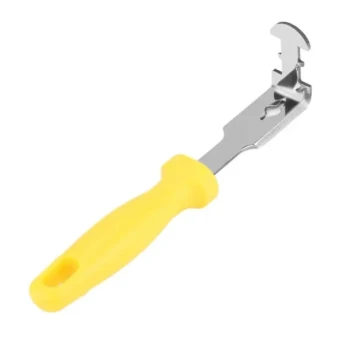
An electric grinder facilitates the pre-treatment of raw propolis by mechanically reducing frozen, hardened samples into a fine, uniform powder. This physical transformation is essential because it drastically increases the material's specific surface area, allowing extraction solvents to penetrate the matrix effectively.
Core Takeaway: By converting sticky, irregular raw propolis into a homogenous powder, the electric grinder maximizes the interface between the solid material and liquid solvents. This ensures that bioactive compounds are not trapped within the matrix but are fully released during the subsequent extraction phase.
The Mechanics of Pre-treatment
Overcoming Physical Limitations
Raw propolis is naturally sticky and possesses an irregular shape at room temperature, making it difficult to process. To address this, the material is first frozen to become brittle.
The electric grinder utilizes mechanical force to shatter this hardened material. This converts an otherwise unmanageable, viscous substance into a workable state.
Increasing Specific Surface Area
The primary technical function of the grinder is to break down the particle size of the propolis. By reducing chunks into a fine powder, the specific surface area of the sample is significantly increased.
This expanded surface area is the critical factor for chemical interaction. It exposes more of the material to the surrounding environment, preparing it for chemical processing.
Ensuring Sample Homogeneity
Mechanical grinding produces a uniform powder rather than random fragments. This uniformity is crucial for laboratory precision.
It ensures that when samples are weighed, the distribution of matter is consistent. This stability allows for reproducible results during sensitivity tests or hive applications.
Impact on Extraction Efficiency
Enhancing Solvent Penetration
Once the propolis is ground into a powder, the physical barrier to solvents is removed. Solvents, such as ethanol or deionized water, can penetrate the propolis matrix rapidly and deeply.
Without this step, solvents would only interact with the outer layer of a raw propolis chunk, leaving the internal compounds untouched.
Maximizing Active Ingredient Recovery
The ultimate goal of using an electric grinder is to facilitate the full release of bioactive substances.
By increasing the contact efficiency between solute and solvent, the process ensures the thorough dissolution of target ingredients. This leads to higher recovery rates of critical compounds such as gallic acid, flavonoids, and phenolic compounds.
Understanding the Trade-offs
The Necessity of Temperature Control
While the electric grinder is effective, it relies entirely on the state of the propolis. The material must remain frozen and hardened throughout the process.
If the propolis warms up due to ambient temperature or friction from the grinder, it will revert to its sticky state. This can lead to equipment clogging and a failure to achieve the necessary powder consistency.
Making the Right Choice for Your Goal
To maximize the utility of an electric grinder in your workflow, consider your specific analytical objectives:
- If your primary focus is Extraction Yield: Prioritize achieving the finest possible powder to maximize surface area for the release of gallic acid and flavonoids.
- If your primary focus is Experimental Consistency: Focus on the uniformity of the grind to ensure precise weighing and reproducible data across different sample batches.
An electric grinder is not just a pulverizing tool; it is a critical enabler that transforms a biologically complex material into a chemically accessible sample.
Summary Table:
| Process Phase | Action of Electric Grinder | Impact on Propolis Sample |
|---|---|---|
| Physical State | Shatters frozen, brittle material | Converts sticky resin into workable powder |
| Surface Area | Particle size reduction | Dramatically increases solvent-to-solid contact interface |
| Homogeneity | Mechanical pulverization | Ensures consistent matter distribution for precise weighing |
| Extraction | Matrix breakdown | Facilitates deep solvent penetration and high compound recovery |
Scale Your Propolis Processing with HONESTBEE
At HONESTBEE, we understand that precision in pre-treatment is the foundation of high-quality bee products. As a leading partner for commercial apiaries and distributors, we provide more than just equipment; we provide the competitive edge your business needs.
Our comprehensive wholesale portfolio features specialized beekeeping tools, industrial machinery, and essential consumables—including advanced grinding solutions and honey-filling machines—designed to streamline your workflow and maximize the recovery of valuable bioactive compounds.
Ready to upgrade your commercial apiary or expand your distribution line?
Contact HONESTBEE today to discover how our professional-grade hardware and honey-themed cultural merchandise can add value to your brand and efficiency to your operations.
References
- Ramadhan Nyandwi, Hasan Hüseyin Oruç. Determination and Quantification of Gallic Acid in Raw Propolis by High-performance Liquid Chromatography–Diode Array Detector in Burundi. DOI: 10.24248/easci.v1i1.18
This article is also based on technical information from HonestBee Knowledge Base .
Related Products
- Electric Honey Press Machine for Squeezing Honey Comb Press Equipment
- Electric Beeswax Flat Sheet Machine with Operating Tray for Wax Processing
- Heavy Duty Stainless Steel Frame Cleaner with Plastic Handle
- 10L Stainless Steel Electric Honey Press Machine
People Also Ask
- What is the pressing honey method? A Guide to Simple, Pollen-Rich Honey Extraction
- What are the steps for extracting honey using a press? Master Traditional Extraction for Pure, Flavorful Honey
- For which type of beekeeping operations is this honey press most suitable? Efficient Solutions for High-Volume Apiaries
- What are some general features of a honey press? Maximize Your Yield with Durable Extraction Tools
- What is the purpose of the raised frame on the honey press? Simplify Logistics and Improve Extraction Workflow