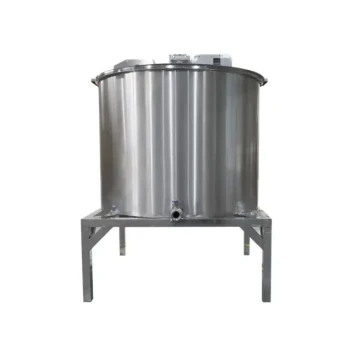
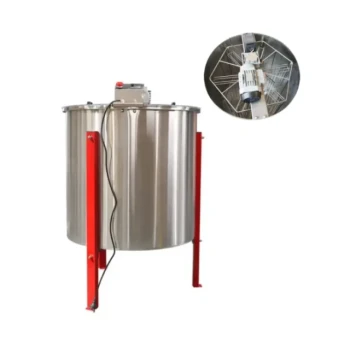
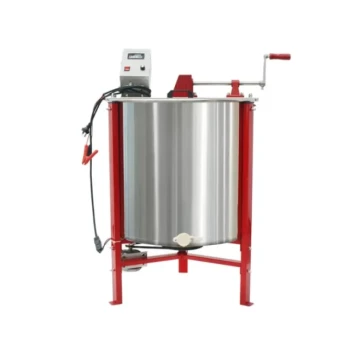
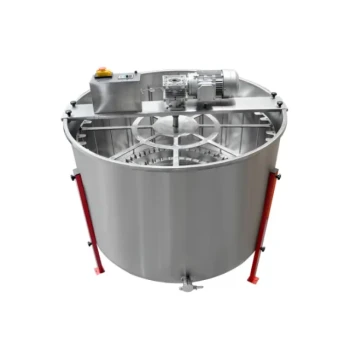
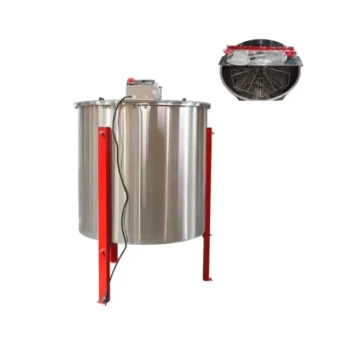
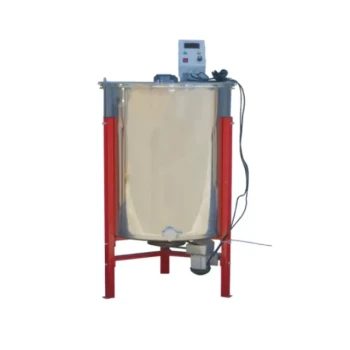
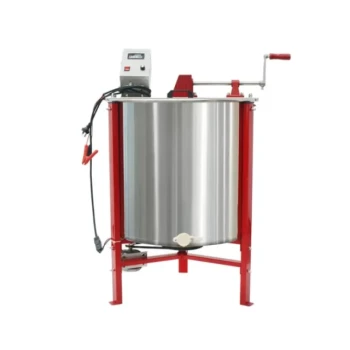
An electric honey extractor is significantly gentler on the honeycomb compared to a honey press. While a press relies on crushing or squeezing the comb to release the honey, an electric extractor utilizes centrifugal force to spin the honey out. This fundamental difference allows the extractor to preserve the structural integrity of the comb, enabling beekeepers to return the intact wax frames to the hive for immediate reuse.
Core Insight: The preservation of drawn comb is a critical asset for apiary productivity. By using an electric extractor rather than a press, you save the bees the immense energy required to rebuild wax, allowing them to focus entirely on honey production for the next cycle.
The Mechanics of Preservation
Centrifugal Force vs. Compression
The primary advantage of an electric extractor is its non-destructive method of harvest. The device spins the hive frames at high speeds, using centrifugal force to pull the honey out of the cells and onto the walls of the drum.
A honey press operates on compression. To extract the honey, the comb must be physically crushed. This process effectively destroys the wax structure, rendering the comb unusable for the bees in its current form.
Reuse and Efficiency
Because the electric extractor minimizes damage, the empty combs remain intact. This is a massive biological advantage for the colony.
When you return intact wet frames to the hive, the bees can immediately begin cleaning and refilling them. This bypasses the time-consuming and energy-intensive process of secreting new wax to build fresh comb.
Understanding the Trade-offs: Speed and Control
The Risk of Motor Power
While electric extractors are generally safer for combs than presses, they introduce a specific risk factor: uncontrolled acceleration.
Electric motors are powerful and consistent. However, professional observations indicate that starting an electric extractor immediately at full speed can generate enough force to rupture the comb or cause a "blowout," especially if the frames are heavy with thick honey.
The "Feel" of Extraction
This is where the nuance between manual and electric extraction becomes relevant. Manual extractors provide tactile feedback; you can feel the resistance and adjust your cranking speed instantly.
Electric extractors lack this physical feedback. To maintain the advantage of being "gentler" on the comb, the operator must consciously manage the motor's speed, starting slowly and gradually increasing the RPMs as the frames lighten.
Making the Right Choice for Your Goal
To maximize the lifespan of your equipment and the productivity of your hive, consider the following regarding your extraction method:
- If your primary focus is maximizing hive productivity: Choose an electric extractor. Preserving the drawn comb allows bees to produce honey faster in subsequent flows.
- If your primary focus is preventing comb damage during the spin: Use a variable-speed technique. Always start your electric extractor at a low RPM to remove the bulk of the honey before ramping up to full speed to dry the combs.
By treating the extraction process as a preservation step rather than just a harvest step, you invest in the future success of your colony.
Summary Table:
| Feature | Electric Honey Extractor | Honey Press |
|---|---|---|
| Mechanism | Centrifugal Force (Spinning) | Mechanical Compression (Crushing) |
| Effect on Comb | Preserves structural integrity | Destroys/Crushes wax structure |
| Comb Reusability | High; frames returned for immediate refill | Low; bees must build new wax |
| Apiary Efficiency | High (saves bees energy) | Lower (slows down honey production) |
| Primary Risk | Comb blowout from high RPM | Total loss of drawn comb |
Elevate Your Commercial Apiary with HONESTBEE
Maximize your honey yield and protect your precious wax assets with professional-grade extraction technology. HONESTBEE specializes in supporting commercial apiaries and distributors with high-performance electric extractors, honey-filling machines, and specialized hive-making equipment.
Whether you need to scale your wholesale operations with durable machinery or source essential industry consumables, our comprehensive portfolio is designed to enhance your efficiency and profitability. Don't let destructive harvesting slow down your production—invest in the future of your hives.
Contact HONESTBEE Today for Custom Wholesale Solutions
Related Products
- HONESTBEE 72 Frame Industrial Electric Honey Extractor for Beekeeping
- Commercial Electric 12 Frame Honey Extractor Spinner Motorized Honey Extractor
- 32 Frame Commercial Electric Honey Extractor for Beekeeping and Honey Production
- Electric 4 Frame Tangential Honey Extractor
- electric honey extractor honey centrifuge 3 frame honey extractor stainless steel honey frame extractor
People Also Ask
- What is the importance of balancing honeycomb frames within a honey extractor? Ensure Stability and Protect Machinery
- How is honey separated from the frames after they are uncapped? Efficient Extraction Methods for High Yields
- What are the main benefits of using a honey extractor? Maximize Yields and Protect Your Honeycomb
- What are the recommended methods for removing honey from the honeycomb? Top Extraction Techniques for Maximum Efficiency
- How do manual honey extractors compare to electric honey extractors? Choosing the Right Tool for Your Apiary Growth