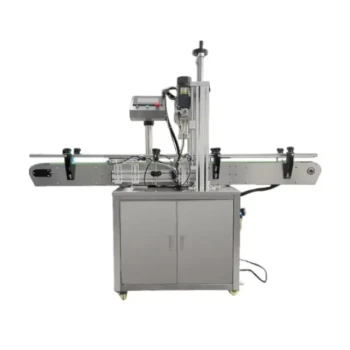
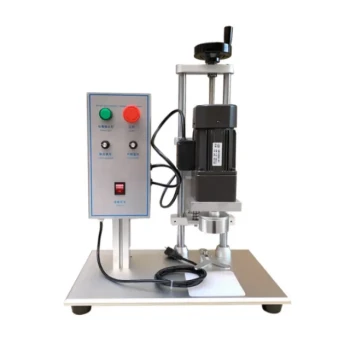
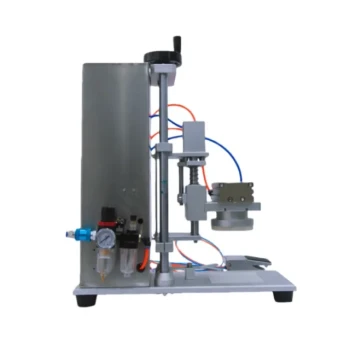
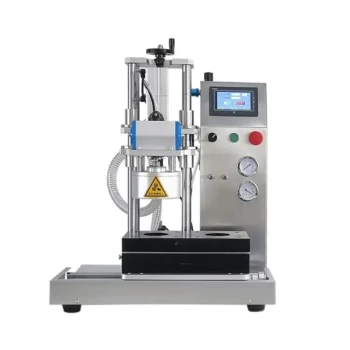
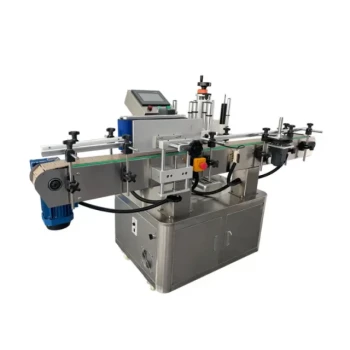
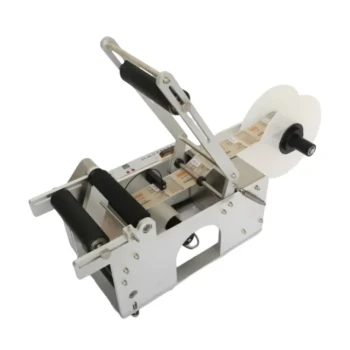
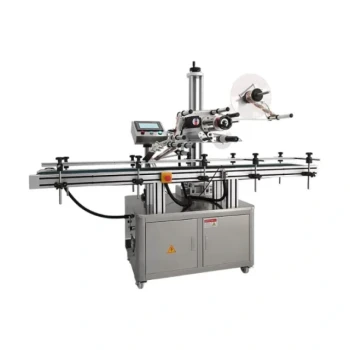
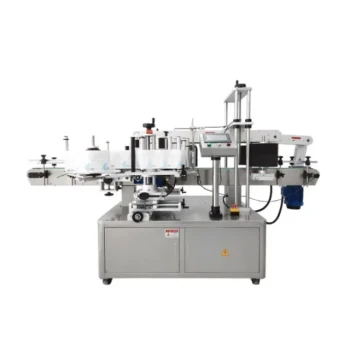
Induction sealing utilizes electromagnetism to bond a foil seal to a container without direct contact. As capped bottles pass under a sealing head on a conveyor, the machine generates an electromagnetic field that heats a foil liner inside the cap. This heat melts a polymer coating on the liner, which fuses firmly to the container's mouth as it cools, creating a hermetic seal.
Core Takeaway For honey producers, induction sealing is not just about closure; it is a critical preservation method. It creates a hermetic barrier that prevents moisture absorption—the primary cause of honey spoilage—while simultaneously securing the product against leakage and tampering during distribution.
The Mechanics of the Seal
The Non-Contact Process
Unlike traditional conduction sealing, induction sealing occurs after the bottle is capped. The sealing head never touches the bottle itself.
Electromagnetic Heating
The machine emits an electromagnetic field that passes through the plastic cap. This energy is absorbed specifically by the foil liner sitting inside the cap, causing it to heat up rapidly.
The Polymer Bond
The heat from the foil melts a thin polymer coating on the inner seal. As the bottle leaves the magnetic field, the polymer cools and solidifies, adhering the foil permanently to the rim of the container.
Why Honey Requires Hermetic Sealing
Combating Moisture Absorption
Honey is highly hygroscopic, meaning it naturally absorbs moisture from the air. Without a perfect seal, atmospheric moisture can enter the jar, diluting the honey and eventually leading to fermentation or spoilage.
Preserving Flavor and Quality
An induction seal creates an airtight barrier. This locks in the natural aroma and flavor profile of the honey, ensuring the product reaches the consumer exactly as it was processed.
Preventing Microbial Contamination
A damaged or incomplete seal is a vector for bacteria. Induction sealing ensures a sterile closure, significantly reducing the risk of microbial contamination associated with manual packaging or inferior sealing methods.
Commercial and Logistical Advantages
Eliminating Transport Leakage
Honey is viscous and sticky; a leak during transport can ruin an entire shipment. The high-strength bond of an induction seal prevents lids from backing off and stops leaks caused by pressure changes or rough handling.
Ensuring Tamper Evidence
Consumer trust is paramount in the food industry. An induction seal provides immediate, visual tamper evidence, assuring the customer that the product has not been opened, adulterated, or compromised since leaving the facility.
Flexibility in Production
Modern induction sealers can handle various bottle sizes, from standard 1L jars to smaller 250ml samplers. This allows producers to meet diverse consumer demands without requiring entirely different machinery for every container specification.
Understanding the Trade-offs
Material Compatibility
Induction sealing requires specific cap liners composed of backing, wax, foil, and polymer. You cannot use standard caps; you must source caps pre-fitted with induction-compatible liners appropriate for your specific container material (glass vs. plastic).
Calibration Sensitivity
The process requires precise calibration of conveyor speed and power output. Overheating can burn the liner or damage the closure, while underheating results in a weak seal that may leak, rendering the process ineffective.
Making the Right Choice for Your Goal
To determine if induction sealing fits your production line, consider your primary objectives:
- If your primary focus is Product Longevity: This technology is essential to prevent fermentation caused by moisture absorption.
- If your primary focus is Logistics and Distribution: The hermetic seal is the most reliable method to prevent costly leakage and rejected shipments during transport.
- If your primary focus is Brand Reputation: The tamper-evident nature of the seal builds immediate consumer trust and protects against claims of adulteration.
By implementing induction sealing, you transition from simple packaging to a professional standard that actively protects the integrity and value of your honey.
Summary Table:
| Feature | Induction Sealing Benefit for Honey |
|---|---|
| Sealing Method | Non-contact electromagnetic heating after capping |
| Moisture Control | Prevents hygroscopic absorption & fermentation |
| Product Integrity | Provides airtight barrier to lock in flavor & aroma |
| Safety | Clear tamper-evidence for consumer trust |
| Logistics | High-strength bond eliminates leaks during transport |
| Compatibility | Suitable for various bottle sizes (250ml to 1L+) |
Elevate Your Honey Brand with HONESTBEE
Transition from basic packaging to professional-grade preservation. At HONESTBEE, we specialize in empowering commercial apiaries and distributors with high-performance beekeeping machinery and tools. Whether you need specialized honey-filling machines or high-efficiency induction sealing equipment, our comprehensive wholesale solutions are designed to scale your operations.
Our value to you:
- Precision Machinery: Reliable sealing technology to prevent costly leaks and spoilage.
- Wholesale Efficiency: A full spectrum of beekeeping hardware and industry consumables.
- Professional Growth: Expert-selected equipment that ensures your product meets international standards.
Protect your harvest and build consumer trust today. Contact HONESTBEE to find the perfect sealing solution for your production line!
Related Products
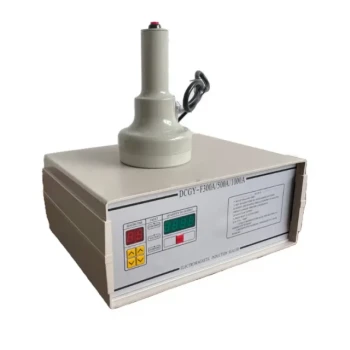
- Handheld Induction Sealing Machine for Tamper Evident Packaging
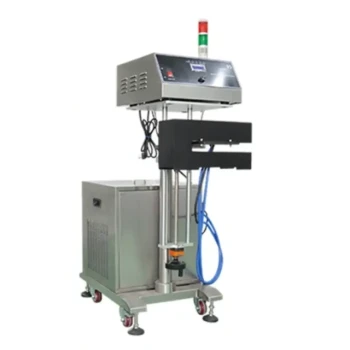
- Professional Water Cooled Induction Sealing Machine for Bottles and Containers
- Precision Automated Packaging Turntable Honey Spoon Filling Sealing Packing Machine
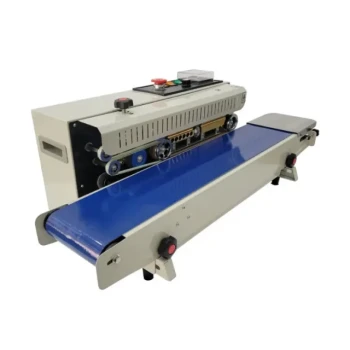
- Automatic Continuous Heat Sealing Machine
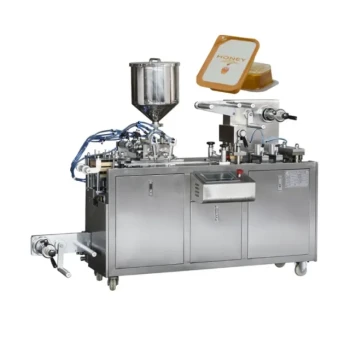
- Professional Durable Customizable Blister Packing Machine
People Also Ask
- How does tamper-evident sealing equipment benefit the honey trade? Ensure Product Integrity and Market Trust
- What is the function of an induction sealing machine in packaging? Secure Your Brand with Tamper-Evident Seals
- How does the induction sealing process work? Create Tamper-Evident, Airtight Seals for Your Products
- What is an induction sealing machine and how does it work? Achieve Airtight, Tamper-Evident Seals
- What is the significance of induction sealing equipment in honey packaging? Protect Your Brand and Product Integrity