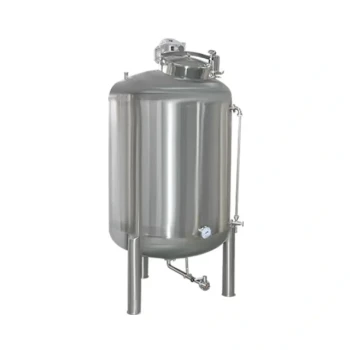
Industrial low-temperature freezers serve as the primary defense against the rapid degradation of rapeseed honey. By maintaining a stable environment, typically between -18°C and -20°C, these units effectively inhibit the natural crystallization and fermentation processes that otherwise compromise this specific honey variety. This method allows the product to retain the quality and characteristics of fresh raw honey for 18 months or longer without altering its physical or chemical properties.
Core Takeaway Freezing rapeseed honey is not merely about storage; it is a critical process safeguard that pauses biological time. By inhibiting invertase degradation and stabilizing the honey's physical state, industrial freezing enables high-quality monofloral honey to meet the rigorous demands of export markets and long-term inventory strategies.
The Mechanics of Preservation
Halting Physical Changes
Rapeseed honey is notorious for its rapid crystallization. An industrial freezer reduces the temperature significantly below the point where glucose molecules can easily organize into crystals.
By keeping the honey at approximately -20°C, the freezer suspends the honey's physical state. This ensures that the texture remains nearly identical to that of fresh raw honey, even after months of storage.
Preventing Fermentation
Raw honey contains natural yeasts that can lead to fermentation if moisture content and temperature are favorable.
The extreme cold of an industrial freezer completely halts the activity of these yeasts. This prevents the honey from souring or developing off-flavors, effectively safeguarding the product against spoilage during long storage periods.
Preserving Biological Integrity
Protecting Enzymatic Activity
One of the most valuable markers of honey quality is its enzyme content, specifically Invertase. Storage at room temperature allows these enzymes to degrade naturally over time.
Industrial freezing at -18°C maximizes the inhibition of Invertase degradation. This maintains the honey's biological activity, ensuring that the final product offers the nutritional benefits expected of premium honey.
Maintaining Chemical Stability
Unlike thermal processing (heating), which can alter chemical structures, freezing is non-destructive.
The primary reference confirms that this storage method does not negatively impact the honey's physical or chemical properties. It essentially "locks in" the honey's state at the moment of harvest.
Strategic Implications for Inventory
Extending Commercial Shelf Life
For producers, the ability to store honey for 18 months or longer transforms inventory management.
It allows for the accumulation of stock without the risk of quality loss. This is particularly vital for handling the seasonality of rapeseed blooms while maintaining a year-round supply for the market.
Enabling High-Quality Exports
The preservation of biological activity is often a requirement for high-end retail channels and export markets.
Using industrial freezing ensures the honey qualifies as high-quality monofloral honey. It serves as a quality assurance step that differentiates premium commercial products from standard, lower-grade options.
Understanding the Trade-offs
Equipment Capability vs. Energy Cost
While highly effective, this method requires specific industrial-grade equipment capable of holding stable temperatures of -20°C.
Producers must weigh the energy costs of long-term freezing against the increased market value of the preserved honey. This process is generally reserved for honey intended for high-value turnover rather than immediate, local consumption where rapid crystallization might be acceptable.
Making the Right Choice for Your Goal
To maximize the value of your rapeseed honey, consider your specific commercial objectives:
- If your primary focus is the Export Market: Utilize freezing to preserve Invertase levels and biological activity, as these are critical metrics for premium international standards.
- If your primary focus is Inventory Management: Use the -20°C standard to extend your product's shelf life to 18 months, allowing you to sell "fresh" honey long after the harvest season.
- If your primary focus is Quality Consistency: Rely on freezing to prevent uncontrolled crystallization, ensuring every batch maintains the texture and clarity of fresh raw honey.
Ultimately, industrial freezing allows you to decouple the harvest timeline from the sales timeline, guaranteeing a premium product regardless of when it is sold.
Summary Table:
| Preservation Factor | Impact of Industrial Freezing (-18°C to -20°C) | Long-term Benefit |
|---|---|---|
| Crystallization | Suspends glucose organization | Maintains fresh liquid texture |
| Fermentation | Halts yeast activity entirely | Prevents souring and spoilage |
| Enzymatic Activity | Inhibits Invertase degradation | Preserves biological/nutritional value |
| Shelf Life | Pauses biological aging | Extends commercial viability to 18+ months |
| Chemical State | Non-destructive stabilization | Meets rigorous export quality standards |
Elevate Your Honey Quality with HONESTBEE Solutions
Maintaining the biological integrity of rapeseed honey is essential for capturing high-value export markets. At HONESTBEE, we specialize in supporting commercial apiaries and distributors with the professional tools needed to succeed. From advanced honey-filling machines to a comprehensive range of beekeeping equipment and consumables, we provide the infrastructure your business needs to scale.
Ready to optimize your honey production and storage? Contact us today to explore our wholesale machinery and equipment tailored for the honey industry. Let HONESTBEE be your partner in delivering premium honey products to the world.
References
- Mariusz Florek, Piotr Domaradzki. Texture characteristics of raw rapeseed honey after storage at room temperature or freezing and heating up to 50°C. DOI: 10.31545/intagr/116419
This article is also based on technical information from HonestBee Knowledge Base .
Related Products
- Economy Small Scale Honey Dryer Dehumidifier Thickening Machine
- Professional Thermostatic Conical Honey Melter
- Classic Round Glass Honey Jar with Lid
- High Quality Honey Dehumidifier Dryer Thickening Machine for Beekeeping
- HONESTBEE Commercial Upright Honey Melter
People Also Ask
- What are the benefits of using a honey dryer for honey production? Boost Yield & Quality
- What are the features of the honey dryer? Achieve Premium Quality & Maximize Your Harvest
- What are the key features of the honey dryer? Essential Guide to Advanced Moisture Reduction Technology
- What is the primary construction material of the honey dryer? Durable AISI 304 Stainless Steel for Beekeepers
- How does the design of some honey dryers achieve high drying efficiency without a vacuum system? Boost Your Productivity