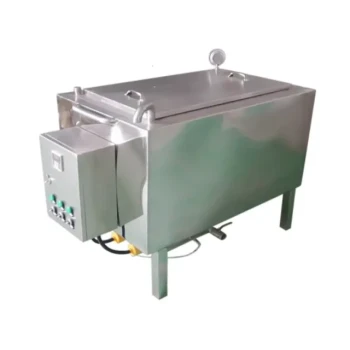
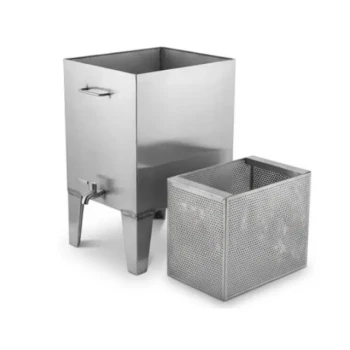
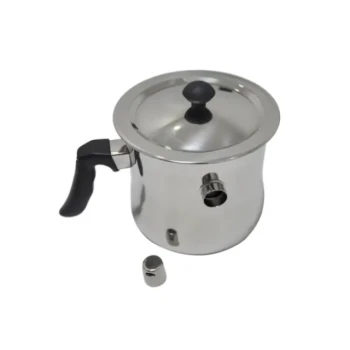
Beeswax recycling and foundation embossing equipment inadvertently acts as a mechanism for pesticide concentration rather than purification. While the processing temperatures are sufficient to melt wax for reshaping, they are typically too low to destroy the molecular structure of persistent, lipophilic (fat-soluble) pesticides. Consequently, the equipment facilitates a cycle where chemicals like bromopropylate and coumaphos are retained, accumulated, and reintroduced into the colony through the new foundation sheets.
Core Insight:
While recycling equipment effectively sterilizes wax against biological pathogens, it fails to neutralize chemical contaminants. This creates a "chemical reservoir" effect, where the embossed foundation becomes a source of chronic toxic exposure for the colony, even in the absence of new pesticide applications.
The Mechanics of Chemical Accumulation
Thermal Limitations of Equipment
Standard wax melting and embossing devices operate at temperatures designed to liquefy beeswax and cast it into sheets.
However, these operating temperatures are generally insufficient to break down the stable molecular bonds of modern pesticides.
Persistence of Lipophilic Compounds
Many acaricides used in beekeeping are lipophilic, meaning they chemically bond to fats and waxes.
Because the recycling equipment melts the wax without chemically separating these compounds, the pesticides remain suspended in the liquid wax throughout the embossing process.
The Cycle of Concentration
With every cycle of melting and re-embossing, the concentration of persistent chemicals can increase.
Old wax containing residues is processed into "new" foundations, which act as a baseline contaminant before the bees even begin drawing out the comb.
The "Chemical Reservoir" Effect
Foundation as a Source of Exposure
The output of the recycling machinery—the embossed foundation—becomes a solidified storage medium for chemicals.
This turns the hive's physical structure into a chemical reservoir, continuously releasing contaminants back into the colony environment.
Direct Contact Risks
Bees are exposed to these concentrated toxins through direct contact with the wax walls.
Because the chemicals are embedded in the foundation itself, the colony faces long-term health risks even if the beekeeper has ceased using those specific treatments.
Understanding the Trade-offs
The Biological Benefit
It is critical to note that this equipment performs excellently regarding biological sterilization.
The high temperatures used are effective at killing pathogenic microorganisms, such as American Foulbrood spores, preventing disease outbreaks and cross-infection between colonies.
The Economic & Operational Advantage
Recycling creates a closed-loop system that significantly reduces overhead costs.
By repurposing cappings and old combs, apiaries minimize the need to purchase external consumables and encourage rapid comb building on the recycled sheets.
The Chemical Blind Spot
The trade-off for this biological and economic efficiency is chemical accumulation.
The very process that secures the apiary against bacteria and saves money simultaneously compromises the chemical purity of the hive environment.
Making the Right Choice for Your Goal
To manage the long-term health of your apiary, you must weigh the benefits of resource recovery against the risks of toxicity.
- If your primary focus is Disease Prevention: Continue using high-temperature recycling equipment, as it effectively neutralizes biological threats like American Foulbrood.
- If your primary focus is Chemical Detoxification: Avoid recycling old brood comb into foundations; instead, rotate in virgin wax or pesticide-free external sources to break the cycle of accumulation.
Summary: Recycling equipment effectively solves the problem of biological pathogens but unintentionally amplifies the problem of chemical persistence by recycling contaminated wax into toxic foundations.
Summary Table:
| Feature | Biological Impact | Chemical Impact | Operational Outcome |
|---|---|---|---|
| Wax Melting | Effective sterilization of pathogens (e.g., AFB) | Fails to break down lipophilic pesticides | High biological safety |
| Embossing Process | Creates uniform, ready-to-use sheets | Reintroduces toxins via new foundations | Efficient comb building |
| Long-term Cycling | Reduces cross-infection risks | Leads to a "Chemical Reservoir" effect | Significant cost savings |
Secure Your Apiary’s Future with HONESTBEE
At HONESTBEE, we understand that commercial apiaries and distributors face a delicate balance between operational efficiency and colony health. Our comprehensive wholesale offering provides the professional-grade beekeeping tools, hive-making machinery, and honey-filling equipment you need to scale your business.
Whether you are looking to optimize your production with advanced foundation embossing machines or need high-quality consumables that meet industry standards, we are here to support your success. We help our partners navigate the complexities of wax management and hive health by providing the right technology for the job.
Ready to elevate your beekeeping operation? Contact HONESTBEE Today to explore our full spectrum of specialized hardware and wholesale solutions tailored for industry leaders.
References
- Jorgen Ravoet, Dirk C. de Graaf. Pesticides for Apicultural and/or Agricultural Application Found in Belgian Honey Bee Wax Combs. DOI: 10.1007/s00128-015-1511-y
This article is also based on technical information from HonestBee Knowledge Base .
Related Products
- Electric Flatting and Embossing Machine with Tray for Beekeeping
- Beeswax Machine Press Embosser Wax Foundation Mold Printer Bee Hive Equipment Making Sheet
- Fully Automatic Beeswax Embossing Machine Foundation Mill
- Manual Beeswax Comb Foundation Machine Wax Foundation Mill Embossing Machine
- Economy Manual Beeswax Embossing Mill Wax Foundation Machine Roller
People Also Ask
- What are the advantages of implementing a pulley and belt drive system in beeswax foundation machinery? Master Quality.
- What are the primary technical challenges faced by beeswax foundation production machinery? Tackling Lipophilic Residues
- How does the beeswax flatting and embossing machine prepare the wax for processing? Achieve Perfectly Uniform Wax Sheets
- What is the purpose of the beeswax flatting and embossing machine? Boost Hive Efficiency & Honey Production
- What are the sequential stages of operation for a beeswax flatting and embossing machine? Master High-Quality Wax Sheets