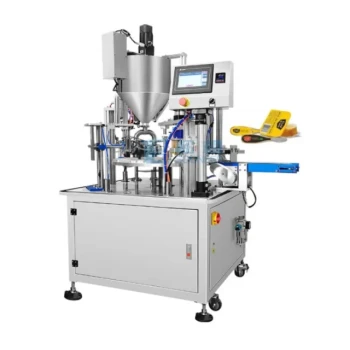
High-precision honey-filling equipment serves as the critical technological bridge between raw agricultural extraction and a viable commercial brand. By automating quantitative accuracy and enforcing strict hygiene standards, this machinery transforms bulk honey into standardized, retail-ready products that can compete in premium markets.
Core Takeaway While raw honey holds intrinsic value, high-precision filling equipment unlocks its commercial value by ensuring the consistency, safety, and shelf-stability required by modern retailers. It is the primary hardware investment that allows producers to pivot from low-margin bulk sales to high-margin, branded operations.
Transforming Raw Yield into Commercial Value
Guaranteeing Quantitative Accuracy
In manual operations, inconsistent filling leads to significant variance. High-precision equipment eliminates this variability, ensuring every unit contains exactly the advertised volume. This prevents regulatory fines associated with underfilling and eliminates the profit erosion caused by accidental overfilling.
Minimizing Product Loss
Honey is viscous and valuable; spills and drips during manual packaging represent direct financial loss. Automated filling systems utilize precise metering to significantly reduce product waste. This efficiency directly improves the overall economic return of the beekeeping operation.
Enhancing Packaging Efficiency
Speed is a critical factor in scaling operations. Automated machinery dramatically increases throughput compared to manual labor. This allows producers to meet larger order volumes rapidly without a proportional increase in labor costs.
Meeting Stringent Market Standards
Achieving Hygiene Compliance
Modern supermarkets and international distributors demand sterile production environments. Professional filling equipment ensures a sterile dispensing process, often creating a closed system that limits human contact. This adherence to strict hygiene standards is a prerequisite for market access.
Protecting Against Oxidation and Moisture
Honey is hygroscopic and susceptible to degradation when exposed to air. Vacuum sealing features often integrated into high-precision fillers minimize air contact during packaging. This barrier protection preserves the honey’s natural active components and prevents moisture-induced fermentation.
Competing with Imported Goods
To displace established imported brands, local products must match their consistency. Standardized processing ensures uniformity in purity and presentation. This technological parity allows local producers to vie for shelf space in high-end retail environments.
Elevating Brand Perception
Transitioning from Bulk to Retail
The most significant economic shift occurs when moving from selling raw materials to selling finished goods. Filling automation enables this pivot, allowing producers to capture the "added value" of branding. Instead of selling low-cost bulk barrels, operations can market high-unit-profit jars.
Improving Visual Presentation
Consumer trust begins with the packaging. Standardized sealing and clean bottling improve the external quality of the product. A professional appearance distinguishes premium artisan honey from lower-quality industrial alternatives in the eyes of the consumer.
Operational Considerations and Trade-offs
High Initial Investment
Implementing high-precision automation requires significant upfront capital. Producers must weigh the cost of machinery against their projected production volume to ensure a viable return on investment (ROI). Small-scale hobbyists may find the cost prohibitive compared to the efficiency gains.
Maintenance and Technical Requirements
Advanced machinery introduces complexity to the production line. Regular maintenance and technical calibration are essential to sustain precision. Operations must account for the need for skilled operators or training to prevent downtime and equipment failure.
Making the Right Choice for Your Goal
To maximize competitiveness, align your equipment choice with your specific business model:
- If your primary focus is entering supermarket chains: Prioritize equipment with certified hygiene controls and vacuum sealing to meet strict safety and shelf-life compliance standards.
- If your primary focus is maximizing profit margins: Focus on high-speed, high-precision metering systems that minimize product waste and reduce labor costs per unit.
Investing in high-precision filling is not just an operational upgrade; it is a strategic decision that redefines your product from a commodity to a competitive brand.
Summary Table:
| Factor | Manual Filling | High-Precision Automated Filling |
|---|---|---|
| Accuracy | High variance; risk of over/underfilling | Precise metering; consistent volume |
| Hygiene | Higher risk of contamination | Closed system; strict sanitary compliance |
| Waste | Frequent drips and spills | Minimal product loss/leakage |
| Throughput | Low speed; labor-intensive | High-speed; scalable production |
| Market Tier | Local/Bulk sales | Premium Retail & Export markets |
| Shelf Life | Variable moisture/oxidation control | Vacuum sealing; preserved bio-activity |
Elevate Your Beekeeping Brand with HONESTBEE Precision Engineering
Transitioning from bulk honey sales to a premium retail brand requires more than just high-quality honey—it requires professional-grade precision. HONESTBEE specializes in empowering commercial apiaries and distributors with the technological edge needed to dominate the market.
Our Value to You:
- Comprehensive Wholesale Range: From specialized hive-making and honey-filling machinery to essential industry consumables.
- Industrial Efficiency: Reduce waste and labor costs while meeting the stringent hygiene standards of international supermarkets.
- Tailored Solutions: We supply everything from heavy-duty hardware to honey-themed cultural merchandise to help you build a complete brand ecosystem.
Ready to transform your production capacity and capture higher margins? Contact HONESTBEE today for a customized equipment consultation and wholesale pricing.
References
- Lubomir Lyubenov. Marketing strategies at sectoral and regional level in the context of the green circular bioeconomy. DOI: 10.56497/etj2166503
This article is also based on technical information from HonestBee Knowledge Base .
Related Products
- Double Nozzle Small Honey Filling Machine Honey Sachet Packing Packaging Equipment
- Small Honey Filling Machine Sachet Packing Equipment Single Nozzle
- Precision Durable Efficient HONESTBEE Rotary Honey Filling Machine
- Manual Honey Filling Machine Bottling Machine for Honey
- Economy Small Honey Filling Machine Honey Bottle Filler Packaging Machine
People Also Ask
- What value do retail packaging equipment and filling technologies provide in the honey distribution process? Maximize ROI
- How does industrial honey-filling machinery support Robinia pseudoacacia stands? Maximize Your Acacia Honey Yield
- How does high-precision honey filling equipment protect honey's biological activity? Safeguard Purity & Premium Value
- Why is high-precision honey filling equipment necessary? Secure the medicinal value and ROI of stingless bee honey.
- How does specialized honey filling equipment contribute to honey distribution? Scale Your Wholesale Efficiency Today