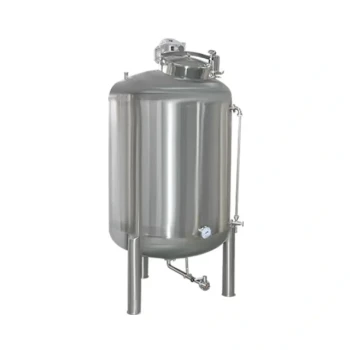
Industrial constant temperature heating equipment acts as a catalyst for chemical transformation rather than simple preservation. specifically, when used to maintain a precise range of 180°C to 200°C, this equipment induces oxidative polymerization in honey and isomaltose. This process restructures sugar molecules to generate active ingredients that promote the secretion of Granulocyte Colony-Stimulating Factor (G-CSF), thereby creating a product with distinct functional immune-boosting properties.
Precision heating is not merely about warming; it is a tool for molecular engineering. By sustaining high temperatures, you effectively trade the raw enzymatic profile of honey for a new, chemically induced biological value focused on immune stimulation.
The Mechanism of Thermal Transformation
Inducing Oxidative Polymerization
The primary function of this equipment is to create a specific thermal environment between 180°C and 200°C.
At these elevated temperatures, the equipment facilitates a reaction known as oxidative polymerization.
This reaction fundamentally alters the chemical structure of sugar molecules, particularly isomaltose found within the honey matrix.
Creating New Functional Value
The structural changes induced by this heat are not destructive in a negative sense; they are generative.
The polymerization process yields new active ingredients that are not present in raw honey.
These ingredients interact with intestinal epithelial cells to enhance the secretion of G-CSF, significantly elevating the honey's functional value as an immune-supporting product.
The Role of Precision Control
Establishing a Stable Thermal Field
Achieving these chemical changes requires a thermal environment free from fluctuations.
High-precision equipment provides a uniform thermal field, ensuring that every portion of the sample is subjected to the exact same conditions.
This uniformity is essential to prevent incomplete polymerization or uneven chemical structuring across the batch.
Eliminating Variables
By removing temperature gradients, the equipment ensures that the observed biological changes are solely the result of the intended chemical reaction.
This allows for the consistent production of the G-CSF stimulating agents.
It also ensures reproducibility in manufacturing, guaranteeing that every batch achieves the same level of biological efficacy.
Understanding the Biological Trade-offs
The Loss of Natural Enzymes
It is critical to understand that the "biological activity" generated at 180°C is distinct from the natural enzymatic activity of raw honey.
Native enzymes, such as diastase and invertase, are extremely heat-sensitive.
Research indicates that these enzymes begin to degrade significantly at temperatures as low as 50°C to 75°C, meaning they are effectively eliminated during the high-heat polymerization process.
Transformation vs. Preservation
The use of this equipment represents a strategic choice between two distinct biological outcomes.
You are sacrificing the traditional enzymatic benefits of raw honey to engineer a specific immunological function.
Therefore, this process is best suited for creating specialized functional foods rather than preserving the characteristics of raw, natural honey.
Making the Right Choice for Your Goal
To maximize the value of your processing, you must align your equipment settings with your specific biological objective.
- If your primary focus is Immune Function (G-CSF): Utilize constant heating between 180°C and 200°C to drive oxidative polymerization and create new bioactive compounds.
- If your primary focus is Enzyme Preservation: Limit heating to well below 50°C and use high-precision baths to prevent hot spots that destroy diastase and invertase.
Ultimately, the equipment's value lies in its ability to precisely manipulate the thermal environment to dictate the biological identity of the final product.
Summary Table:
| Process Objective | Temperature Range | Chemical Reaction | Biological Impact |
|---|---|---|---|
| Immune Engineering | 180°C - 200°C | Oxidative Polymerization | Increases G-CSF secretion; generates new bioactives |
| Enzyme Preservation | < 50°C | None (Protective) | Maintains natural diastase & invertase activity |
| Processing Control | High Precision | Uniform Thermal Field | Ensures batch consistency and reproducible efficacy |
Elevate Your Honey Processing with HONESTBEE
Are you looking to transition from raw honey production to high-value functional food manufacturing? HONESTBEE specializes in serving commercial apiaries and distributors with professional-grade solutions. From honey-filling machines to specialized industrial heating and processing equipment, we provide the tools necessary to precisely control your thermal fields and maximize biological outcomes.
Whether you need robust machinery for high-heat molecular engineering or delicate handling for enzyme preservation, our comprehensive wholesale offering has you covered.
Ready to scale your production? Contact us today to discover how our beekeeping hardware and machinery can transform your business efficiency!
References
- Xin Xu, Toshiaki Makino. Honey isomaltose contributes to the induction of granulocyte-colony stimulating factor (G-CSF) secretion in the intestinal epithelial cells following honey heating. DOI: 10.1038/s41598-020-71993-w
This article is also based on technical information from HonestBee Knowledge Base .
Related Products
- Professional Thermostatic Conical Honey Melter
- Stainless Steel Heated Honey Tank Warming Heating Tank
- Honey Tank Heater Drum Heating Blanket for Honey Barrel
- Honey Concentrating Vacuum Heating Thickening Machine Dehumidifier for Honey
- 0.5T Capacity Honey Dehumidifier Dryer with Vacuum Heating and Thickening Filtering Machine
People Also Ask
- What is melter honey used for? A Low-Cost Ingredient for Bakers and Brewers
- How do you melt a bucket of honey? Safely Reliquefy Crystallized Honey Without Damage
- How does a honey melter address the issue of crystallized honey in storage? Restore Flow and Quality Efficiently
- When is a honey melter necessary? Optimize Your Facility's Workflow for Crystallized Honey
- What factors should be considered when selecting a heater for honey containers? Optimize Your Warming Efficiency