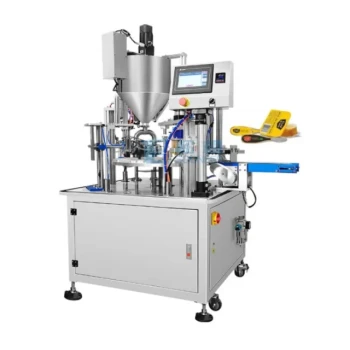
Industrial honey filling equipment secures product safety by utilizing sterile filling technologies and precise dosing systems that fundamentally isolate the product from the external environment. This automation minimizes physical contact, ensures consistent net weights, and effectively prevents secondary microbial contamination, thereby maintaining the integrity of the food safety chain from the apiary to the consumer.
By replacing manual handling with a closed-loop mechanical process, industrial equipment removes human error and environmental variables from the equation. This ensures the honey remains chemically pure, biologically stable, and compliant with strict commercial health regulations.
Mastering Sterility and Hygiene
The primary function of industrial filling equipment is to create a barrier between the raw product and potential contaminants. This goes beyond simple cleanliness; it is about engineering a sterile workflow.
The Closed-Loop Advantage
Advanced filling machinery operates through a closed-loop system. This design keeps the honey contained within the machinery from the filtration stage to the final fill.
By removing open-air transfers, the equipment drastically reduces the risk of secondary microbial contamination. External pathogens and airborne particles are prevented from entering the product stream.
Precision Dosing and reduced Handling
Manual filling inevitably involves variation and human contact. Industrial machines utilize precise dosing systems to control the exact amount of product dispensed.
This accuracy ensures strict consistency in net weight for every package. More importantly, it eliminates the need for manual intervention, which is the most common source of cross-contamination in food processing.
Material Integrity and Chemical Stability
Safety is not just about bacteria; it is also about maintaining the chemical purity and nutritional value of the honey.
Food-Grade Construction
Industrial-grade equipment is manufactured from food-grade stainless steel. This material choice is critical for preventing chemical leaching.
Using stainless steel prevents external metal impurities and heavy metals from migrating into the honey during processing. This ensures that heavy metal levels remain strictly below legal safety limits.
Preventing Oxidation
Honey is sensitive to moisture and air. Automatic filling equipment includes high-precision sealing functions designed to evacuate air from the container.
By ensuring no air bubbles remain, the machinery prevents quality degradation caused by oxidation or moisture absorption. This process extends the shelf life of the honey while preserving its natural antioxidant activity and nutritional components.
Understanding the Operational Trade-offs
While automation provides superior safety, it introduces new maintenance responsibilities that must be managed to prevent issues.
The Maintenance Imperative
The complexity of a closed-loop system means that cleaning is more involved than with manual tools. If the clean-in-place (CIP) protocols are not followed rigorously, the machine itself can become a reservoir for bacteria.
Standardization vs. Flexibility
These machines are designed for standardization. While this is excellent for meeting supermarket supply chain requirements, changing bottle shapes or honey viscosities requires technical adjustments. Operators must be trained to adjust settings without compromising the sterile environment.
Making the Right Choice for Your Production Line
Selecting the right equipment depends on where your operation sits within the market and what your specific safety goals are.
- If your primary focus is Regulatory Compliance: Prioritize equipment with certified food-grade stainless steel components and automated cleaning cycles to ensure heavy metal and microbial limits are never breached.
- If your primary focus is Shelf Life Extension: Look for machines with advanced sealing technologies that specifically guarantee the removal of air bubbles to prevent oxidation.
- If your primary focus is Scaling for Retail: Choose high-precision dosing systems that guarantee the standardized net weights required for entry into supermarket supply chains.
True product safety is achieved when precision engineering replaces variable manual processes, guaranteeing purity from the tank to the table.
Summary Table:
| Feature | Safety Impact | Benefit for Commercial Apiaries |
|---|---|---|
| Closed-Loop System | Isolates honey from external pathogens | Prevents secondary microbial contamination |
| Precise Dosing | Eliminates manual intervention | Ensures consistent net weights and regulatory compliance |
| Food-Grade Stainless Steel | Prevents chemical leaching | Guaranteed chemical purity and zero heavy metal migration |
| High-Precision Sealing | Removes air bubbles and moisture | Prevents oxidation and extends product shelf life |
Elevate Your Honey Production with HONESTBEE Professional Solutions
For commercial apiaries and distributors, maintaining the highest food safety standards is non-negotiable. HONESTBEE provides the industry-leading tools you need to scale with confidence. From high-precision honey-filling machines and automated hive-making equipment to essential beekeeping consumables, our comprehensive wholesale portfolio is designed to optimize your production line and ensure market-ready purity.
Ready to upgrade your efficiency? Our experts are here to help you select the perfect machinery for your specific needs.
Contact HONESTBEE Today to Discuss Your Wholesale Needs
References
- Nadezhda Lunyova, Olga Dutova. Honey Quality and Safety Control in The Altai Territory. DOI: 10.1051/bioconf/20213700108
This article is also based on technical information from HonestBee Knowledge Base .
Related Products
- Precision Durable Efficient HONESTBEE Rotary Honey Filling Machine
- Double Nozzle Small Honey Filling Machine Honey Sachet Packing Packaging Equipment
- Commercial Rotary Honey Filling Machine for Production
- Small Honey Filling Machine Sachet Packing Equipment Single Nozzle
- Fully Automatic Honey Filling Packaging Machine for Processing Line
People Also Ask
- What quality control role does professional honey filling equipment perform? Ensure Consistency and Product Stability
- How do high-precision honey filling machines ensure quality? Optimize Your Commercial Production with HONESTBEE
- What are the common types of bottling machines used for honey? Choosing the Right Solution for Your Apiary
- How do honey filling machines work? Achieve Precision & Speed for Your Apiary
- What is a key feature of the new generation of the honey filling machine? The Advanced Electronic Control Unit