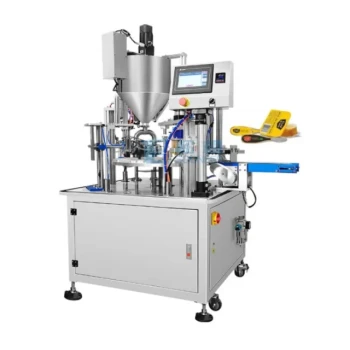
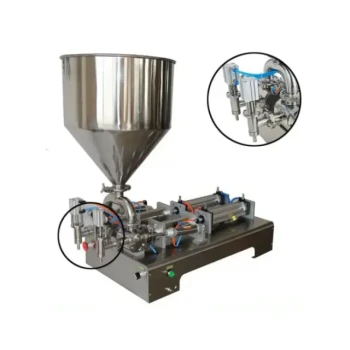
Industrial honey filling systems preserve product integrity through a combination of precision thermal regulation, low-shear pumping mechanisms, and enclosed volumetric controls. By strictly managing temperature and mechanical pressure, this equipment prevents the chemical degradation associated with rising Hydroxymethylfurfural (HMF) levels while ensuring the uniform distribution of botanical markers like pollen grains.
The core value of industrial filling equipment lies in its ability to balance viscosity management with biological preservation. By minimizing heat exposure and mechanical friction, these systems stabilize the honey's delicate enzymatic structure and ensure that the botanical profile remains consistent from the first bottle to the last.
Managing Thermal and Chemical Stability
Preventing HMF Elevation
The primary chemical risk during honey packaging is the elevation of Hydroxymethylfurfural (HMF). HMF is an organic compound that indicates thermal degradation and aging in honey.
Industrial machines utilize precision temperature control systems to mitigate this risk. By maintaining the honey at the lowest flowable temperature, the equipment prevents overheating, ensuring HMF levels remain low and compliant with quality standards.
Protecting Heat-Sensitive Enzymes
Beyond HMF, honey contains volatile enzymes such as invertase, diastase, and glucose oxidase. These components are biologically active and highly sensitive to thermal stress.
Modern filling lines are engineered to operate within strict thermal parameters that protect these biological agents. This ensures the packaged product retains the health-promoting properties that consumers expect from raw or high-quality honey.
Preserving Botanical and Physical Structure
Ensuring Uniform Pollen Distribution
For honey to be classified by a specific botanical source (e.g., Clover, Manuka, Acacia), it must contain a consistent count of specific pollen grains.
Advanced filling machinery uses specialized valve designs and agitation techniques to keep these heavy particles suspended. This guarantees that pollen grains remain uniformly distributed throughout the batch, maintaining the botanical quality and consistency required for the consumer market.
Mitigating Shear Stress
Honey is a non-Newtonian fluid that can be damaged by high mechanical friction, or "shear." Intense shear can alter the crystalline structure and texture of the honey.
To address this, equipment manufacturers utilize anti-shear internal components and piston or rotor pump systems. These are designed to move high-viscosity fluids gently, preserving the natural texture and preventing the breakdown of the honey's physical matrix.
Environmental Isolation and Hygiene
Preventing Aeration and Oxidation
Exposure to air during high-speed filling can introduce oxygen bubbles, leading to oxidation of aromatic compounds and potential spoilage.
Fully enclosed filling designs minimize the time honey is exposed to the atmosphere. This isolation prevents the incorporation of excessive air, thereby preserving the delicate aromatic profiles derived from the original plant sources.
Moisture Control and Hygiene
Honey is hygroscopic, meaning it naturally absorbs moisture from the air, which can lead to fermentation and spoilage.
Precision-engineered pumping systems and enclosed loops prevent the absorption of environmental moisture. Furthermore, automated sealing minimizes human contact, significantly reducing the risk of secondary microbial contamination.
Understanding the Trade-offs
While automated filling preserves quality, it introduces operational complexities that must be managed.
Complexity of Cleaning To maintain the "enclosed" sanitary benefits, these machines rely on complex internal valve systems. These require rigorous Clean-In-Place (CIP) protocols to prevent cross-contamination between different honey varietals.
Viscosity vs. Speed There is an inherent trade-off between throughput and shear stress. Increasing the filling speed on highly viscous honey increases friction. Operators must carefully calibrate the flow rate to avoid compromising the enzymatic integrity of the product for the sake of speed.
Making the Right Choice for Your Goal
When selecting filling equipment, the preservation method should align with your specific market positioning.
- If your primary focus is "Raw" or Enzymatic Honey: Prioritize machines with advanced anti-shear components and low-temperature flow controls to protect invertase and diastase activity.
- If your primary focus is Varietal Certification: Ensure the equipment features specialized agitation or valve systems that guarantee the uniform suspension of pollen grains for botanical consistency.
- If your primary focus is Shelf-Life and Stability: Select fully enclosed systems with high-precision sealing to eliminate air entrapment and moisture absorption.
The most effective equipment acts not just as a dispenser, but as a preservation system that safeguards the biological and chemical footprint of the hive.
Summary Table:
| Preservation Factor | Technical Mechanism | Impact on Honey Quality |
|---|---|---|
| Enzymatic Activity | Precision Thermal Regulation | Prevents degradation of invertase and diastase. |
| Chemical Stability | HMF Monitoring & Low Temp | Minimizes Hydroxymethylfurfural (HMF) elevation. |
| Botanical Integrity | Specialized Valve Agitation | Ensures uniform distribution of pollen grains. |
| Physical Texture | Anti-shear Pumping Systems | Prevents mechanical damage to the crystalline matrix. |
| Aromatic Profile | Enclosed Filling Design | Reduces oxidation and preserves delicate floral scents. |
| Shelf-Life | Moisture & Hygiene Control | Prevents fermentation and microbial contamination. |
Scale Your Honey Production Without Sacrificing Quality
At HONESTBEE, we understand that for commercial apiaries and distributors, the integrity of your honey is your brand's most valuable asset. Our comprehensive range of industrial honey-filling machines and specialized beekeeping equipment is engineered to protect the delicate enzymatic and botanical profiles of your product while maximizing efficiency.
Whether you need precision hardware for boutique varietals or high-speed machinery for large-scale distribution, we provide the full spectrum of tools—from hive-making machines to advanced filling lines and industry consumables.
Ready to elevate your honey processing standards? Contact HONESTBEE today to discuss your wholesale equipment needs.
References
- Anna Wróblewska, Ernest Stawiarz. Botanical Characteristics of Polish Honeys from Natura 2000 Habitats. DOI: 10.1515/jas-2015-0003
This article is also based on technical information from HonestBee Knowledge Base .
Related Products
- Commercial Rotary Honey Filling Machine for Production
- Precision Durable Efficient HONESTBEE Rotary Honey Filling Machine
- Fully Automatic Honey Filling Packaging Machine for Processing Line
- Precision Automated Packaging Turntable Honey Spoon Filling Sealing Packing Machine
- Automatic Honey Filling and Filtering Machine for Beekeeping Bottle Filling
People Also Ask
- What role do commercial honey filling machines play in honey distribution? Scaling Efficiency and Quality Control
- What technical support do commercial-grade filling machines provide? Convert Honey NTFPs into Marketable Commodities
- What is the significance of specialized honey filling equipment? Scaling from Beekeeping to Commercial Success
- Why is professional honey filling machinery critical for honey production? Scale Your Apiary's Profit & Efficiency
- Why is high-capacity honey filling machinery necessary for Giant Honey Bees? Solve the Apis dorsata Volume Crisis