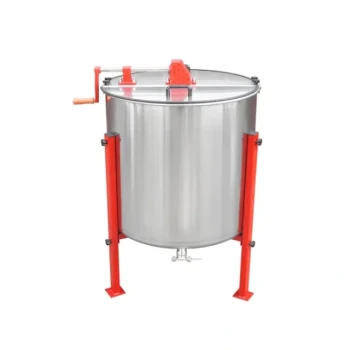
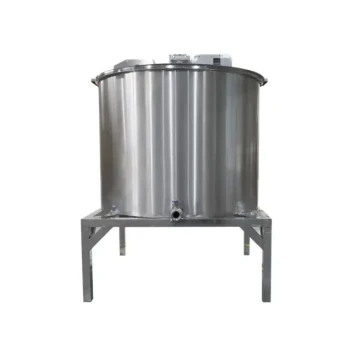
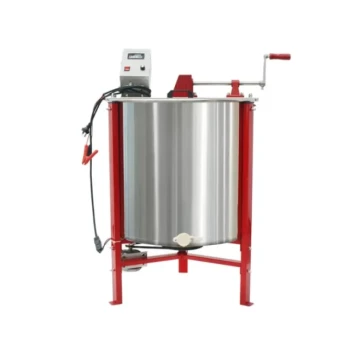
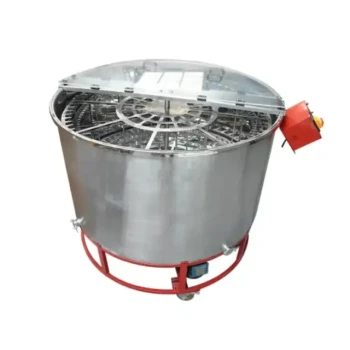
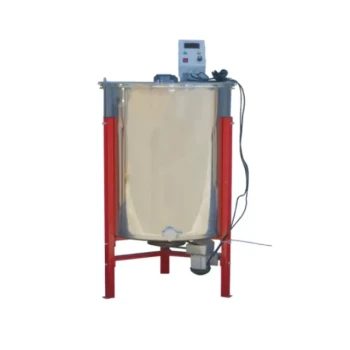
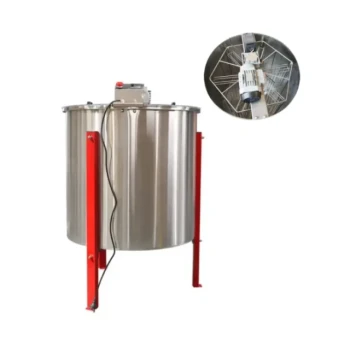
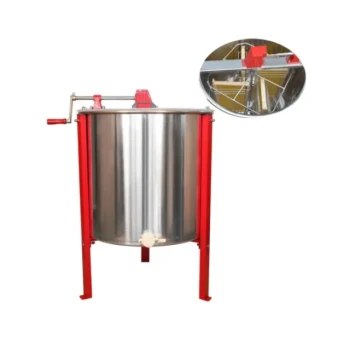
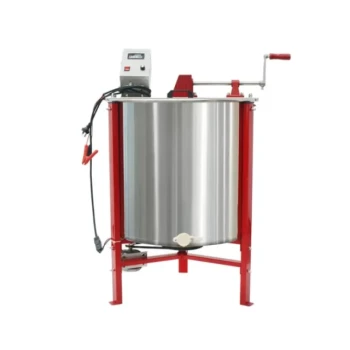
Professional honey extraction machinery guarantees compliance by employing controlled centrifugal force to separate ripened honey without degrading the delicate beeswax structure or introducing heat damage. When combined with integrated filtration systems, these units preserve the honey's bio-active content while ensuring the physicochemical purity required for international export.
By automating the balance between efficient physical extraction and delicate handling, these systems maintain essential maturity indicators and eliminate impurities. This ensures the final product meets rigorous global standards—such as EU regulations—without compromising biological activity.
Preserving Bio-Activity During Extraction
The primary challenge in honey production is separating the product from the comb without altering its chemical composition. Professional machinery addresses this through non-thermal physical processes.
Centrifugal Separation
Modern extractors use centrifugal force rather than heat to release honey. This method prevents thermal degradation, which is critical for maintaining the honey's natural enzyme levels and bio-active properties.
By avoiding heat, the machinery ensures that parameters like Hydroxymethylfurfural (HMF) remain low, a key indicator of freshness in international trade.
Protecting the Beeswax Structure
Advanced machinery is designed to spin frames at precise speeds that extract honey while leaving the beeswax structure intact.
This prevents wax particles from contaminating the honey at the source. It also allows for the reuse of combs, supporting sustainable apiary management.
Multi-Stage Filtration
Once extracted, the honey moves through integrated filtration systems. These systems efficiently remove macroscopic impurities such as wax debris and bee remains.
This step is essential for meeting the strict purity requirements of sensory analysis, ensuring the final product is visually clear and free of foreign matter.
Ensuring Stability and Hygiene
Beyond extraction, the processing capabilities of professional equipment are vital for shelf stability and meeting sanitary regulations like NMX-F-036-NORMEX-2006.
Moisture Control Mechanisms
Excess water in honey leads to fermentation. Specialized processing systems allow for preliminary moisture control and dehydration.
This ensures the honey achieves the correct maturity level and water content, which is a non-negotiable prerequisite for passing EU safety standards and extending shelf life.
Sterile Filling Environments
Industrial filling facilities provide a controlled hygienic environment. This prevents external contaminants, such as dust or airborne microbes, from entering the product during the bottling phase.
By inhibiting microbial growth, the machinery preserves the honey’s sensory characteristics—taste, aroma, and texture—throughout the supply chain.
Prevention of Secondary Pollution
Automated sealing and filling lines minimize human contact with the product. High-precision equipment seals containers immediately after filling to prevent oxidation and secondary pollution.
This level of isolation is critical for complying with strict non-tariff trade measures (NTMs) regarding food safety.
Precision and Consistency
International buyers demand uniformity across large batches. Professional machinery eliminates the variability found in manual processing.
Accurate Volume Control
Automated filling machines utilize pneumatic or servo-controlled systems to dispense honey with extreme precision. This ensures the net weight of every unit meets legal labeling standards.
Shear Reduction for Viscous Varietals
For high-quality varieties like Acacia, machines are tuned to prevent physical shear. Shear stress can induce unwanted crystallization or color changes.
By handling high-viscosity fluids gently, the machinery maintains the transparency and consistency required for high-end markets.
Understanding the Trade-offs
While professional machinery is essential for export-grade honey, reliance on automation introduces specific risks that must be managed.
The Risk of Over-Processing
If centrifugal speeds are set too high or filtration is too fine (ultra-filtration), producers risk stripping pollen, which authenticates the honey's botanical origin. This can inadvertently classify the product as "filtered honey" rather than "honey," significantly lowering its market value.
Maintenance and Cross-Contamination
Complex machinery with internal piping creates standardized hygiene, but it also creates "blind spots." If the automated cleaning cycles (CIP) are not rigorously validated, residue from a previous batch can contaminate the next, compromising the purity of distinct varietals.
Making the Right Choice for Your Goal
To select the right machinery, you must align the equipment's capabilities with your specific export targets.
- If your primary focus is High-End Varietals (e.g., Manuka, Acacia): Prioritize servo-controlled filling systems that minimize shear stress to preserve transparency and prevent crystallization.
- If your primary focus is Bulk Export to the EU: Focus on systems with robust moisture control and dehydration features to strictly ensure fermentation stability and shelf life.
Professional extraction machinery transforms a raw agricultural yield into a standardized, compliant commodity ready for the global stage.
Summary Table:
| Feature | Quality Mechanism | Benefit for International Trade |
|---|---|---|
| Centrifugal Extraction | Non-thermal separation | Maintains low HMF levels and preserves enzymes |
| Multi-Stage Filtration | Physical impurity removal | Ensures visual clarity and sensory purity |
| Moisture Control | Integrated dehydration | Prevents fermentation; meets EU water content limits |
| Automated Filling | Sterile environment & precision | Ensures net weight accuracy and prevents pollution |
| Shear Reduction | Controlled viscous handling | Maintains transparency and prevents crystallization |
Scale Your Honey Production for the Global Market
Transitioning from local supply to international export requires equipment that guarantees consistency and compliance. HONESTBEE empowers commercial apiaries and distributors with the professional machinery needed to exceed global quality benchmarks.
Our comprehensive wholesale portfolio includes:
- Advanced Extraction & Filling Lines: Precise, low-shear systems to preserve bio-activity.
- Industrial Machinery: From hive-making to honey-dehydration and bottling solutions.
- Beekeeping Equipment & Consumables: A full spectrum of tools for large-scale operations.
- Cultural Merchandise: Premium honey-themed products to diversify your brand.
Whether you are upgrading an industrial facility or expanding a distribution network, our team provides the technical expertise and hardware to ensure your product is export-ready.
Contact HONESTBEE Today for a Custom Equipment Quote
References
- Liena Poiša, Artis Teilāns. HONEY PRODUCTION IN LATVIA. DOI: 10.17770/sfi2025.1.1.8372
This article is also based on technical information from HonestBee Knowledge Base .
Related Products
- Stainless Steel Manual 8 Frame Radial Honey Extractor Machine for Beehives
- 6 Frame Manual Stainless Steel Honey Extractor Beekeeping Equipment
- 32 Frame Commercial Electric Honey Extractor for Beekeeping and Honey Production
- HONESTBEE 6 Frame Three Use Electric Honey Extractor for Beekeeping
- HONESTBEE 72 Frame Industrial Electric Honey Extractor for Beekeeping
People Also Ask
- What types of beehive frames are compatible with honey extractor machines? Find the Perfect Match for Your Apiary
- Which type of honey extractor is generally more durable? Focus on Material & Build Quality for Longevity
- What are the key features and benefits of a stainless steel honey extractor? Upgrade to Professional Purity
- What are the disadvantages of a manual honey extractor? Overcome Efficiency Bottlenecks in Your Apiary
- What is a manual honey extractor? The Essential Guide to Cost-Effective Beekeeping for Beginners