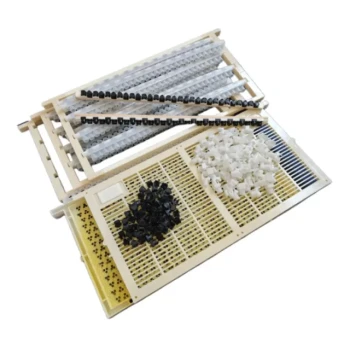
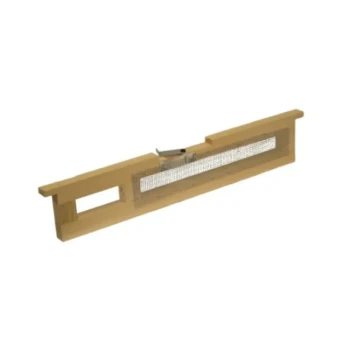
Professional Queen Bee Rearing Equipment serves as the technological infrastructure for artificial directional breeding. By utilizing specialized tools such as rearing frames, grafting needles, and mating hives, apiarists can systematically select and propagate high-productivity genetic traits rather than relying on chance. This equipment ensures the continuous presence of high-quality queens, which is the single most critical factor in determining the vitality, resilience, and honey production capacity of a colony.
The quality of the queen bee dictates the success of the entire hive. Professional rearing equipment transforms beekeeping from a passive observation of nature into a controlled genetic strategy, ensuring consistent apiary-wide efficiency and resilience.
The Mechanics of Genetic Control
Artificial Directional Breeding
The primary function of professional rearing equipment is to facilitate artificial directional breeding. Unlike natural selection, which may prioritize survival over yield, this equipment allows beekeepers to isolate and propagate specific desirable traits.
By using tools like grafting needles, apiarists can manually transfer larvae from colonies exhibiting superior traits—such as high honey yield or gentleness—into queen cell cups. This ensures that the next generation of queens inherits these specific genetic advantages.
Combating Breed Degradation
Without intervention, local bee populations can suffer from breed degradation or a lack of adaptation to changing climates. Rearing equipment allows for the introduction and maintenance of superior genetics.
This creates a buffer against environmental stressors. By breeding specifically for disease resistance and climate adaptation, the equipment helps stabilize the apiary against external threats that would otherwise decimate a "wild" population.
Enhancing Operational Productivity
The Pheromone Advantage
A critical aspect of productivity is the age and vigor of the queen. Specialized equipment enables the regular replacement of queens, typically every two years.
Younger queens produced through this method secrete stronger pheromones. These chemical signals significantly enhance colony cohesion and suppress the natural swarming instinct, directing the colony's energy toward honey production rather than reproduction and departure.
Maximizing Egg-Laying and Foraging
The biological output of the hive is directly tied to the queen's reproductive capacity. High-quality queens reared via professional tools demonstrate superior egg-laying rates.
A higher egg-laying rate translates to a larger workforce. A robust population of worker bees increases foraging activity, which directly correlates to higher honey yields and better pollination efficiency for the apiary.
Scalability and Management Principles
Mass Rearing Capabilities
Specialized queen rearing frames act as the central carrier for mass production. These frames allow for the concentrated placement of artificial wax queen cells within a single colony.
This density enables beekeepers to manage large numbers of developing larvae simultaneously. It also facilitates precise data recording regarding development timelines, from grafting to emergence, which is essential for large-scale commercial operations.
Planned Colony Expansion
Reliable equipment removes the unpredictability from colony division. Instead of waiting for a hive to create a natural queen cell, beekeepers can utilize ready-made queen cells to split colonies on a strict schedule.
This facilitates planned colony division and the timely replacement of low-performing queens. It ensures that production stability is maintained across the entire apiary without gaps caused by queen failure.
Understanding the Trade-offs
Operational Complexity
While professional equipment offers control, it introduces significant operational complexity. Successful grafting and rearing require a higher level of technical skill and precision than traditional beekeeping. Improper handling of grafting needles or rearing frames can damage larvae, leading to lower success rates and wasted resources.
Genetic Diversity Risks
There is a potential risk of over-standardization. By aggressively selecting for specific traits like honey yield using a limited number of breeder queens, an apiary risks creating a genetic bottleneck. This can inadvertently reduce the overall genetic diversity of the operation, potentially making the apiary more vulnerable to new, unforeseen pathogens that target that specific genetic lineage.
Making the Right Choice for Your Goal
To maximize the benefit of professional rearing equipment, align your strategy with your specific operational objectives.
- If your primary focus is Commercial Honey Yield: Prioritize equipment that facilitates frequent queen replacement cycles (every 2 years) to maintain peak pheromone production and suppress swarming.
- If your primary focus is Colony Health and Resilience: Focus on using grafting tools to select strictly for disease resistance and hygienic behavior traits, even if it means a slight compromise on immediate honey volume.
- If your primary focus is Large-Scale Expansion: Invest heavily in specialized rearing frames and data-tracking systems to manage the simultaneous development of mass queen populations for planned splits.
Mastering these tools shifts your role from simply keeping bees to actively engineering the genetic success of your apiary.
Summary Table:
| Feature | Function in Rearing | Impact on Productivity |
|---|---|---|
| Grafting Needles | Precise larvae transfer | Selection of high-yield genetic traits |
| Queen Cell Cups | Artificial queen housing | Facilitates mass-rearing & scalability |
| Rearing Frames | Concentrated larvae management | Enables planned colony expansion & splits |
| Mating Hives | Controlled environment | Higher success rates for young queen vigor |
| Pheromone Control | Regular queen replacement | Suppresses swarming and improves cohesion |
Elevate Your Apiary's Genetic Potential with HONESTBEE
Maximize your honey yields and ensure colony resilience with professional-grade equipment. At HONESTBEE, we specialize in supporting commercial apiaries and distributors with a comprehensive wholesale portfolio. From precision grafting tools and rearing frames to advanced honey-filling machinery and hive hardware, we provide the industrial-strength solutions you need to scale your operations.
Ready to transform your beekeeping strategy? Contact HONESTBEE today to explore our full spectrum of wholesale tools and essential industry consumables. Let us help you engineer a more productive future.
References
- Nermin BAHSI, Dilek Bostan Budak. CAUSES OF LOW YIELD IN BEE PRODUCTS IN OSMANIYE, TURKEY. DOI: 10.21474/ijar01/178
This article is also based on technical information from HonestBee Knowledge Base .
Related Products
- Premium Nicot Style Queen Rearing Kit with Hair Roller Bee Cages
- Nicot Queen Rearing Kit for Beekeeping and Grafting in Nicot System
- Retractable Chinese Queen Rearing Grafting Tools Equipment
- No Grafting Queen Rearing Kit: System for Royal Jelly Production and Queen Rearing
- Plastic Chinese Queen Grafting Tool for Bee Queen Rearing
People Also Ask
- What is the primary function of a queen rearing kit? Eliminate Manual Grafting for Superior Bee Breeding
- What are some alternative methods to grafting for queen cell production? Discover Graft-Free Queen Rearing Systems
- How do specialized queen rearing kits and queen management tools improve the success rate of bee colony expansion?
- How do modern queen bee rearing and breeding kits improve apiary management? Transition to Proactive Precision Breeding
- How is 'active' queen rearing defined in beekeeping? Master Intentional Colony Management & Genetic Control