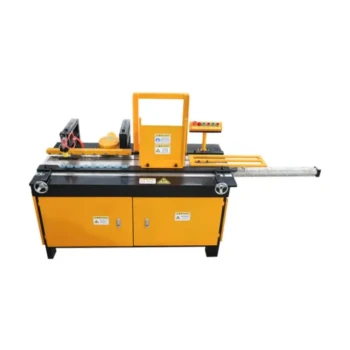
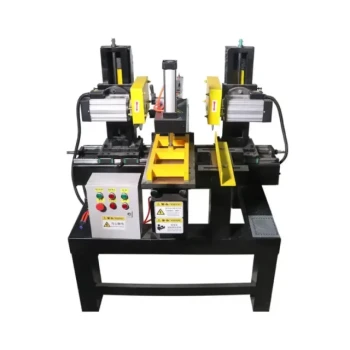
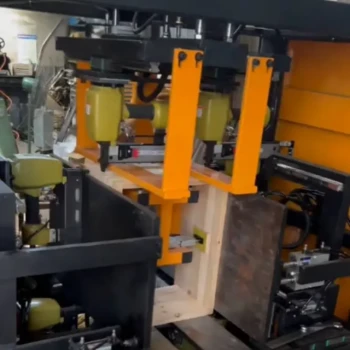
Specialized hive-making machinery acts as the foundational enabler of modern industrial beekeeping by ensuring rigorous dimensional precision across all equipment. These machines produce components that strictly adhere to the critical "bee space" technical standard, eliminating structural variations that otherwise disrupt colony management. By guaranteeing that every frame and box is mechanically identical, this technology ensures universal interchangeability, which is the prerequisite for scalable, efficient apiary operations.
By automating the production of dimensionally perfect components, specialized machinery solves the biological challenge of "bee space." This standardization prevents bees from gluing hive parts together with wax or propolis, transforming beekeeping from a variable craft into a streamlined industry capable of mass mechanization.
The Science of Spatial Precision
Mastering the "Bee Space"
The primary function of hive-making machinery is the high-precision cutting and assembly of components to maintain bee space.
This is a specific gap (usually between 6mm and 9mm) that bees leave open for passage. If this dimension varies due to poor manufacturing, the colony will instinctively fill the gap with comb or propolis, sealing the hive shut.
Preventing Biological Obstructions
Standardized machinery eliminates the "wild wax" and excess propolis usage caused by irregular dimensions.
When internal components fit perfectly, bees focus their energy on honey production rather than structural repair. This reduction in unwanted construction prevents frames from becoming stuck, protecting the colony from disturbance during inspections.
Operational Efficiency and Scalability
Universal Interchangeability
Machine-made hives ensure that frames and supers from different batches or sources are fully compatible.
This allows beekeepers to move resources seamlessly between colonies without modification. In a large-scale commercial operation, the ability to swap any frame into any box is vital for rapid management and equipment rotation.
Enabling Mechanized Extraction
Standardization establishes the hardware infrastructure required for downstream automation.
Modern honey harvesting relies on mechanized uncapping and extraction lines. These machines require uniform frame dimensions to function; without the precision provided by hive-making machinery, automated harvesting would be impossible due to equipment jams or breakage.
Economic and Strategic Advantages
Localization and Self-Sufficiency
Specialized machinery allows operations to manufacture high-quality hives using local materials.
This reduces dependence on external suppliers and lowers procurement costs. It supports a circular economy model where beekeepers can expand their apiaries efficiently using regional resources tailored to their specific climate.
Durability and Climate Control
Precise joinery created by industrial machines results in tighter, more durable equipment.
A precise fit improves the hive's thermal regulation capabilities, which is essential for colony survival in diverse climates. Furthermore, the structural integrity of machine-made hives extends the lifespan of the equipment, reducing long-term fixed asset investments.
Understanding the Trade-offs
While specialized machinery drives standardization, it introduces specific challenges that must be managed.
Dependency on Calibration
The benefit of standardization relies entirely on the initial calibration of the machinery. If the machine is set incorrectly, the error is replicated across thousands of units, potentially rendering an entire season's equipment incompatible with existing stock.
Material Quality Sensitivity
High-precision machines require consistent raw materials to function optimally. Variations in wood quality or moisture content can affect the final dimensions after processing, meaning that machinery must be paired with strict material selection protocols to ensure the final "bee space" is accurate.
Making the Right Choice for Your Goal
To leverage standardized machinery effectively, align your equipment choice with your operational scale.
- If your primary focus is rapid management: Prioritize machinery that guarantees strict adherence to bee space to prevent wild wax buildup and stuck frames.
- If your primary focus is commercial scalability: Ensure your manufacturing process produces frames compatible with automated extraction lines to remove bottlenecks in harvesting.
- If your primary focus is cost reduction: Utilize machinery to process local timber, minimizing shipping costs and external hardware dependency.
The transition to specialized hive-making machinery is not just about making boxes; it is about establishing a predictable, interchangeable infrastructure that allows beekeeping to scale from a hobby to a high-efficiency industry.
Summary Table:
| Key Advantage | Impact on Apiary Management | Industrial Benefit |
|---|---|---|
| Bee Space Precision | Prevents wild wax and propolis buildup | Reduces labor during hive inspections |
| Interchangeability | Allows seamless swapping of frames and supers | Enables rapid, large-scale colony management |
| Mechanical Uniformity | Ensures frames fit automated extraction lines | Required for downstream honey processing |
| Structural Integrity | Improves thermal regulation and hive durability | Lowers long-term capital expenditure |
Scale Your Beekeeping Business with HONESTBEE Precision
Transitioning from a craft to a high-efficiency industry requires hardware that works every single time. At HONESTBEE, we empower commercial apiaries and distributors by providing the full spectrum of industry-leading beekeeping tools and machinery.
From specialized hive-making machines that guarantee perfect bee space to automated honey-filling systems and high-quality consumables, we offer the comprehensive wholesale support your business needs to grow.
Ready to optimize your production and maximize efficiency?
Contact Us Today to Discuss Your Wholesale Requirements
References
- Enock Nyamorambo Nyamira, Benjamin Sosi. Determinants of the Adoption of Modern Apiculture Among Marginal Households in Baringo and Makueni Counties, Kenya. DOI: 10.62049/jkncu.v4i1.59
This article is also based on technical information from HonestBee Knowledge Base .
Related Products
- High-Efficiency Pneumatic Bee Hive Making Machine for Rapid Box Assembly
- Mini Desktop Bee Hive Frame Forming Making Machine
- Beehive Handle and Frame Rest Cutting Machine: Your Specialized Hive Machine
- Beehive Machine Double End Saw for Precision Hive Component Manufacturing
- Automatic High-Speed Bee Hive Box Stapling Machine
People Also Ask
- How does the introduction of professional beehive-making machinery benefit sustainable beekeeping? Scale Your Apiary
- Why is specialized beehive-making machinery critical for low-defense breeding? Enhance Selection with Precision Tools
- How does the introduction of specialized beehive making machinery contribute to increasing the scale of regional beekeeping industries?
- What is the importance of specialized beehive making machinery in a circular bio-economy? Build Local Sustainability
- Why is specialized beehive-making machinery essential? Scale Your Apiary with Precision Industrial Standards