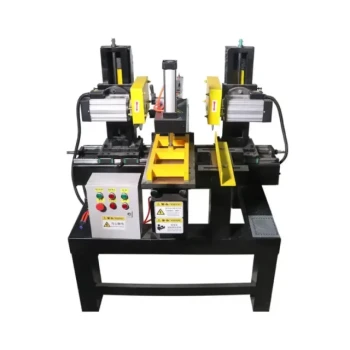
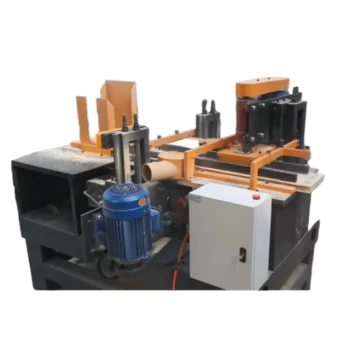
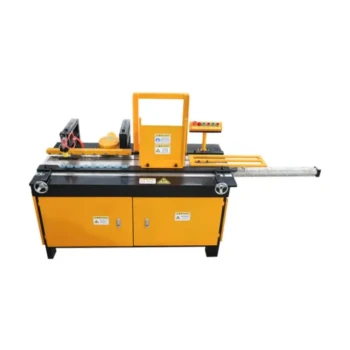
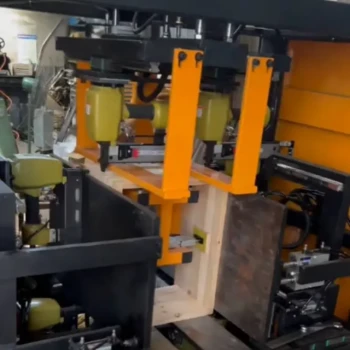
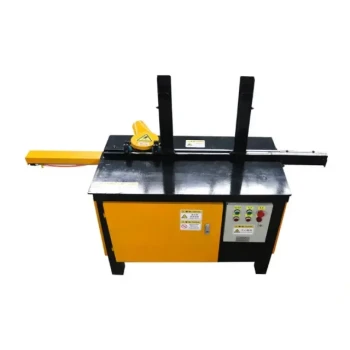
Standardized beehive manufacturing equipment is the foundational technology that enables the transition of stingless beekeeping from a hobbyist pursuit to a viable commercial industry. By producing artificial hive components with uniform specifications and precise interfaces, this equipment ensures the repeatability of colony propagation (eduction) and allows beekeepers to rapidly deploy standardized devices across large-scale apiaries.
By replacing the random structural variations of traditional hives with precise, interchangeable hardware, standardized equipment lowers infrastructure costs and minimizes operational risks. It provides the essential physical interface required for automated harvesting machinery and scientific colony management.
Scaling Colony Propagation and Management
For stingless beekeeping to become commercially viable, operators must be able to multiply colonies reliably and efficiently. Standardized equipment is the key enabler of this scalability.
Ensuring Process Repeatability
Industrial-grade manufacturing produces hive components that are chemically and physically identical. This uniformity ensures that the eduction process (colony propagation) is no longer an artisanal craft but a repeatable industrial procedure.
When every hive box has precise interfaces, beekeepers can deploy propagation devices rapidly. This consistency allows for the establishment of large-scale apiaries where management protocols can be applied universally across thousands of colonies.
Minimizing Biological Risk
Precise physical connections between hive components are critical for colony health. High-precision manufacturing minimizes gaps that could lead to bee absconding (the colony leaving the hive).
Furthermore, superior structural designs offer enhanced protection against pests and provide optimal temperature control. These factors significantly increase the success rate of colony splitting and expansion, reducing the financial loss associated with colony failure.
Enabling Automation and Operational Efficiency
Commercialization requires efficiency. Standardized equipment moves the industry away from manual, labor-intensive extraction toward mechanized production.
The Gateway to Mechanized Harvesting
One of the most significant barriers to industrialization is the irregular shape of natural honey pots. Standardized manufacturing allows for the creation of artificial honey pots with consistent, array-based geometries.
This uniformity acts as a standard interface, enabling the use of specialized harvesting machinery. It allows operators to utilize automated uncapping equipment and high-efficiency centrifuges, facilitating a shift from slow manual extraction to intensive industrial production.
Reducing Infrastructure Costs
When manufacturing machines produce components with consistent specifications, all parts become interchangeable. This modularity significantly lowers the long-term cost of beekeeping infrastructure.
It also supports professional workflows. For example, the INPA model beehive features a modular structure (often 13x13x6.5 cm chambers) that facilitates the installation of feeding devices and simplifies maintenance without disrupting the colony.
Establishing a Data-Driven Production Model
Industrialization relies on predictable data. Standardized wooden beehives provide a controlled environment that eliminates variables, making production metrics scientifically valid.
Eliminating Environmental Variables
By strictly controlling internal dimensions—such as length, width, height, and total volume (e.g., 2352 cm³)—researchers and commercial managers can ensure that a colony's performance is not skewed by spatial differences.
This control allows for valid comparisons of hygienic behaviors, such as the removal rate of dead brood. It ensures that data regarding population density and food pot density reflects the colony's genetics and health, rather than the shape of their container.
Enhancing Inspection Precision
Standardized designs provide a scientifically mapped physical space. This allows technicians to precisely identify and extract brood combs containing the queen or specific-aged larvae during splitting.
Additionally, standardized structures minimize structural damage during these inspections. This protects the colony's investment in comb construction and ensures higher survival rates for newly formed colonies.
Understanding the Trade-offs
While standardization is essential for industrial scale, it introduces specific requirements that operators must manage.
The Shift from Natural to Artificial
Standardization often involves replacing natural honeycomb structures with artificial geometries to facilitate automation. While this improves efficiency, it requires precise engineering to ensure the bees accept the artificial environment.
Capital Intensity
Transitioning to industrial-grade manufacturing equipment requires an initial investment in machinery and high-quality materials. This shifts the entry barrier from skill-based (knowing how to handle irregular hives) to capital-based (affording standardized infrastructure), which fundamentally changes the business model of the apiary.
Making the Right Choice for Your Goal
To leverage standardized equipment effectively, align your hardware choices with your specific commercial objectives.
- If your primary focus is Rapid Colony Expansion: Prioritize hive models like the INPA that feature modular chambers and precise interfaces to maximize the survival rate of split colonies and minimize damage during handling.
- If your primary focus is Industrial Honey Production: Invest in equipment that supports standardized artificial honey pots, as this is the prerequisite for utilizing automated uncapping and centrifugal harvesting machinery.
Ultimately, standardized manufacturing equipment converts the biological unpredictability of a bee colony into a controlled, measurable, and scalable production unit.
Summary Table:
| Feature | Impact on Industrialization | Key Commercial Benefit |
|---|---|---|
| Uniform Interfaces | Enables process repeatability in colony eduction | Rapid, large-scale apiary deployment |
| Modular Design | Components become interchangeable and modular | Lower infrastructure costs & easier maintenance |
| Geometric Precision | Standard interface for harvesting machinery | Shift to mechanized, high-efficiency production |
| Controlled Volume | Eliminates spatial variables in hive environment | Precise, data-driven colony management |
| High-Precision Fit | Minimizes gaps and structural weaknesses | Reduced biological risk & higher survival rates |
Scale Your Apiary with Industrial-Grade Precision
Transitioning from hobbyist stingless beekeeping to a commercial enterprise requires more than just bees—it requires the right infrastructure. HONESTBEE specializes in empowering commercial apiaries and distributors with the high-precision tools necessary for industrialization.
From hive-making machines that ensure perfect modularity to automated honey-filling equipment and specialized beekeeping hardware, our comprehensive wholesale portfolio is designed for scalability. We help you minimize operational risks and maximize yields through standardization.
Ready to industrialize your honey production?
Contact HONESTBEE Today to explore our full spectrum of beekeeping machinery and consumables.
References
- Preeti S. Virkar, V. P. Uniyal. Building Walkways: Observation on Nest Duplication of Stingless Bee Smith (1854). DOI: 10.21276/ambi.2014.01.1.nn01
This article is also based on technical information from HonestBee Knowledge Base .
Related Products
- High-Efficiency Pneumatic Bee Hive Making Machine for Rapid Box Assembly
- Mini Desktop Bee Hive Frame Forming Making Machine
- Beehive Machine Double End Saw for Precision Hive Component Manufacturing
- HONESTBEE Bee Frame Side Bar Forming Machine Precision Engineered for High-Volume Production Bee Frame Machine
- Beehive Handle and Frame Rest Cutting Machine: Your Specialized Hive Machine
People Also Ask
- How does the introduction of professional beehive-making machinery benefit sustainable beekeeping? Scale Your Apiary
- Why is specialized beehive-making machinery critical for low-defense breeding? Enhance Selection with Precision Tools
- How does the introduction of specialized beehive making machinery contribute to increasing the scale of regional beekeeping industries?
- What is the importance of specialized beehive making machinery in a circular bio-economy? Build Local Sustainability
- Why is specialized beehive-making machinery essential? Scale Your Apiary with Precision Industrial Standards