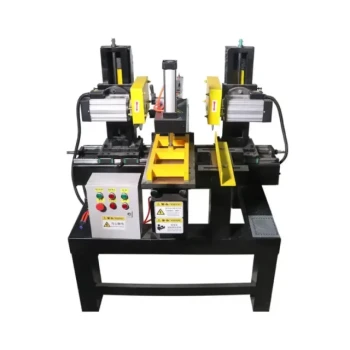
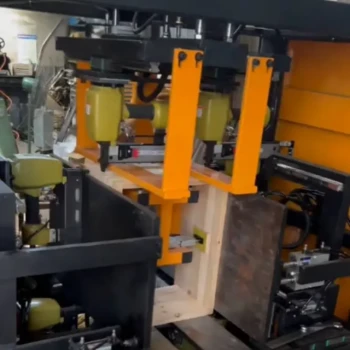
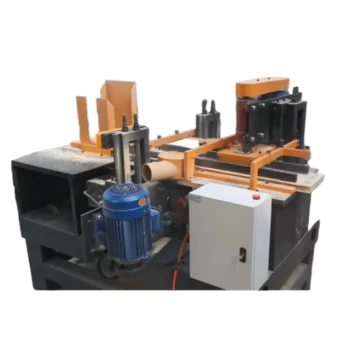
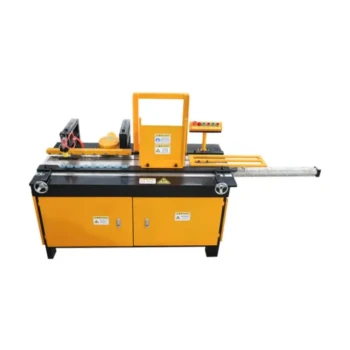
Standardized beehive manufacturing machinery plays a critical role in modeling accuracy by eliminating physical variability from the data set. By producing hives with uniform specifications, this machinery ensures that the physical nesting environment remains constant across all test subjects. This allows researchers to attribute productivity fluctuations to biological factors or management strategies, rather than structural inconsistencies in the habitat.
The Core Value of Standardization By transforming the beehive from a variable into a constant, standardized machinery provides a stable physical baseline for data analysis. This consistency is the prerequisite for accurate yield calculations, comparable scientific studies, and reliable agricultural policy forecasting.
Establishing a Reliable Physical Baseline
Eliminating Environmental Noise
When modeling bee colony productivity, data fluctuations can obscure true biological trends.
If hive dimensions vary, it becomes impossible to know if a change in yield is due to colony health or simply a larger storage space. Standardized machinery produces hives that are identical, effectively removing this "noise" from the dataset.
Ensuring Biological Alignment
Machinery-produced hives are designed to align specifically with the biological needs of honeybees.
This ensures that the modeled environment reflects optimal living conditions. Consequently, the simulation captures how bees perform when their physical habitat is not a limiting factor.
Facilitating Accurate Yield Calculation
The primary goal of productivity modeling is often to forecast the yield per colony.
By using a standardized physical structure, analysts can calculate average yields with much higher confidence. This data serves as a foundational metric for broader agricultural planning and resource allocation.
Enhancing Simulation Parameters
Defining Spatial Constraints
A standardized hive provides a fixed spatial definition for the model.
This includes precise metrics for hive volume, frame count, and specific storage zones. These constraints allow the model to accurately simulate how substances—such as pheromones or treatments—are distributed and diluted within the colony.
Consistent Model Initialization
Accurate modeling requires precise starting conditions, known as initialization parameters.
Because the physical constraints of the hive are known, researchers can accurately set the initial number of adult bees, larvae, and food reserves. This ensures that every simulation begins from a comparable starting point.
Simulating Human Intervention
Industrial equipment also standardizes the extraction process, representing external management in the model.
Models can simulate specific events, such as extracting a precise volume of honey while retaining a set amount for winter survival. This reflects the reality of managed beekeeping, making long-term survival projections more realistic.
Understanding the Trade-offs
The Limit of Standardization
While standardization improves data accuracy for industrial agriculture, it may reduce the model's applicability to wild or non-standard colonies.
Bees in natural settings adapt to irregular cavities, which creates different stress factors and productivity profiles. Models based strictly on machinery-produced hives may overestimate productivity when applied to non-industrial contexts.
Dependency on Manufacturer Specs
Accuracy is only as good as the adherence to the manufacturing standard.
If the machinery itself drifts from tolerance, the "standard" becomes flawed. Researchers must verify that the physical equipment used in validation matches the theoretical dimensions used in the software model.
Making the Right Choice for Your Goal
To leverage standardized machinery data effectively, align your approach with your specific objective:
- If your primary focus is Agricultural Forecasting: Rely on standardized hive models to predict regional honey yields, as this mirrors the equipment used by commercial producers.
- If your primary focus is Biological Research: Use the fixed spatial definitions to isolate variables, ensuring that changes in colony health are attributed to environmental stressors rather than hive structure.
- If your primary focus is Colony Management: Input precise extraction volumes into your model to simulate how different harvesting schedules impact long-term colony survival.
Standardization turns the complex variable of "habitat" into a reliable constant, empowering you to model biological reality with precision.
Summary Table:
| Feature of Standardized Machinery | Impact on Productivity Modeling | Benefit to Research/Operations |
|---|---|---|
| Uniform Specifications | Eliminates physical habitat variability | Isolates biological factors for cleaner data |
| Fixed Spatial Constraints | Defines precise hive volume & frame count | Accurate simulation of pheromone/treatment distribution |
| Consistent Dimensions | Sets reliable model initialization parameters | Ensures comparable starting points for simulations |
| Industrial Tolerances | Standardizes honey extraction volumes | Facilitates realistic long-term survival projections |
Optimize Your Beekeeping Infrastructure with HONESTBEE
At HONESTBEE, we empower commercial apiaries and distributors by providing the high-precision tools necessary for standardized success. Our comprehensive wholesale portfolio includes everything from advanced hive-making and honey-filling machines to essential industry consumables and specialized hardware.
Whether you are looking to scale your production or ensure the highest data accuracy for colony management, our expertise in beekeeping machinery delivers the consistency you need. Partner with us to access professional-grade equipment and honey-themed cultural merchandise designed for the global market.
Ready to elevate your apiary standards? Contact HONESTBEE today to discuss our wholesale solutions!
References
- Alla Chmil. MODELING OF THE BEEKEEPING SECTOR BY USING THE AGMEMOD MODEL FOR UKRAINE. DOI: 10.32782/2415-8801/2019-6.37
This article is also based on technical information from HonestBee Knowledge Base .
Related Products
- High-Efficiency Pneumatic Bee Hive Making Machine for Rapid Box Assembly
- Mini Desktop Bee Hive Frame Forming Making Machine
- Beehive Machine Double End Saw for Precision Hive Component Manufacturing
- Automatic High-Speed Bee Hive Box Stapling Machine
- HONESTBEE Top Bar & Bottom Bar Forming Machine | Bee Frame Machine
People Also Ask
- How does the introduction of professional beehive-making machinery benefit sustainable beekeeping? Scale Your Apiary
- Why is specialized beehive-making machinery critical for low-defense breeding? Enhance Selection with Precision Tools
- How does the introduction of specialized beehive making machinery contribute to increasing the scale of regional beekeeping industries?
- What is the importance of specialized beehive making machinery in a circular bio-economy? Build Local Sustainability
- Why is specialized beehive-making machinery essential? Scale Your Apiary with Precision Industrial Standards