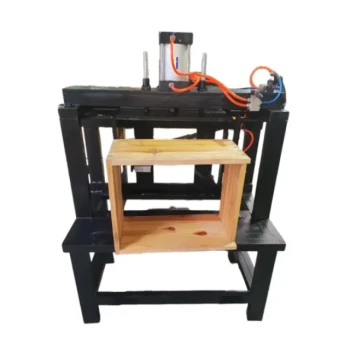
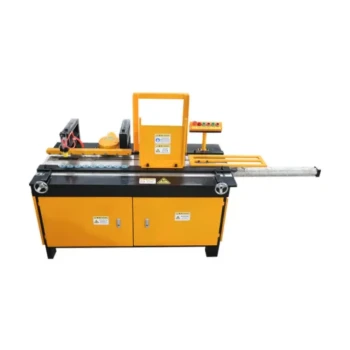
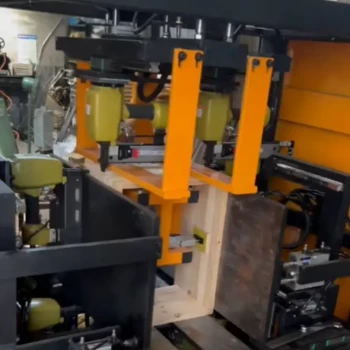
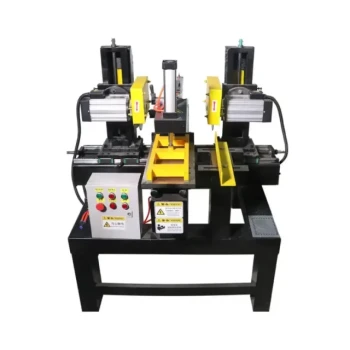
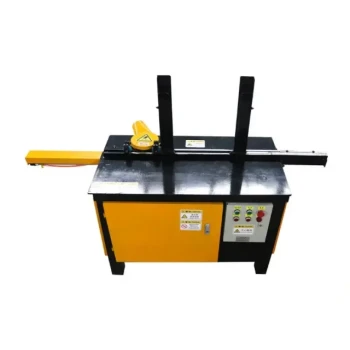
Standardized hive construction helps commercial apiaries manage disease by making every hive more consistent, inspectable, ventilated, and interchangeable. Modern hive-making machinery produces accurately sized boxes, frames, joints, and openings, reducing moisture accumulation and pest-harboring gaps. This allows beekeepers to inspect colonies faster, sanitize equipment more reliably, and isolate or replace compromised components before problems spread.
The core benefit is operational control: precision-manufactured hives create a stable colony environment and provide the standardized hardware needed for efficient inspection, sanitation, frame exchange, and disease-containment protocols.
Why Hive Standardization Matters for Disease Management
Consistent internal dimensions support colony health
Precision machinery maintains accurate internal hive spaces and frame geometry. This gives colonies a predictable nesting environment that supports stable brood development and helps maintain suitable temperature and ventilation conditions.
A stable physical environment can reduce stress on colonies, which is important because stressed bees may be less resilient when exposed to pathogens, pests, or adverse environmental conditions.
Accurate joints reduce moisture and pest-harboring areas
High-precision woodworking produces better-aligned joints and structurally stable hive components. Fewer gaps and misalignments reduce locations where moisture, debris, and pests can accumulate.
Moisture control is particularly important in commercial apiaries because damp hive conditions can weaken colonies and contribute to an environment favorable to secondary problems.
Consistent sealing supports controlled ventilation
Standardized hive construction improves the predictability of airflow and enclosure performance. The objective is not simply to make a hive airtight, but to provide controlled protection with adequate ventilation.
This becomes valuable when colonies must be temporarily closed, isolated, or relocated during nearby pesticide applications or other environmental emergencies. Properly constructed hives help limit exposure while reducing the risk of overheating or poor air exchange during containment.
How Standardized Hives Improve Disease-Control Operations
Interchangeable frames enable rapid isolation
Standardized frames and boxes can be exchanged between compatible hives and equipment. When an inspection identifies a compromised frame, beekeepers can remove it quickly and replace it with a clean, properly fitting component.
This supports a practical form of containment: affected materials can be separated, treated, cleaned, or discarded without disrupting the entire colony-management system.
Uniform structures make inspections more systematic
When hive components follow the same dimensions, workers can inspect colonies using repeatable procedures. They know where frames, entrances, partitions, and other components should be located, reducing variation between inspections.
This improves the likelihood of detecting abnormal brood patterns, pest activity, poor ventilation, or other warning signs at an earlier stage.
Sanitation becomes more reliable
Accurately manufactured components are easier to remove, clean, inspect, and reinstall. Compatible hives also work more effectively with standardized cleaning and handling equipment.
For large apiaries, this matters because disease prevention depends not only on the quality of a single hive, but on whether hygiene procedures can be applied consistently across hundreds or thousands of colonies.
Standardized hardware supports monitoring protocols
Disease management requires more than a well-built box. It also requires repeatable monitoring, recordkeeping, inspection, and response procedures.
Standardized hive geometry provides the physical foundation for these protocols, allowing beekeepers to compare colonies more consistently and respond according to defined thresholds rather than improvised judgments.
The Operational Advantages for Commercial Apiaries
Mechanization reduces handling variation
Industrial-grade hive components are compatible with mechanized workflows, including frame handling, honey extraction, cleaning, and storage. This reduces the amount of inconsistent manual fitting and handling that can introduce damage or delay.
More consistent handling helps preserve hive integrity and allows workers to focus on inspection and disease-control decisions.
Faster response limits exposure
In a commercial apiary, the speed of response can affect how widely a problem spreads. Standardized components allow teams to perform familiar tasks—such as replacing frames, closing hives, separating equipment, or moving colonies—more quickly.
The benefit is especially significant when multiple colonies require attention at the same time.
Consistent equipment supports scalable biosecurity
A disease-control plan is only effective when it can be applied throughout the operation. Standardized hive construction makes it easier to define compatible tools, cleaning routines, replacement parts, and inspection procedures across different apiary locations.
For distributors and commercial buyers, this makes product consistency a biosecurity consideration as well as a manufacturing specification.
Stable colonies are better positioned to resist stress
A sound hive structure helps protect colonies from environmental stressors and physical intruders such as wax moths. By maintaining a more stable habitat, it can support colony defensive behavior and reduce avoidable pressure on the bees.
This does not replace pathogen treatment or veterinary guidance, but it can remove structural weaknesses that make colonies more vulnerable.
Choosing Machinery That Supports Disease Management
Prioritize dimensional accuracy
Hive-making machinery should consistently produce accurate boxes, frames, entrances, and internal spaces. Small dimensional differences can create poor fits, obstructed airflow, or incompatibility between components.
For buyers, repeatable production quality is more important than isolated samples that meet specifications only occasionally.
Evaluate joint quality and structural stability
Machinery should produce clean cuts, consistent joints, and durable components that remain stable through repeated use. Poorly aligned joints can create gaps, leakage, or difficult-to-clean surfaces.
Ask suppliers about quality-control procedures, dimensional tolerances, material handling, and the consistency of finished output.
Confirm compatibility across the workflow
The hive system should work with the apiary’s existing extractors, cleaning equipment, transport methods, and replacement components. A standardized hive that cannot integrate with the rest of the operation may create new handling problems.
Compatibility should therefore be evaluated at the level of the entire production and disease-management workflow, not only the hive box.
Consider supply continuity
Commercial disease control depends on having clean replacement frames, boxes, and other components available when required. Reliable sourcing, rapid response, and efficient order fulfillment reduce the risk of keeping damaged or suspect equipment in service because replacements are unavailable.
For wholesalers and B2B resellers, a broad product portfolio and dependable delivery capability can be part of the practical value offered to apiary customers.
Understanding the Trade-offs
Standardization does not eliminate disease
Precisely built hives cannot prevent all viral, bacterial, fungal, or parasitic diseases. They improve the physical and operational conditions for prevention, monitoring, and containment, but they must be combined with sound beekeeping practices and appropriate disease-control measures.
Claims that hive construction alone prevents colony collapse or pathogen transmission should be treated cautiously.
Ventilation must be balanced with protection
Better sealing can help limit exposure during emergency isolation, but excessive sealing can restrict airflow and increase heat or moisture problems. Hive design and operating procedures must maintain adequate ventilation under normal and emergency conditions.
The correct specification is controlled airflow, not maximum airtightness.
Standardized components require disciplined management
Interchangeable frames make operations faster, but they can also spread problems if contaminated equipment is moved carelessly between colonies. Standardization improves the efficiency of a protocol; it does not replace the protocol.
Equipment movement, cleaning, inspection, and quarantine rules must remain clearly defined.
Machinery quality affects the result
Investing in automated equipment does not guarantee standardized output. Poor calibration, unsuitable materials, inadequate maintenance, or weak quality control can produce components that appear uniform but fail under commercial use.
A supplier’s technical support, production consistency, spare-parts availability, and after-sales service should be assessed alongside the machine’s headline specifications.
How to Apply This to Your Apiary or Supply Program
Standardized hive construction is most valuable when it is treated as part of a complete apiary-management system.
- If your primary focus is disease prevention: Select machinery that delivers accurate dimensions, clean joints, controlled ventilation, and easy-to-sanitize surfaces across every production batch.
- If your primary focus is rapid outbreak response: Prioritize interchangeable frames and boxes so compromised components can be isolated or replaced without disrupting the entire colony.
- If your primary focus is large-scale efficiency: Choose hive systems compatible with mechanized inspection, extraction, cleaning, transport, and replacement workflows.
- If your primary focus is sourcing and distribution: Work with suppliers that provide a full range of compatible hive components, responsive technical service, stable quality, and fast fulfillment.
- If your primary focus is emergency protection: Verify that hive construction supports secure closure or relocation while preserving adequate ventilation and temperature control.
With the right specifications, supplier support, and operating protocols, modern hive-making machinery turns hive construction into a practical foundation for scalable disease management.
Summary Table:
| Aspect | Benefit |
|---|---|
| Dimensional consistency | Stable colony environment, reduced stress |
| Accurate joints | Fewer moisture/pest harborage points |
| Controlled ventilation | Better protection during isolation/relocation |
| Interchangeable components | Rapid isolation/replacement of compromised parts |
| Uniform structures | Systematic inspections, earlier detection |
| Ease of sanitation | Reliable hygiene across many hives |
| Mechanization compatibility | Faster handling, reduced variation |
| Scalable biosecurity | Consistent protocols across locations |
Ready to enhance your apiary's disease management with standardized hive construction? At HONESTBEE, we provide a comprehensive range of beekeeping tools, machinery, and equipment to support your operational needs. Our high-precision hive-making machinery ensures dimensional accuracy, consistent quality, and compatibility with existing workflows, helping you improve inspection efficiency, sanitation, and rapid response. As a trusted B2B supplier for commercial apiaries and distributors, we offer fast delivery, dedicated support, and a full-spectrum product portfolio. Contact us today to learn how we can help you build a scalable, disease-resilient apiary operation — Get in touch with our experts!
Related Products
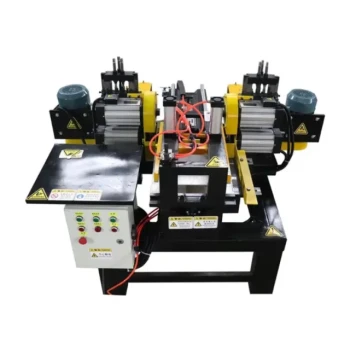
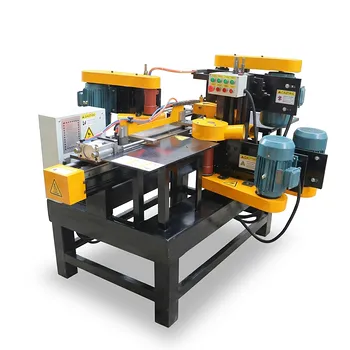
- High-Efficiency Pneumatic Bee Hive Making Machine for Rapid Box Assembly
- Beehive Handle and Frame Rest Cutting Machine: Your Specialized Hive Machine
- Mini Desktop Bee Hive Frame Forming Making Machine
- Automatic High-Speed Bee Hive Box Stapling Machine
- Beehive Machine Double End Saw for Precision Hive Component Manufacturing
People Also Ask
- How does the introduction of professional beehive-making machinery benefit sustainable beekeeping? Scale Your Apiary
- Why is specialized beehive-making machinery critical for low-defense breeding? Enhance Selection with Precision Tools
- How does the introduction of specialized beehive making machinery contribute to increasing the scale of regional beekeeping industries?
- What is the importance of specialized beehive making machinery in a circular bio-economy? Build Local Sustainability
- Why is specialized beehive-making machinery essential? Scale Your Apiary with Precision Industrial Standards