Beeswax melting and recycling drives standardization by converting irregular apiary by-products into uniform comb foundations. This process involves cleaning, melting, and re-processing raw wax into industrial-grade templates that guide bee colonies to build straight, orderly combs. By establishing a consistent physical structure for every hive, apiaries can ensure interchangeable equipment, increase comb reuse rates, and maintain a predictable workflow across operations.
The transformation of raw wax into standardized foundations creates a closed-loop system that enforces structural uniformity across colonies. This process not only optimizes hive inspections and equipment compatibility but also establishes a critical biosecurity barrier by sterilizing materials before reuse.
Creating a Uniform Physical Infrastructure
The Role of Foundation Templates
The primary function of recycled beeswax is the production of standardized foundations. These sheets act as precise architectural blueprints for the colony, forcing bees to construct combs that are straight and uniform rather than irregular or cross-linked.
Ensuring Interchangeability
When combs are built on standardized foundations, frames become universally interchangeable between hives. This allows apiary managers to move resources—such as brood frames or honey stores—between colonies seamlessly to balance populations or support weaker hives.
Improving Operational Efficiency
Orderly combs significantly speed up the inspection process. Because the physical structure is stable and predictable, beekeepers can manipulate frames with less risk of crushing bees or damaging the comb, resulting in a smoother, more efficient workflow.
Strengthening Biosecurity Protocols
Eliminating Internal Pathogens
Professional melting equipment utilizes controlled high-temperature processes effectively serving as a sterilization step. This heat treatment is capable of killing persistent pathogenic microorganisms, such as American Foulbrood spores, ensuring that reused materials do not perpetuate disease cycles within the apiary.
Reducing External Contamination Risks
By recycling internal wax, apiaries reduce their reliance on foundation sheets purchased from external sources. Externally sourced beeswax carries the risk of unknown pesticide residues or foreign pathogens; processing your own wax creates a secure biosecurity boundary that protects the health of the stock.
Optimizing Economic and Material Resources
Establishing a Closed-Loop System
Recycling creates a self-sustaining material cycle where old honeycombs and cappings are recovered rather than discarded. This reduces the need to purchase external consumables, lowering the long-term operational costs of the apiary.
Resource Recovery and Asset Management
Efficient melting devices allow beekeepers to treat wax by-products as valuable assets rather than waste. High-purity beeswax recovered from this process can be utilized for new colony expansion or sold as a raw material for pharmaceutical and cosmetic industries, diversifying the apiary's revenue stream.
Understanding the Trade-offs
Equipment Investment vs. Long-Term Gain
Implementing a standardized recycling program requires an upfront investment in specialized melting and pressing equipment. While this ensures independence and quality control, smaller operations must weigh the capital cost against the volume of wax they produce annually.
Precision Requirements
The quality of the recycled foundation depends heavily on precise temperature control during the melting phase. Inadequate heating may fail to sterilize the wax, while overheating can degrade the physical properties of the wax, resulting in brittle foundations that bees may reject.
Making the Right Choice for Your Management Goals
Standardization is not just about equipment; it is about data, health, and scalability.
- If your primary focus is Scalability: Prioritize the production of rigid foundation templates to ensure all hive components remain interchangeable as your operation grows.
- If your primary focus is Biosecurity: Invest in melting equipment with precise high-temperature controls to guarantee the destruction of spores and pathogens before re-introducing wax to the hives.
- If your primary focus is Cost Control: Focus on the closed-loop aspect of recycling to minimize the purchase of external foundation sheets and maximize the value of wax by-products.
By controlling the physical quality of the comb, you effectively control the operational rhythm of the entire apiary.
Summary Table:
| Aspect | Contribution to Standardization | Key Benefit |
|---|---|---|
| Infrastructure | Converts raw wax into uniform foundation templates | Ensures straight, interchangeable combs across all hives |
| Biosecurity | High-temperature sterilization during melting | Eliminates pathogens and reduces reliance on external wax |
| Operations | Creates a predictable physical hive layout | Speeds up inspections and reduces risk of colony damage |
| Economics | Establishes a closed-loop material recovery system | Lowers consumable costs and creates new revenue streams |
Elevate Your Apiary Operations with HONESTBEE
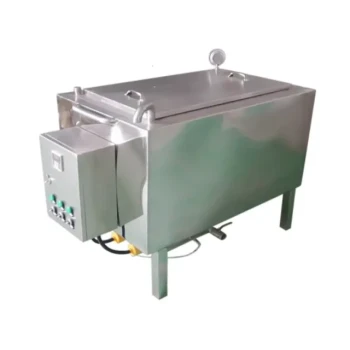
At HONESTBEE, we empower commercial apiaries and distributors with the specialized machinery needed to turn raw wax into a standardized asset. From high-precision beeswax melting tanks to professional-grade foundation machines, our equipment is designed to ensure structural uniformity and biosecurity across your entire operation.
Whether you are scaling your business or optimizing resource recovery, our comprehensive wholesale offering provides everything from hive-making hardware to honey-themed merchandise.
Ready to standardize your production?
Contact HONESTBEE Today to discover how our industrial solutions can enhance your efficiency and profitability.
References
- Nuray Şahiṅler, Nesibe Özge Toy. Uşak ilinde arı ürünlerinin tüketim durumları. DOI: 10.37908/mkutbd.824699
This article is also based on technical information from HonestBee Knowledge Base .
Related Products
- Electric Commercial Beeswax Melter for Factory Use
- Beeswax Melter for Candle Making Honey Bee Wax Melter
- Steam Beeswax Melter Wax Warmer for Wax Processing
- Solar Beeswax Melter Easy Solar Wax Melter for Beeswax
- Electric Flatting and Embossing Machine with Tray for Beekeeping
People Also Ask
- Why might a commercial beekeeper prefer an electric beeswax melter? Maximize Profit with Speed & Scale
- What safety precautions should be taken when melting beeswax? A Guide to Flammable Wax Handling
- What types of beeswax melters are available for different scales of beekeeping? Solar vs. Electric Melters Compared
- What are the three popular methods for melting beeswax? Safely Process Your Wax with Ease
- How do you melt beeswax without making a mess? Master Safe & Clean Techniques