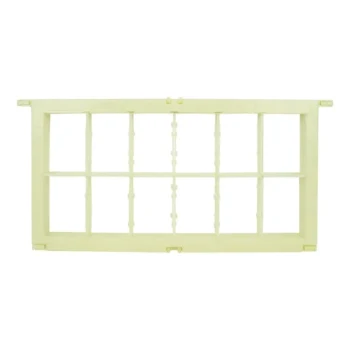
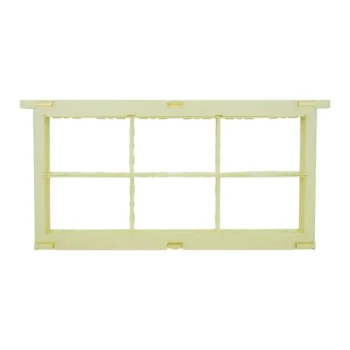
The fundamental difference lies in whether the bees must build the comb or simply fill it. Standard foundation provides a flat guide—essentially a floor plan—upon which bees must construct wax walls; specialized honey-harvesting frames replace this with a pre-formed, fully depth plastic honeycomb that bees do not build themselves.
In specialized harvesting systems, the frame is not a construction site but a mechanical device. The bees are bypassed in the comb-building process within the honey super, as the rigid plastic cells are pre-manufactured to split open for direct drainage.
The Structural Divide
Standard Foundation: A Template
In traditional beekeeping, the foundation is a thin sheet (wax or plastic) embossed with a hexagonal pattern.
This serves only as a base. The colony must expend significant energy and resources to secrete wax and draw out the cell walls to store nectar.
Specialized Frames: A Complete Matrix
Frames in specialized harvesting systems (such as those using split-cell technology) arrive with the comb structure already fully formed.
There is no "foundation" in the traditional sense. The frame consists of a rigid plastic matrix of deep cells that is ready for immediate nectar storage and capping.
The Mechanism of Action
The defining feature of these specialized frames is mechanical utility.
While standard frames are static structures designed to hold wax, specialized frames contain moving parts. The pre-formed cells are designed to vertically split or shift, allowing honey to drain downwards without removing the frame from the hive.
Impact on Colony Management
Energy Allocation
Because the comb is pre-built, bees do not need to consume honey to produce wax for the honey super.
This allows the colony to immediately focus on foraging and nectar dehydration, potentially leading to faster honey storage in the supers.
The Brood Box Exception
It is critical to note that this technology is exclusively for honey supers (storage areas).
As stated in the primary reference, decisions regarding foundation usage still apply to the brood boxes. In the lower chambers where the queen lays eggs, beekeepers continue to use standard foundation or natural comb methods.
Understanding the Trade-offs
Equipment Compatibility
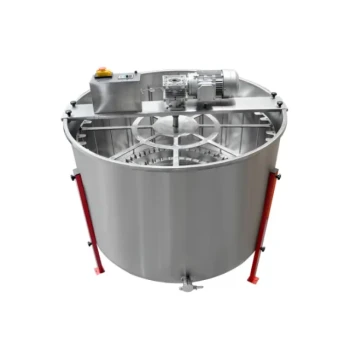
Standard foundation frames are universal. They are designed for compatibility with centrifugal honey extractors, which are essential for large-scale operations.
Specialized split-cell frames are generally incompatible with standard extraction machinery and are designed solely for gravity-based harvesting.
Acceptance and Material
Bees generally prefer natural wax over plastic.
Because specialized frames consist of substantial amounts of rigid plastic, some colonies may hesitate to enter the super or "accept" the artificial comb compared to a wax-coated standard foundation.
Cost vs. Labor
Standard foundation is inexpensive but labor-intensive during harvest (requires uncapping and spinning).
Specialized frames represent a significantly higher upfront financial investment but reduce the physical labor and disturbance associated with harvesting.
Making the Right Choice for Your Goal
When deciding between standard foundation and specialized harvesting frames, consider your operational scale and objectives.
- If your primary focus is large-scale production: Stick to standard foundation to utilize centrifugal extractors for efficient, bulk processing.
- If your primary focus is low-impact harvesting: Choose specialized frames to harvest honey without opening the hive or disturbing the bees.
- If your primary focus is cost-efficiency: Use standard foundation, as the cost per frame is a fraction of the price of mechanical split-cell frames.
Ultimately, specialized frames change the beekeeper's role from a manager of wax construction to an operator of a mechanical harvest system.
Summary Table:
| Feature | Standard Foundation | Specialized Harvesting Frames |
|---|---|---|
| Comb Structure | Flat template (bees must build walls) | Pre-formed, full-depth plastic matrix |
| Material | Beeswax or thin plastic sheet | Rigid, heavy-duty food-grade plastic |
| Harvesting Method | Centrifugal extraction (requires uncapping) | Gravity-based (mechanical split-cell) |
| Bee Energy Use | High (must secrete wax) | Low (direct nectar storage) |
| Best Use Case | Commercial apiaries & bulk production | Low-disturbance, small-scale harvesting |
| Cost | Low initial investment | High upfront capital per frame |
Scale Your Apiary with HONESTBEE
Whether you are managing a commercial honey operation or a growing distribution network, HONESTBEE provides the professional-grade tools you need to succeed. From standard foundation and hive-making machinery to specialized honey-filling systems and honey-themed cultural merchandise, our comprehensive wholesale portfolio covers the full spectrum of beekeeping equipment.
Why partner with us?
- Comprehensive Supply: One-stop shop for tools, machinery, and consumables.
- Commercial Grade: Durable equipment designed for high-efficiency production.
- Global Distribution: Tailored solutions for large-scale apiaries and distributors.
Ready to upgrade your harvesting efficiency? Contact HONESTBEE today to discuss our wholesale offerings and discover how we can streamline your honey production!
Related Products
- Professional Sectional Comb Honey Frame with 250g Cassette System for Beekeeping
- Professional 500g Sectional Comb Honey Frame System for Beekeeping
- Heart-Shaped Comb Honey Frame and Honeycomb Cassette
- Plastic Honey Comb Frames Cassette Box for Honey
- 32 Frame Commercial Electric Honey Extractor for Beekeeping and Honey Production
People Also Ask
- How are honeybee combs utilized for non-destructive colony monitoring? Master Population Density Tracking
- What is the technical purpose of exchanging honeycomb frames? Master Apiary Equalization for Growth
- What frame to use for honeycomb? Choose the Right System for Pure, Edible Comb
- What is a honeycomb frame? The Key to Modern, Sustainable Beekeeping
- What are the recommended temperature and duration settings for freezing honey frames? Ensure Pest-Free Comb Storage