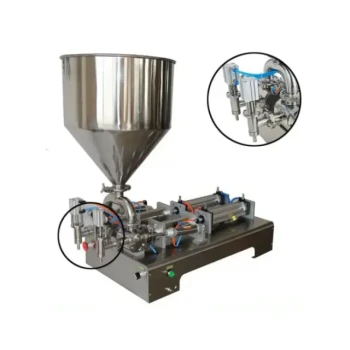
The implementation of industrial honey filling machinery and automated processing lines fundamentally transforms commercial apiaries by enabling the high-speed conversion of raw harvest into finished products. This automation significantly reduces labor costs and ensures strict hygiene, allowing beekeepers to redirect their primary focus toward critical biological management tasks rather than manual processing.
Core Takeaway Automation does not just accelerate production; it decouples human labor from downstream processing. This shift liberates apiarists to focus on the biological core of their business—such as selective breeding and resistance monitoring—thereby maximizing long-term productivity and economic sustainability.
Redefining Labor Allocation
Shifting Focus to Biological Management
The most significant impact of automation is the liberation of primary productivity. By handing over repetitive processing tasks to machinery, beekeepers can focus on selective breeding and resistance monitoring.
This ensures that the core asset of the apiary—the bee colony itself—receives the expert attention required for long-term health and genetic improvement.
Reducing Manual Labor Intensity
Standardized and mechanized operations drastically reduce the physical labor required for apiary management. This reduction in labor intensity applies to both the processing line and the management of the hives themselves.
By minimizing human intervention in routine tasks, apiaries can standardize operations. This helps reduce production disparities between different regions and stabilizes output.
Economic Sustainability and Efficiency
Stabilizing Cash Flow
Modern extraction and filling machines are essential for maximizing the industrialization of honey processing. High-efficiency production equipment provides a stable cash flow.
This steady revenue stream is critical for offsetting the significant expenses incurred from colony replenishment and general apiary management.
Optimizing Resource Inputs
Research suggests that many apiaries operate at an average economic efficiency of only 46%. The precise configuration of production tools can address this by reducing resource input by up to 54% while maintaining output.
Strategic investment in specialized hardware ensures economic resources are fully utilized. This directly solves low-efficiency issues caused by improper resource allocation.
Product Integrity and Quality Control
Ensuring Strict Hygiene
Automated filling and packaging machinery is vital for maintaining food safety standards during mass production. These systems minimize human contact, effectively preventing secondary contamination.
This isolation preserves the natural physical and chemical characteristics of the honey. It ensures the final product meets stringent market quality and safety requirements.
Standardization of Infrastructure
While filling machinery handles the product, industrial-grade hive manufacturing machinery ensures the structural consistency of the apiary itself. Standardized hive components simplify routine maintenance and reduce labor time per unit.
This structural uniformity facilitates migratory beekeeping practices. It allows operations to follow seasonal blooms efficiently, a requirement for large-scale commercial success.
Understanding the Trade-offs
The Requirement for Strategic Capital
Achieving high efficiency is not automatic; it requires strategic capital investment. The benefits of automation are realized only when the hardware configuration is precise and aligned with the apiary's scale.
Improper resource allocation can result in continued low efficiency. Success depends on selecting tools that directly address the specific resource bottlenecks of the operation.
Balancing Hardware with Biological Data
While processing machinery handles physical output, it must be paired with biological insight. Automated monitoring systems are necessary to track worker and drone traffic to separate production volume from colony health.
Reliance on processing speed alone can mask biological decline. Data-driven decision-making is required to predict swarming risks and manage the labor force effectively.
Making the Right Choice for Your Goal
To maximize the value of industrial automation in your apiary, align your implementation with your specific operational targets:
- If your primary focus is Biological Health: Leverage automation to free up labor hours, redirecting that time specifically toward selective breeding and disease resistance monitoring.
- If your primary focus is Economic Stability: Prioritize high-speed extraction and filling equipment to generate the consistent cash flow needed to cover high colony maintenance costs.
- If your primary focus is Operational Scalability: Invest in standardized hive manufacturing and processing tools to facilitate migratory practices and reduce resource input by up to 54%.
Industrial automation ultimately serves as the foundation for converting a labor-intensive agricultural practice into a streamlined, biologically secure commercial enterprise.
Summary Table:
| Impact Category | Key Benefit | Efficiency Metric |
|---|---|---|
| Labor Allocation | Shifts focus from manual bottling to biological management | Redirects 100% of repetitive labor |
| Economic Output | Stabilizes cash flow through high-speed production | Up to 54% reduction in resource input |
| Quality Control | Minimizes human contact & prevents contamination | Meets 100% of hygiene standards |
| Infrastructure | Standardized hive-making for migratory practices | Drastically reduces maintenance time |
Revolutionize Your Beekeeping Operation with HONESTBEE
Transition from labor-intensive processing to a streamlined commercial enterprise. HONESTBEE empowers commercial apiaries and distributors with the specialized hardware needed to maximize productivity and economic sustainability.
Our comprehensive wholesale range includes:
- High-Speed Honey-Filling & Packaging Machines: Ensure hygiene and stabilize your cash flow.
- Industrial Hive-Making Machinery: Achieve the structural consistency required for migratory success.
- Full-Spectrum Tools & Consumables: From honey extraction equipment to honey-themed cultural merchandise.
Ready to reduce your resource input by up to 54%? Contact HONESTBEE today to discuss how our tailor-made equipment solutions can optimize your honey production and biological management.
References
- T. Blacquière, Delphine Panziera. A Plea for Use of Honey Bees’ Natural Resilience in Beekeeping. DOI: 10.1080/0005772x.2018.1430999
This article is also based on technical information from HonestBee Knowledge Base .
Related Products
- Precision Durable Efficient HONESTBEE Rotary Honey Filling Machine
- Commercial Rotary Honey Filling Machine for Production
- Fully Automatic Honey Filling Packaging Machine for Processing Line
- Economy Small Honey Filling Machine Honey Bottle Filler Packaging Machine
- Small Honey Filling Machine Sachet Packing Equipment Single Nozzle
People Also Ask
- How do high-precision honey filling machines ensure quality? Optimize Your Commercial Production with HONESTBEE
- What are the common types of bottling machines used for honey? Choosing the Right Solution for Your Apiary
- How do honey filling and processing machines aid native bee product conservation? Boost Value with HONESTBEE Technology
- How do honey filling machines work? Achieve Precision & Speed for Your Apiary
- What quality control role does professional honey filling equipment perform? Ensure Consistency and Product Stability